
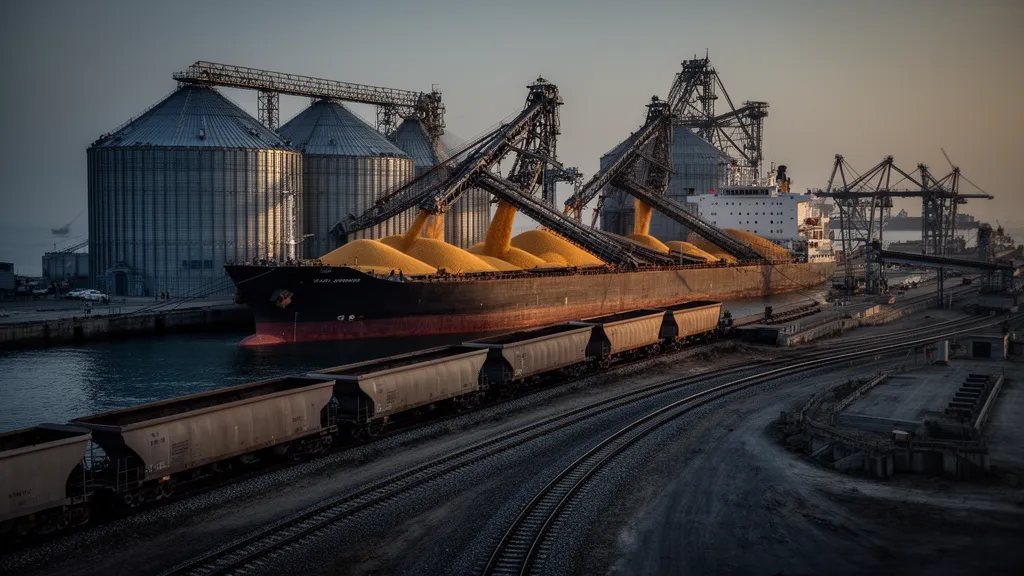
- Regulatory shift: Hungary has reinstated a wide-ranging ban on Ukrainian agricultural imports, adding fresh constraints to regional trade flows.
- Logistics pressure: The ban complicates Central European land transit routes for Ukrainian grain and oilseeds, likely raising logistics costs and transit times.
- Freight sentiment: Market impact is assessed as neutral to slightly bearish for Ukrainian freight, with potential for increased reliance on Black Sea export channels.
Hungary Reinstates Ban on Ukrainian Agricultural Imports
Hungarian Prime Minister Péter Magyar confirmed that the government has reinstated import restrictions on a broad range of Ukrainian agricultural commodities. The renewed ban covers wheat, corn, sunflower seeds, rapeseed, flour, poultry, eggs, and other agricultural goods, effectively reimposing comprehensive limits on Ukrainian agri-food flows into Hungary.
The previous import ban, introduced under emergency decrees by the former Hungarian government, expired on May 13. The new resolution restores these measures, with the regulations now officially published in the Hungarian Herald, the country's primary government gazette, providing formal legal backing for the renewed restrictions.
Market & Logistics Impact
Market Impact: Neutral to Slightly Bearish for Ukrainian Freight
Hungary functions primarily as a transit corridor rather than a core destination market for Ukrainian agricultural exports. Nonetheless, the reinstated ban adds regulatory complexity to overland routes through Central Europe, forcing Ukrainian exporters to reconsider logistical planning and potentially divert flows away from Hungarian territory.
The immediate impact is concentrated on land-based freight, where additional checks, rerouting, or modal shifts may increase transport costs and extend delivery times. This may lead to a modest redirection of volumes back toward Black Sea port infrastructure and alternative EU corridors, as exporters seek more predictable and compliant export pathways.
Traders and logistics operators are closely monitoring whether neighboring Central European countries adopt similar or coordinated measures. Any broader replication of Hungary's approach would likely amplify bottlenecks, increase freight volatility for Ukrainian wheat, corn, and oilseeds, and heighten competition for limited export capacity in alternative ports and corridors.
Source: Market Data
Leave a Reply