
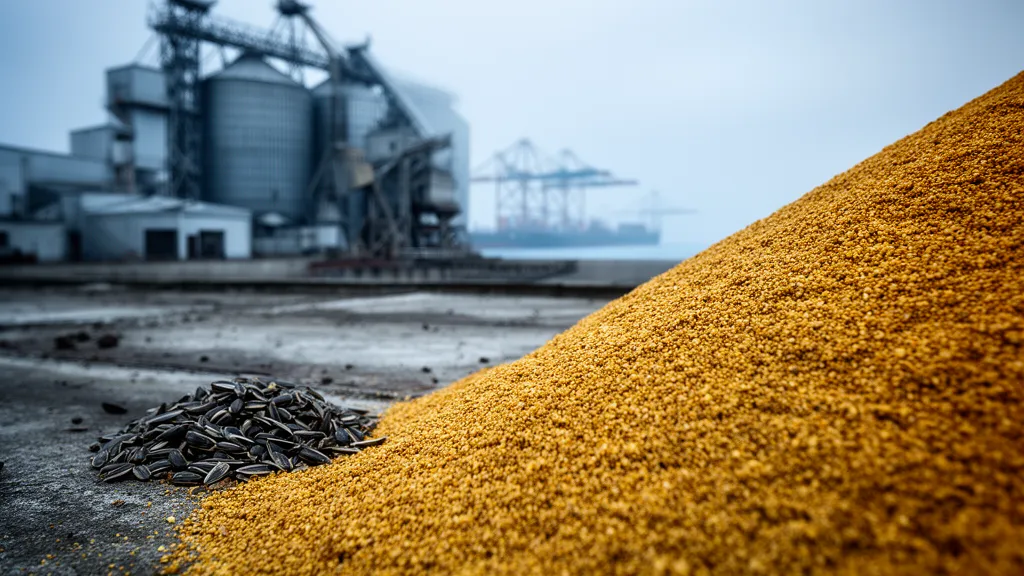
- Bullish: Ukrainian sunflower meal export prices hit USD 240/MT FOB, the highest level in three years, driven by tight supply and reduced crushing activity.
- Bearish: Crushing plants face shutdowns and underutilized capacity due to sunflower seed shortages and elevated raw material costs, limiting near-term supply recovery.
Ukrainian Sunflower Meal Market Update
Ukrainian sunflower meal export prices have climbed to USD 240 per metric ton (FOB ports) as of June 1, according to APK-Inform monitoring. This marks the highest price level in three seasons and highlights pronounced tightness in Ukraine’s processed sunflower products market.
The rally is being driven by a seasonal reduction in sunflower meal availability combined with operational disruptions at crushing facilities. Many plants have cut back throughput or temporarily halted production amid insufficient sunflower seed supplies and prohibitively high raw material procurement costs. As a result, output volumes have declined and exportable meal supplies have tightened markedly in the current marketing period.
Price Snapshot
| Commodity | Price (FOB) | Period / Context |
|---|---|---|
| Ukrainian Sunflower Meal | USD 240/MT | As of June 1, three-year high |
Market Analysis and Implications
The three-year high in sunflower meal prices underscores structural supply constraints in Ukraine’s oilseed processing sector. Underutilized crushing capacity, caused by raw seed shortages and elevated input costs, is likely to keep sunflower meal prices firm in the near term.
This dynamic also lends indirect support to sunflower seed values, as processors compete more aggressively for limited origination. Livestock feed buyers and export traders should budget for sustained elevated pricing and consider forward coverage where possible, as any meaningful easing in supply will depend on the size and timing of the new crop and the pace at which crushing operations normalize.
Source: Market Data
Leave a Reply