
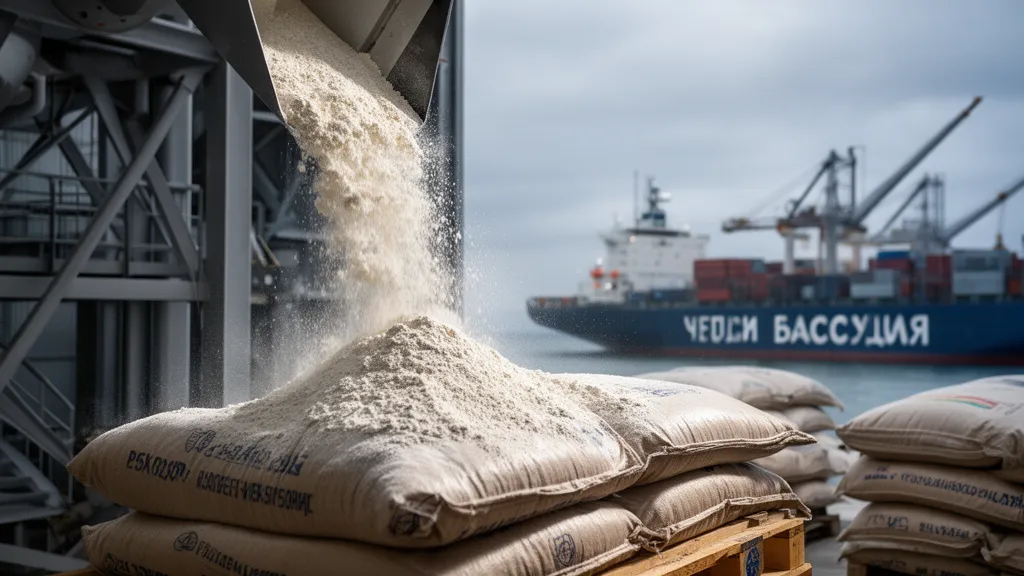
- Export Growth: Russia exported about 180,000 tons of wheat and rye-wheat flour in January–April 2026, an 11% year-on-year increase in value.
- Revenue Expansion: Flour exports generated approximately $60 million, reflecting steady international demand for Russian value-added grain products.
- Market Tone: The trend is neutral to slightly bullish for global wheat, highlighting Russia’s diversification beyond raw grain exports.
Russian Flour Export Performance, Jan–Apr 2026
Russia’s flour export sector showed solid momentum in the first four months of 2026, according to data from the federal center "Agroexport" under the Ministry of Agriculture of the Russian Federation. From January to April 2026, Russia supplied around 180,000 tons of wheat and rye-wheat flour to foreign markets, generating an estimated $60 million in export revenue.
| Metric | Jan–Apr 2025 | Jan–Apr 2026 | Change (Value Terms) |
|---|---|---|---|
| Flour Export Volume (wheat & rye-wheat) | n/a | ≈180,000 tons | +11% |
| Flour Export Value | Baseline (100) | ≈$60 million | +11% |
The published figures exclude April 2026 shipments to EAEU (Eurasian Economic Union) countries, but still indicate an 11% increase in value compared with January–April 2025. This underscores resilient external demand for Russian flour products despite regional and logistics uncertainties.
Market Impact and Trade Dynamics
The 11% growth in flour exports points to sustained international appetite for value-added wheat products from the Black Sea region. For the broader wheat market, this is neutral to slightly bullish: Russia continues to channel a portion of its wheat into higher-margin processed exports, reinforcing its role as both a grain and flour supplier.
For freight and logistics coordinators, increased flour shipments create additional, though still modest, cargo opportunities relative to bulk grain flows. The trend also implies stable utilization of Russian milling capacity, which can influence domestic wheat demand patterns and, over time, contribute to shifts in exportable grain surpluses.
Source: Market Data
Leave a Reply