- Largest U.S. SPC facility: Bunge’s new $550 million Morristown, Indiana plant is now the biggest soy protein concentrate operation in the country.
- Stronger U.S. soybean demand: The plant will add roughly 4.5 million bushels (about 122,000 metric tons) of annual soybean demand, boosting local basis support in Indiana.
- Efficiency and non-GMO focus: Integration with existing crushing and expanded non-GMO capabilities enhance Bunge’s high-value food ingredient portfolio.
- Neutral to marginally bearish for Black Sea: Incremental U.S. domestic processing may slightly limit exportable beans in tight years, modestly supporting Black Sea meal competitiveness.
Bunge Expands U.S. Soy Protein Capacity
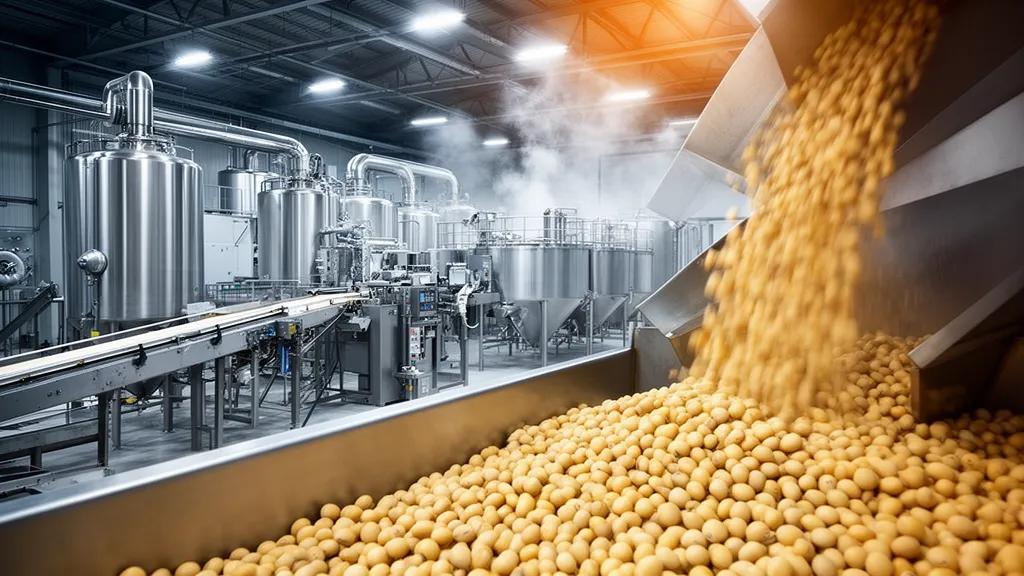
Bunge Global SA has commissioned a new soy protein concentrate (SPC) and textured soy protein concentrate (TSPC) facility in Morristown, Indiana, representing a major expansion of U.S. value-added soybean processing. First announced in 2022, the $550 million plant is fully integrated with Bunge’s existing crushing operations at the site, allowing beans to move seamlessly from crush to protein processing.
According to Oil World, this is now the largest single SPC facility in the United States. The plant is designed to deliver significantly higher production scale and operational efficiency than Bunge’s conventional SPC and TSPC plant in Bellevue, Ohio, while meaningfully expanding the company’s non-GMO production footprint for food-grade ingredients.
Impact on U.S. Soybean Demand
The Morristown facility is expected to absorb an additional 4.5 million bushels of soybeans annually from Indiana suppliers. In volume terms, this equates to roughly 122,000 metric tons of soybeans per year, providing a structural boost to local demand and potentially supporting basis and crush margins in the region.
| Item | Value | Notes |
|---|---|---|
| Plant Investment | $550 million | Fully integrated SPC/TSPC and crushing complex |
| Additional Soybean Demand | 4.5 million bushels/year | Approx. 122,000 metric tons annually |
| Location | Morristown, Indiana | Key U.S. soybean-producing region |
| Facility Status | Largest U.S. SPC plant | Per Oil World |
Implications for Black Sea Oilseed Markets
For Black Sea exporters, the development is assessed as neutral to marginally bearish. Higher U.S. domestic processing capacity and incremental bean demand modestly reduce the pool of soybeans available for export in tighter crop years. At the same time, increased U.S. meal output supports downstream value addition, subtly shifting trade flows.
While the additional 4.5 million bushels is small relative to global trade, it fits a larger trend of sustained investment in U.S. value-added processing in a key competitor region. This may offer some marginal support to Black Sea crushing margins and the competitiveness of Ukrainian and Russian meal exports, as a greater share of U.S. beans is diverted into domestic protein production rather than raw bean exports.
Source: Market Data
Leave a Reply