
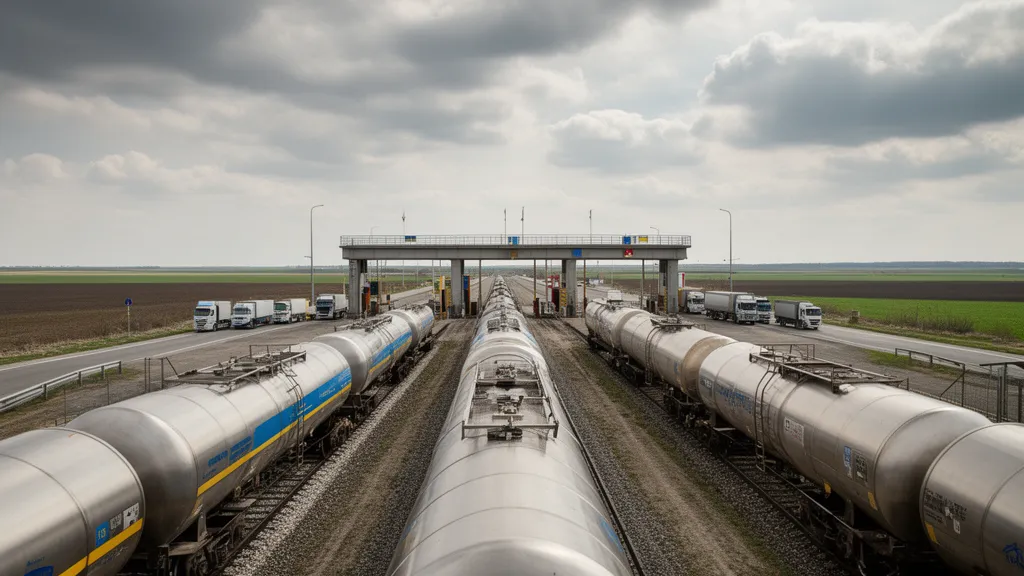
- Vegetable oil exports down 14.2% m/m: Ukrzaliznytsia moved 58,500 tons in the first half of April, signaling tighter supply flows.
- Meal and oilcake exports fall 13.8%: Shipments totaled 105,800 tons, pointing to reduced crushing activity or logistical bottlenecks.
- Land routes dominate logistics: Border crossings handled 58% of vegetable oil and 79% of meal exports, underscoring reliance on overland corridors.
- Price implications: Neutral to slightly bullish for sunflower oil on supply constraints; bearish for meal availability along Ukrainian export routes.
Ukrainian Rail Exports of Vegetable Oils and Meal Fall 14% in Early April
Ukrzaliznytsia reported a notable slowdown in rail-based exports of vegetable oils and oilseed meals during the first two weeks of April, highlighting renewed pressure on Ukraine’s agri-logistics system and potential implications for sunflower oil and meal markets.
Export Volumes and Logistics Split
| Product | Period | Total Volume (tons) | m/m Change | Land Border Share | Seaport Share |
|---|---|---|---|---|---|
| Vegetable oils | First half of April | 58,500 | -14.2% | 58% (≈33,900 t) | 42% (≈24,600 t) |
| Oilcake & meal | First half of April | 105,800 | -13.8% | 79% (≈83,600 t) | 21% (≈22,200 t) |
Vegetable oil exports via rail reached 58,500 tons in early April, a 14.2% decline versus March. Land border crossings carried about 33,900 tons (58%), while seaports handled around 24,600 tons (42%). Oilcake and meal exports totaled 105,800 tons, down 13.8% month-on-month, with land routes moving the bulk of shipments at roughly 83,600 tons (79%) and ports managing 22,200 tons (21%).
Market Analysis
The double-digit reduction in vegetable oil and meal exports indicates either tighter logistical capacity or a pullback in processing output at the start of spring. The strong dependence on land routes, especially for meal, underscores Ukraine’s continuing adaptation to constrained Black Sea export options and intermittent port risks.
For sunflower oil, a 14% drop in shipments may lend mild support to prices if demand remains stable, as buyers relying on Ukrainian origin face thinner spot availability. However, the data may also reflect weaker crushing margins or inventory drawdowns, rather than purely logistical disruption. In contrast, reduced meal flows through Ukrainian corridors point to tighter regional supply for feed users, potentially reshaping import demand patterns and basis levels in neighboring EU markets.
Overall sentiment is neutral to slightly bullish for sunflower oil on the supply side, while the meal market faces a more clearly bearish signal on availability, particularly along key overland export routes.
Source: Market Data
Leave a Reply