
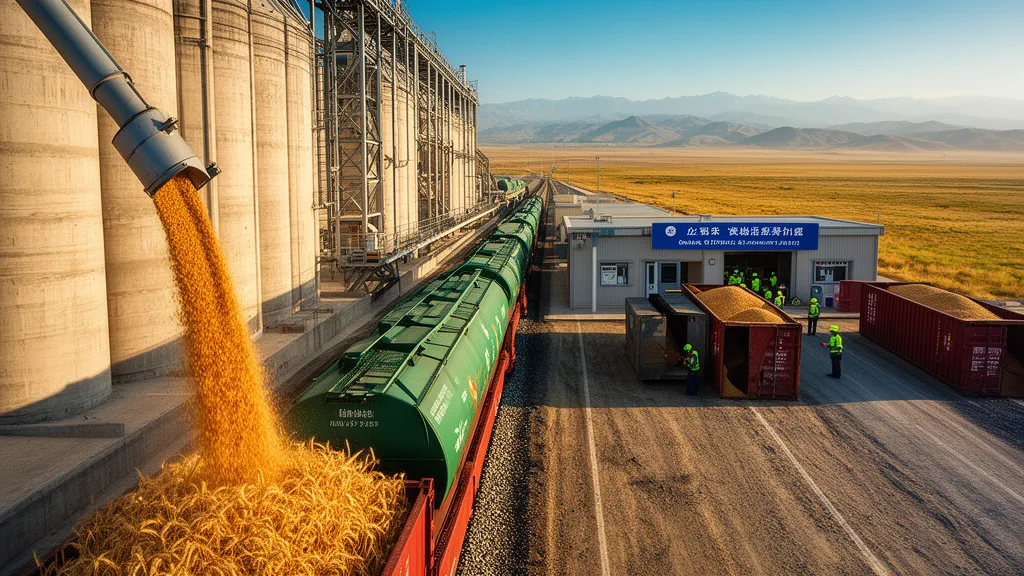
- Streamlined Trade: Kazakhstan and China signed a joint Protocol to simplify and standardize agricultural export procedures under the SCO framework.
- Supply Predictability: Alignment with international standards is expected to enhance shipment predictability and unlock Kazakhstan’s export potential to China.
- Quality Assurance: Deeper cooperation on product quality control and safety aims to remove trade barriers and support stable, compliant exports.
- Logistics Impact: Neutral to moderately bullish implications for Black Sea logistics and regional grain flows as alternative eastbound routes develop.
Kazakhstan–China Agricultural Trade Protocol
Kazakhstan and China have signed a joint Protocol aimed at facilitating agricultural trade within the Shanghai Cooperation Organization framework. The Ministry of Agriculture of Kazakhstan held bilateral consultations with Chinese representatives during the third SCO meeting on plant quarantine in the Kyrgyz Republic, focusing on expanding agricultural exports to China and stabilizing supply chains.
The agreement centers on systematizing export procedures and aligning them with international standards to improve the predictability of agricultural shipments. By harmonizing documentation, inspection, and compliance requirements, both sides aim to unlock Kazakhstan’s export potential and reduce administrative frictions at the border.
Chinese and Kazakh committee representatives confirmed their readiness to deepen cooperation on product quality control and safety measures. This includes closer collaboration on plant quarantine standards and inspection protocols to ensure that agricultural goods meet mutually recognized thresholds for quality and safety.
The joint Protocol, signed following the meeting, formalizes these approaches and is designed to facilitate mutual trade in agricultural products among SCO member states. Over time, the framework is expected to lower technical barriers to trade and support more consistent export flows from Kazakhstan to China.
Market and Logistics Implications
The market impact is assessed as neutral to moderately bullish for Black Sea logistics and regional grain flows. While Kazakhstan is not a core Black Sea exporter, streamlined export procedures to China could reduce administrative delays and improve freight planning for eastbound agricultural shipments from Central Asia.
Enhanced trade corridors toward China may indirectly influence competition and freight demand for wheat and oilseeds in the wider region, particularly where cargo flows overlap or reroute through alternative corridors. As the Protocol is implemented and export volumes scale over the medium term, regional price dynamics could gradually adjust to reflect shifting trade patterns and improved supply reliability.
Source: Market Data
Leave a Reply