
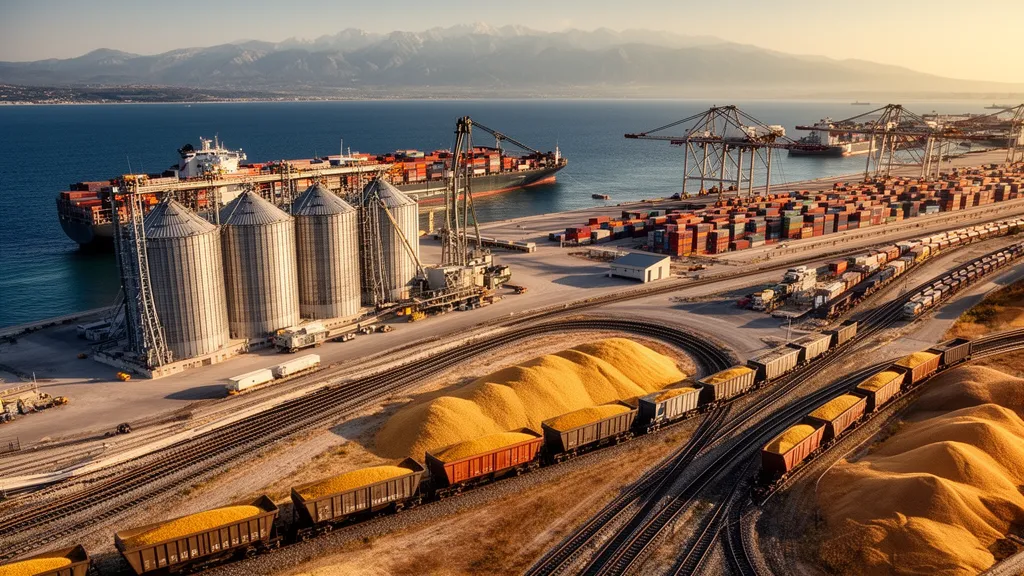
- Kazakhstan and Slovenia’s Luka Koper port are negotiating integration of the Middle Corridor to create new grain export routes to Central Europe.
- Luka Koper processes around 23 million tonnes annually and is a key entry point for landlocked EU countries, including 33% of Austrian and 45% of Hungarian imports.
- A successful partnership would diversify transport routes and improve supply chain resilience between Asia and Europe, especially for grain and oilseed exports.
- Market impact is currently neutral to moderately bullish, with benefits dependent on future freight rates, schedules, and trial shipment results.
Kazakhstan–Slovenia Logistics Partnership Overview
Kazakhstan is in advanced discussions with Slovenia’s Luka Koper port to align the Trans-Caspian International Transport Route (Middle Corridor) with the Adriatic gateway, aiming to establish a new corridor for grain and oilseed exports into Central Europe. The Kazakh Ministry of Foreign Affairs confirmed that Ambassador Altay Abibullaev met with Luka Koper’s Board Chairperson Nevenka Krzan to explore detailed cooperation mechanisms.
The talks center on leveraging Kazakhstan’s role as a key Eurasian transit hub together with Luka Koper’s port and rail infrastructure. Located on the Adriatic Sea, Luka Koper handles approximately 23 million tonnes of cargo per year, including 1.5–1.8 million containers, and acts as a primary sea gateway for landlocked EU states such as Austria and Hungary.
Infrastructure and Trade Flows
Luka Koper currently processes about 33% of Austrian imports and 45% of Hungarian imports, underscoring its strategic importance for Central European supply chains. Maritime transit times from China’s east coast to Luka Koper are reported at roughly 43–46 days, providing a competitive route for Asia–Europe trade flows when paired with efficient inland rail and road links.
| Metric | Value |
|---|---|
| Total annual cargo throughput | 23 million tonnes |
| Annual container volume | 1.5–1.8 million TEU |
| Share of Austrian imports via Luka Koper | 33% |
| Share of Hungarian imports via Luka Koper | 45% |
| Sea transit time: China (east coast) → Luka Koper | 43–46 days |
Both sides have indicated interest in broadening practical cooperation, including possible engagement with KTZ Express and the wider business communities of both countries. A harmonized Middle Corridor–Luka Koper route could create a more resilient logistics chain for Kazakh wheat and barley exports targeting Austria, Hungary, and neighboring markets.
Market Impact and Strategic Implications
Market Impact: Neutral to Moderately Bullish
The prospective link between Kazakhstan’s Middle Corridor and Luka Koper supports Kazakhstan’s broader strategy to diversify export routes away from the Black Sea. For grain and oilseed traders, this may offer an additional logistics option during periods of congestion, seasonal bottlenecks, or geopolitical risk affecting traditional corridors.
In the near term, the overall impact on pricing and basis levels is limited, as the project remains in the negotiation phase. Material benefits will depend on confirmed freight tariffs, reliable transit schedules, and the performance of initial trial shipments. Logistics and risk managers should track upcoming announcements on KTZ Express participation, capacity allocations, and any pilot grain movements through Luka Koper.
Source: Market Data
Leave a Reply