
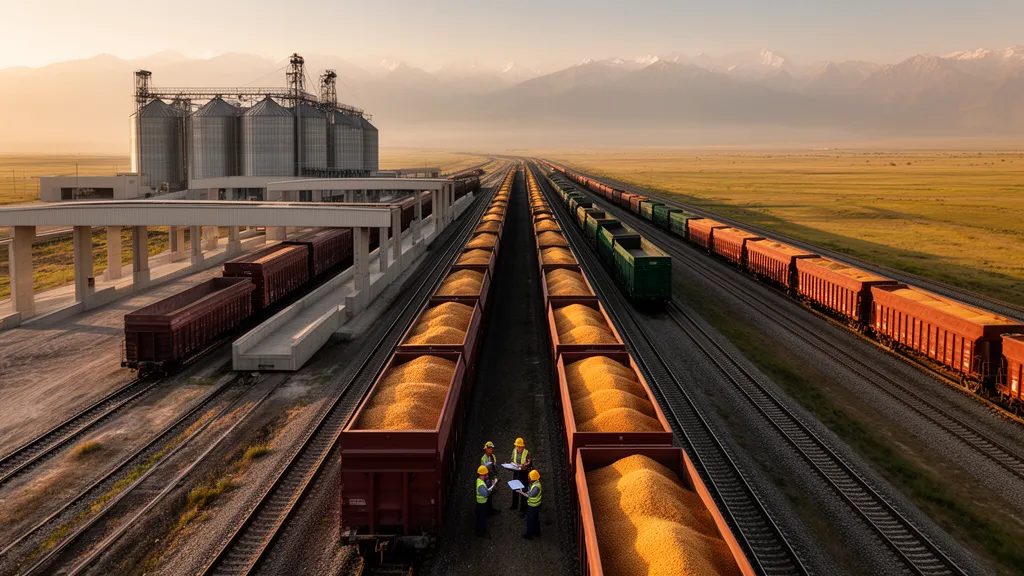
- Strategic tariffs: Uzbekistan is being urged to introduce flexible, competitive rail freight tariffs and bundled logistics services to retain agricultural transit flows.
- Route efficiency focus: Freight carriers increasingly prioritize speed, reliability, and predictability over pure distance when choosing Central Asian transit corridors.
- New southern corridor: Development of a logistics complex at Bolashak station is set to support grain and flour transit toward Iran and Afghanistan via Turkmenistan.
- Black Sea impact: Modernization of alternative routes may divert some Kazakh grain away from traditional Black Sea export channels.
Uzbekistan Rail Tariff Reforms in Focus
Dauren Ilesaliev, Professor at Tashkent State Transport University, is calling for Uzbekistan to overhaul its rail transit tariff policy for grain, flour, and bulk agricultural cargo to preserve its status as a core logistics hub linking Kazakhstan with Afghanistan and wider South Asian markets.
The proposed reforms include seasonal discounts, long-term tariff agreements, bundled logistics service packages, and preferential conditions for major shippers. Such measures are intended to keep Uzbekistan’s rail network competitive as neighboring countries vie for growing volumes of agricultural freight.
Shift in Carrier Priorities and New Infrastructure
Ilesaliev notes that freight carriers increasingly evaluate transit routes using a broad efficiency matrix: tariff levels, border crossing performance, availability of rolling stock, schedule reliability, terminal handling capacity, degree of document digitalization, and overall delivery predictability often outweigh the advantage of the shortest physical route.
In parallel, Uzbekistan is planning a new logistics complex at the Bolashak railway station to support higher transit volumes of grain and flour headed to Iran and Afghanistan via Turkmenistan, reinforcing the country’s role in emerging southbound corridors.
Implications for Regional Grain Flows
These developments underline intensifying competition for Central Asian agricultural freight, with indirect consequences for Black Sea grain logistics. As southern and alternative corridors modernize infrastructure and pricing models, part of Kazakhstan’s grain that might traditionally move west through Black Sea ports could be re-routed south. Logistics providers serving Black Sea export channels will need to match improvements in tariff flexibility, operational efficiency, and service reliability to maintain their share of regional grain flows.
Source: Market Data
Leave a Reply