
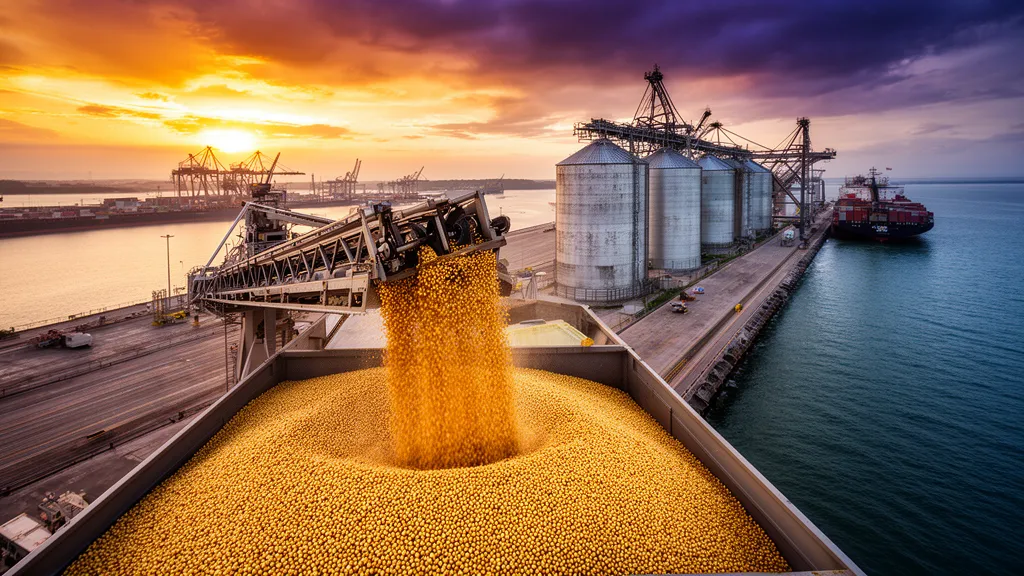
- Global Trade Expansion: Soybean exports reached 63.71 million tonnes in Jan–Apr 2026, up 10% year-on-year, underscoring strong South American supply and Asian demand.
- Brazil & China Dominate: Brazil shipped 40.24 million tonnes year-to-date while China imported 38.08 million tonnes, reinforcing their roles as the key global supplier and buyer.
- Growing Emerging Market Demand: Imports rose notably in Turkey, Thailand, Vietnam, Pakistan, and North Africa, signaling broad-based demand growth for protein meals.
- Neutral to Slightly Bearish for Black Sea: Ample global soybean availability may pressure sunflower seed and meal prices in the Black Sea region, though regional logistics could offset some downside.
Market Overview
Global soybean trade accelerated in early 2026, with exports from major suppliers and imports by key consuming regions both posting solid year-on-year gains. Robust South American supply, led by Brazil, combined with sustained demand from China and other emerging markets, has pushed cumulative shipments and purchases to multi-year highs for the January–April period.
Export Performance by Major Suppliers
| Exporter | Period | 2026 Shipments (million tonnes) | 2025 Shipments (million tonnes) | Change (million tonnes) |
|---|---|---|---|---|
| Global (7 major exporters) | Jan–Apr | 63.71 | 57.51 | +6.20 |
| Global (7 major exporters) | April | 21.43 | 19.19 | +2.24 |
| Brazil | Jan–Apr | 40.24 | 37.43 | +2.81 |
| Brazil | April | 16.75 | 15.27 | +1.48 |
| United States | Jan–Apr | 17.04 | 13.97 | +3.07 |
| United States | April | 3.05 | 2.18 | +0.87 |
| Paraguay | Jan–Apr | 3.94 | 2.87 | +1.07 |
Exports from seven major soybean suppliers reached 63.71 million tonnes in the first four months of 2026, 6.2 million tonnes higher than a year earlier. April shipments alone climbed 11.7% year-on-year to 21.43 million tonnes. Brazil solidified its leadership with 16.75 million tonnes exported in April and 40.24 million tonnes for Jan–Apr, while the United States and Paraguay also posted notable volume increases versus 2025.
Import Dynamics by Key Buyers
| Importer | Period | 2026 Imports (million tonnes) | 2025 Imports (million tonnes) | Change (million tonnes) |
|---|---|---|---|---|
| China | April | 13.64 | 11.84 | +1.80 |
| China | Jan–Apr | 38.08 | 34.24 | +3.84 |
| European Union | Jan–Apr | 4.41 | 4.58 | -0.17 |
| Argentina | Jan–Apr | 3.53 | 2.90 | +0.63 |
| Egypt | Jan–Apr | 1.96 | 1.42 | +0.54 |
| Turkey | Jan–Apr | 1.90 | 1.52 | +0.38 |
| Thailand | Jan–Apr | 1.39 | 1.15 | +0.24 |
| Vietnam | Jan–Apr | 1.09 | 0.79 | +0.30 |
| Pakistan | Jan–Apr | 1.06 | 0.98 | +0.08 |
China remained the pivotal force on the demand side, with April imports rising to 13.64 million tonnes and Jan–Apr purchases reaching 38.08 million tonnes, up nearly 4 million tonnes year-on-year. While EU imports softened slightly, several emerging markets in Asia, the Middle East, and North Africa expanded buying, underlining a broad-based rise in demand for soybean-based protein.
Implications for the Black Sea Oilseed Complex
The surge in global soybean exports is neutral to slightly bearish for the Black Sea region. Although the region is not a major soybean supplier, abundant South American soybeans increase competition for alternative oilseeds, potentially pressuring prices for sunflower seed and meal—core Black Sea exports. At the same time, Turkey’s 25% year-on-year increase in soybean imports and solid demand from neighboring markets highlight ongoing regional appetite for protein meals, which could provide some support to the Black Sea oilseed complex if local logistics and freight advantages are leveraged effectively.
Source: Market Data
Leave a Reply