
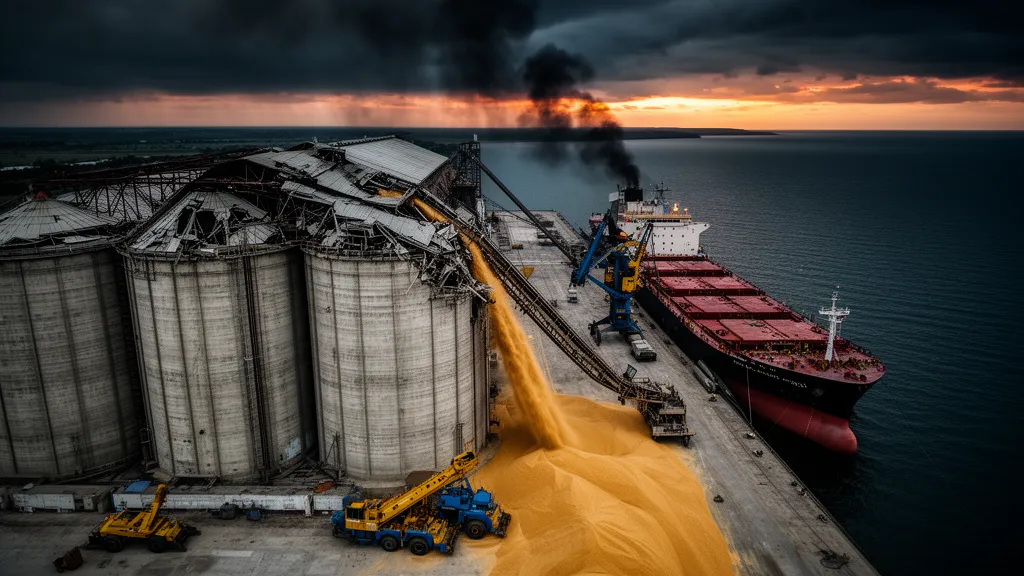
- Approximately 90% of Ukrainian agricultural exports depend on Greater Odessa ports, leaving no viable alternative corridor.
- Direct losses to companies with port storage and transshipment facilities already exceed $1.5 billion.
- Repeated attacks on Black Sea infrastructure are causing systemic delays in transshipment, processing, and storage operations.
- Ongoing disruptions are bearish for Ukrainian grain freight, increasing logistics costs and rate volatility.
Russian Port Attacks Intensify Ukrainian Export Losses
Ukrainian agricultural exporters are facing escalating financial and operational pressure as repeated attacks on Black Sea port infrastructure disrupt flows through Greater Odessa. Denys Marchuk, Deputy Chairman of the All-Ukrainian Agrarian Council, notes that roughly 90% of Ukraine’s grain and oilseed exports move via this hub, leaving the sector acutely exposed to localized damage.
The strikes are creating cascading logistical frictions, including longer transshipment cycles, slower processing, and growing storage bottlenecks. Extended dwell times for cargo at origin are pushing up working capital needs and logistics costs for producers and traders, eroding margins across the export chain.
Companies operating storage and transshipment facilities in the affected port zones report direct losses exceeding $1.5 billion. Beyond immediate asset damage, the ongoing disruptions threaten Ukraine’s standing as a reliable origin in global grain and oilseed markets and complicate contract performance with international buyers.
Market Impact: Bearish for Ukrainian Grain Freight
The heavy concentration of export capacity in Greater Odessa creates a structural vulnerability in Ukraine’s supply chain. With no meaningful alternative infrastructure available, each attack compounds backlogs and heightens freight risk premiums. Market participants should expect elevated volatility in Ukrainian freight rates and uneven cargo availability in the near term.
Importers relying on Black Sea origins may need to diversify sourcing, secure replacement volumes from alternative regions, or extend lead times within procurement strategies. The scale of the reported $1.5 billion in losses signals prolonged recovery cycles after each incident, raising the risk of tighter exportable supplies during key shipping windows.
Source: Market Data
Leave a Reply