
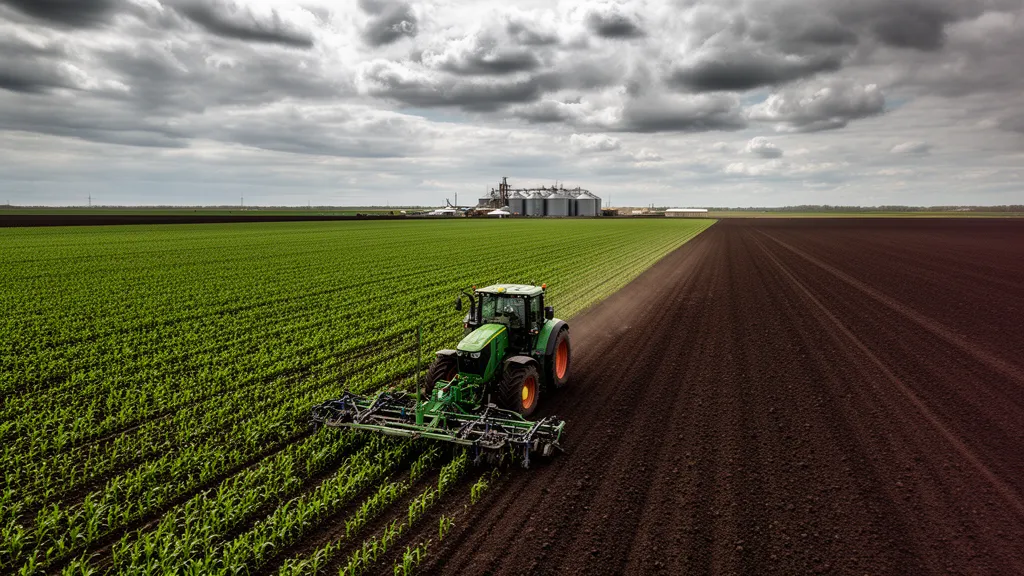
- Ukraine has completed 43% of its planned 6.003 million hectares of spring grain planting, lagging behind last year’s 57% pace.
- Corn and sunflower planting are both at 30% of planned areas, introducing timing and weather risks for yield potential.
- Soybean planting is slower at 18% of the target area, while sugar beet planting is nearly finished at 93% completion.
- The delayed progress is neutral to slightly bearish for corn as compressed planting windows raise production uncertainty.
Ukraine Spring Planting Progress
Ukraine’s Ministry of Economy reports that spring crop planting reached 2.609 million hectares as of May 4, covering 43% of the projected 6.003 million hectare area. This pace is slower than in 2023, when 3.252 million hectares had been sown by May 1, representing 57% of the then-planned 5.681 million hectares.
Corn planting is currently at 30% of planned area, though specific hectare figures were not disclosed. Oilseed planting is progressing, with sunflower also at 30% completion, totaling 1.507 million hectares out of a targeted 5 million hectares. Soybean planting remains behind, with 377,100 hectares sown, or 18% of planned area. Sugar beet planting is nearly complete at 182,900 hectares, reaching 93% of the intended area.
| Crop | Area Sown (Thousand ha) | Completion vs Plan | Planned Area (Thousand ha) |
|---|---|---|---|
| Spring grains (total) | 2,609.0 | 43% | 6,003.0 |
| Corn | n/a | 30% | n/a |
| Sunflower | 1,507.0 | 30% | 5,000.0 |
| Soybeans | 377.1 | 18% | n/a |
| Sugar beet | 182.9 | 93% | n/a |
Market Analysis
The slower planting pace versus last year introduces additional weather and timing risk for Ukraine’s 2024 crop. While total area targets for major crops such as corn and sunflower appear intact, the lag implies a compressed planting window. If adverse conditions persist, yield potential could be pressured, particularly for corn, making the update neutral to slightly bearish for price sentiment.
The parallel delays in both corn and sunflower suggest system-wide constraints, such as field access or weather-driven disruptions, rather than crop-specific issues. Market participants should monitor the pace of planting over the next several weeks to assess whether Ukraine can close the gap with 2023 progress as optimal planting windows narrow.
Source: Market Data
Leave a Reply