
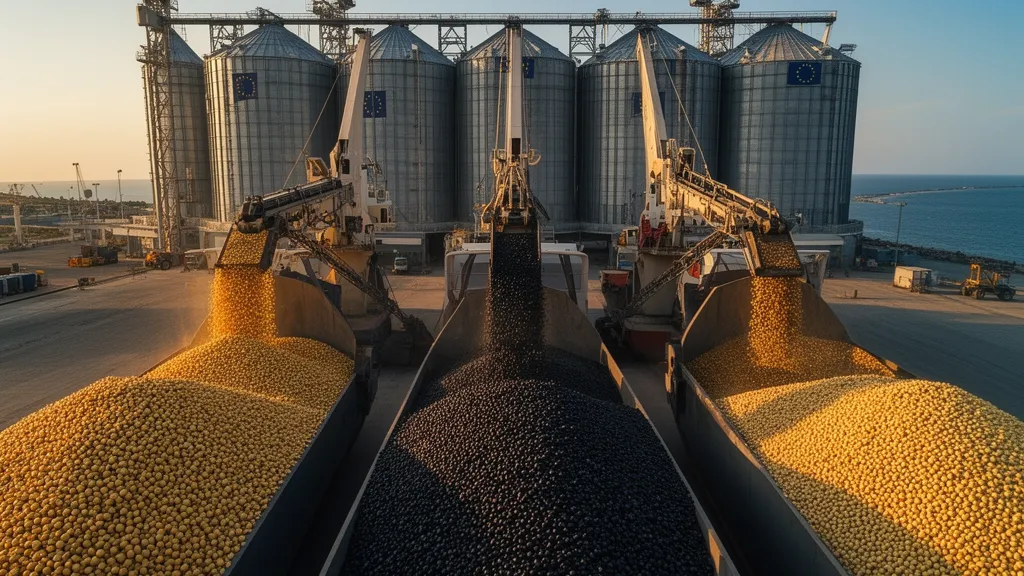
- Soybeans Bearish: EU soybean imports are down 10% to 10.54 million tonnes, pressuring demand for US and Brazilian exporters.
- Rapeseed Bearish: Rapeseed imports plunged 29% to 4.12 million tonnes, despite Ukraine remaining the top supplier.
- Sunflower Bullish: Sunflower seed imports jumped 46% to 758,000 tonnes, with strong flows from Moldova and Argentina.
- Meal Mixed: Soybean and sunflower meal imports declined, while rapeseed meal imports surged 140% to nearly 680,000 tonnes.
- Oils Mixed: Palm and sunflower oil imports fell, while soybean oil and rapeseed oil shipments into the EU rose sharply.
- Sentiment: Neutral to Bearish for soybean traders; Neutral to Bullish for Black Sea rapeseed and sunflower suppliers.
EU Oilseed Import Trends in 2025/26
European Commission data for the 2025/26 marketing year (July 1 – April 24) show a notable contraction in EU oilseed imports, led by soybeans and rapeseed. Soybean imports reached 10.54 million tonnes, 10% lower year-on-year. The United States was the largest soybean supplier with 4.3 million tonnes, narrowly ahead of Brazil at 4.22 million tonnes.
Rapeseed imports recorded an even sharper decline, falling 29% to 4.12 million tonnes. Ukraine remained the EU’s dominant rapeseed supplier at 1.4 million tonnes, followed closely by Australia at 1.3 million tonnes, underscoring the continued importance of Black Sea and Australian origins in meeting EU crush demand.
In contrast, sunflower seed imports expanded strongly, rising 46% to 758,000 tonnes. Moldova and Argentina each shipped around 300,000 tonnes, positioning themselves as key beneficiaries of the EU’s increased appetite for sunflower seed.
EU Oilseed Meal and Vegetable Oil Flows
Processed product trade mirrored the shifts seen in raw seeds. Soybean meal imports declined 7% to 14.55 million tonnes, while sunflower meal imports dropped 25% to 1.52 million tonnes, indicating softer demand for these protein meals. In contrast, rapeseed meal imports surged 140% to nearly 680,000 tonnes, highlighting a pivot toward rapeseed-based feed components.
Vegetable oil imports showed a mixed pattern. Palm oil shipments into the EU fell 5% to 2.34 million tonnes, and sunflower oil imports slid 23% to 1.58 million tonnes. Meanwhile, soybean oil imports climbed 57% to 614,000 tonnes, and rapeseed oil imports jumped 94% to 479,000 tonnes, reflecting evolving refining margins, biofuel demand, and substitution effects among competing oils.
Market Implications and Regional Impact
The pullback in EU soybean and rapeseed imports points to changing crushing economics and feed demand patterns across the bloc. Ukraine’s continued lead in rapeseed shipments underlines the resilience and competitiveness of the Black Sea region despite ongoing geopolitical and logistical challenges.
The strong growth in sunflower seed imports, with Moldova emerging as a key origin, reinforces the Black Sea’s strategic role in covering EU oilseed needs. For regional exporters, diversifying further into sunflower seed and rapeseed markets offers opportunities, even as soybean demand softens. Overall, sentiment is Neutral to Bearish for soybean traders and Neutral to Bullish for rapeseed and sunflower suppliers in the Black Sea and associated origins.
EU Oilseed and Product Import Volumes (2025/26 vs. Year Ago)
| Commodity | Import Volume (tonnes) | YoY Change (%) | Key Suppliers / Notes |
|---|---|---|---|
| Soybeans | 10.54 million | -10% | US 4.3m; Brazil 4.22m |
| Rapeseed | 4.12 million | -29% | Ukraine 1.4m; Australia 1.3m |
| Sunflower seed | 758,000 | +46% | Moldova 300k; Argentina 300k |
| Soybean meal | 14.55 million | -7% | Lower protein meal demand |
| Sunflower meal | 1.52 million | -25% | Weaker import requirements |
| Rapeseed meal | ~680,000 | +140% | Strong shift toward rapeseed meal |
| Palm oil | 2.34 million | -5% | Softer demand and substitution |
| Sunflower oil | 1.58 million | -23% | Reduced imports despite more seed |
| Soybean oil | 614,000 | +57% | Higher use in food and fuel mixes |
| Rapeseed oil | 479,000 | +94% | Strong demand, including for biofuels |
Source: Market Data
Leave a Reply