
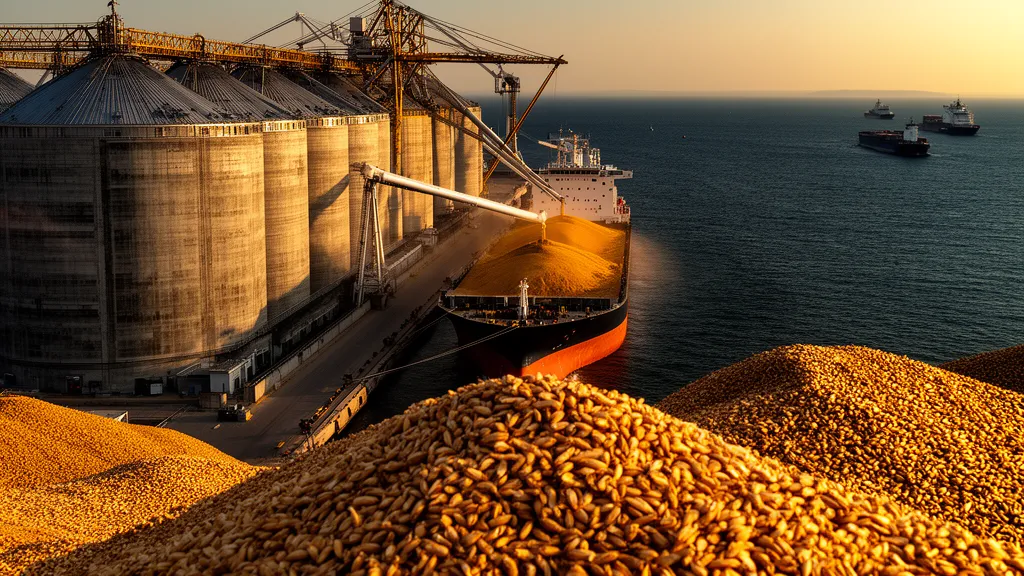
- Policy Shift: Russia introduced an additional tariff quota for grain exports outside the Eurasian Economic Union for the 2025/26 marketing year.
- Supply Outlook: Rosstat revised the 2025 grain harvest up to 141.2 million tonnes, signaling ample domestic supply and export potential.
- Base Quota Intact: The main 20 million tonne export quota remains in place from February 15 to June 30, 2025.
- Freight Sentiment: Neutral to slightly bullish impact on Black Sea grain freight markets as extra export volume could lift shipping demand.
Russia Expands Grain Export Capacity for 2025/26
The Russian government has approved an additional tariff quota for grain exports in the 2025/26 marketing year, targeting shipments to destinations outside the Eurasian Economic Union. The measure is designed to support domestic agricultural producers by opening up further export capacity on top of existing limits.
The main grain export quota remains set at 20 million tonnes for the 2025/26 season, covering the period from February 15 to June 30, 2025. The new supplementary quota will operate alongside this framework, although the government has not yet disclosed the specific volume of the additional allocation.
Harvest Outlook and Domestic Supply
The decision follows Rosstat’s upward revision of Russia’s projected 2025 gross grain harvest to 141.2 million tonnes. The higher crop estimate indicates robust domestic availability, providing the government with room to ease export constraints while maintaining food security.
According to the decree, current and projected stock levels are sufficient to cover internal consumption needs, which underpins the move to allow greater access to international markets for Russian grain exporters.
Implications for Black Sea Freight and Trade Flows
For freight markets, the announcement is neutral to slightly bullish for Black Sea grain routes. The additional quota signals confidence in export availability beyond the initial 20 million tonne cap, which could translate into higher seaborne volumes from Russian ports during the active export window.
While the exact size of the supplementary quota remains unspecified, any incremental tonnage is likely to increase competition for vessel capacity in the February–June corridor. Traders and shipowners should monitor follow-up regulations to gauge the real impact on regional pricing, loading programs, and chartering activity.
Depending on how aggressively the extra quota is utilized, regional grain prices could face pressure from increased supply, even as freight demand strengthens on key Black Sea export routes.
Source: Market Data
Leave a Reply