
Key Takeaways
- Policy Shift: Kazakhstan’s competition authority has recommended a gradual reduction of the €100/ton sunflower seeds export duty after deeming it economically unviable.
- Farmer Squeeze: Sunflower farmers face losses as processors deduct the full €100/ton duty from domestic purchase prices, while exports have fallen 20% and warehouses are overflowing.
- Trade Flows: A duty rollback could quickly release accumulated Kazakh supply into global markets, intensifying competition for Black Sea exporters, particularly in China-focused demand.
Market Update
Kazakhstan’s Agency for the Protection and Development of Competition (APDC) has concluded that the current sunflower seeds export duty regime is “incorrectly formulated and economically unviable.” Following a comprehensive audit, the APDC recommended a gradual reduction of the €100 per ton duty at a meeting of the Agrarian Committee in the Majilis.
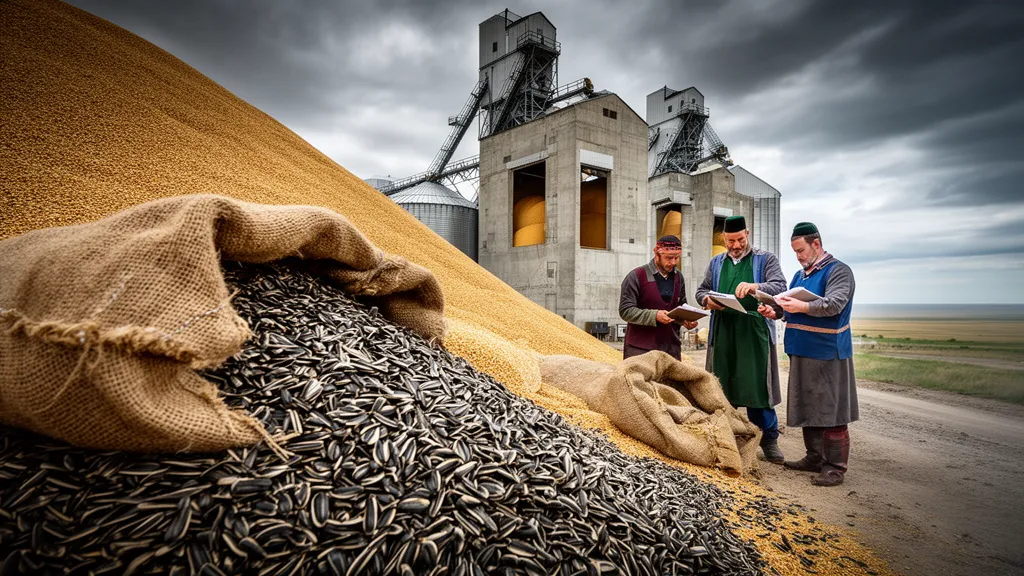
The export duty, introduced in 2023 by the Ministry of Trade and the Ministry of Agriculture, was intended to stimulate domestic processing but has instead generated severe market distortions. Committee member Nurzhan Ashimbetov reported that warehouses are overflowing with sunflower seeds, with excess volumes being stored outdoors as farmers struggle to secure profitable export channels.
Farmers in the Pavlodar region are among the hardest hit, operating at losses despite solid international demand, including from China. The audit found that processing plants deduct the €100 duty when purchasing sunflower seeds domestically, effectively shifting the full burden of the policy onto producers regardless of whether their product is exported or sold locally.
According to data from the competition authority, sunflower seed exports dropped by 20% by the end of 2024. While vegetable oil exports have risen, roughly 70% of these exports consist of unrefined, cold-pressed oil from primary processing rather than higher-value, deeply processed products. The government’s Interdepartmental Commission is expected to review the APDC’s recommendations in the near term.
| Indicator | Value | Notes |
|---|---|---|
| Sunflower seeds export duty | €100/ton | Implemented in 2023; under review for gradual reduction |
| Change in sunflower seed exports (by end-2024) | -20% | Reflects lower competitiveness and logistical bottlenecks |
| Share of unrefined oil in vegetable oil exports | ≈70% | Predominantly cold-pressed, primary-processed products |
Market Analysis: Black Sea Sunflower Seeds Outlook
A reduction in Kazakhstan’s export duty could quickly unlock additional sunflower seed volumes into global markets, with the Black Sea region likely to feel the most direct impact. The 20% decline in exports over 2024 represents meaningful tonnage that could return to trade flows once policy adjustments are confirmed.
For traders, this points to potential downside pressure on regional sunflower seed prices as Kazakh origins regain export competitiveness, especially against suppliers in Ukraine and Russia. The current oversupply and storage congestion in Kazakhstan suggest that sell-side interest could be front-loaded when restrictions ease.
Buyers with exposure to China or active execution channels into that market should monitor the Interdepartmental Commission’s decision and any implementation timeline closely. The episode underlines how protectionist measures, even when aimed at supporting domestic processing, can distort producer incentives and disrupt established Black Sea supply chains.
Source: Market Data
Leave a Reply