
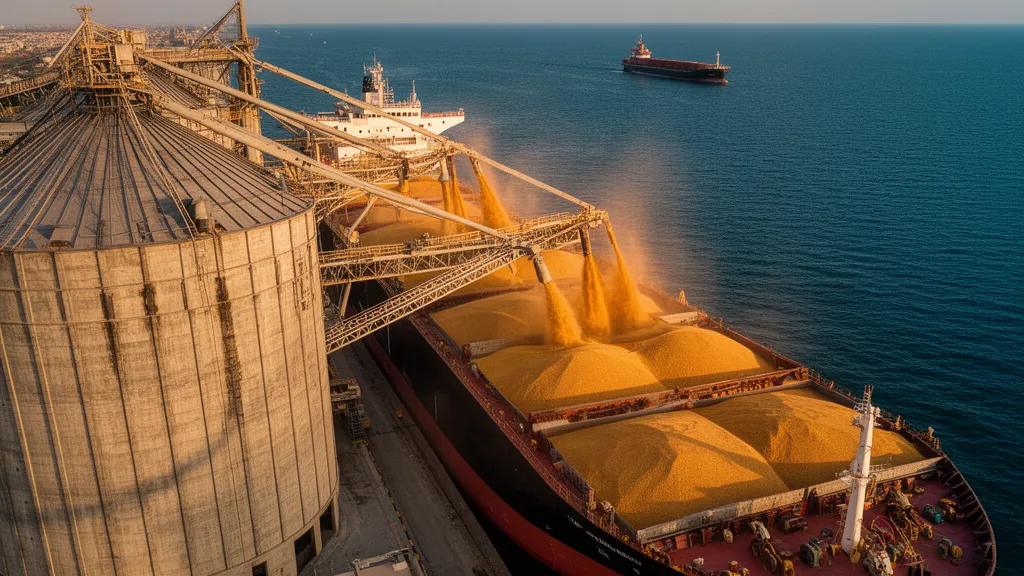
- Bullish: Turkey’s wheat import requirement doubling to 7.3 million tonnes in 2025/26 boosts demand for Black Sea exporters, especially Russia and Ukraine.
- Bearish: A 41% drop in Turkish flour exports and policy-driven constraints erode Turkey’s regional flour competitiveness, opening space for rival suppliers.
- Bullish: Russia’s pivot to overseas processing facilities supports long-term value-added export growth and more stable market access.
- Bearish: Drought-driven declines in Turkey’s wheat and barley harvests increase exposure to weather risk and import dependency.
Turkey: Wheat Production Crisis and Import Surge
Abnormally dry weather has pushed Turkey’s 2025/26 wheat production forecast down 15% to 16.3 million tonnes, with around 80% of the country’s wheat area dependent on rainfall. The lower harvest forces Turkey to return to historical import reliance, with wheat imports expected to more than double year-on-year to 7.3 million tonnes.
Roughly two-thirds of these wheat imports are expected to be processed into flour and pasta for re-export, underscoring Turkey’s continued role as a processing hub despite current headwinds. However, overall wheat exports are forecast at 6 million tonnes, down 1.3 million tonnes from the previous season, reflecting reduced durum availability and mounting challenges in the flour sector.
Turkish Flour Sector Under Pressure
Turkey’s flour milling industry, long a global leader, has faced a sharp reversal. From July 2024 to January 2025, flour exports fell 41% to just 1.44 million tonnes. The downturn is tied to multiple overlapping factors that have eroded Turkey’s competitive position in key regional markets.
- Policy constraint: The temporary suspension of the Inward Processing Regime (IPR) until March 2025 has blocked duty-free wheat imports for processing, squeezing mill margins and throughput.
- Loss of core market: Iraq, historically Turkey’s largest flour buyer, cut purchases by 64% after introducing new import duties and expanding its own domestic milling capacity.
- Rising competition: Egyptian flour producers have stepped into African and Middle Eastern markets traditionally dominated by Turkish exporters, signaling a potential long-term shift in trade flows.
The combination of policy shifts, market loss, and new competition is structurally bearish for Turkish flour exports. Even if the IPR suspension is lifted as scheduled, regaining lost market share may prove difficult where new suppliers have already established logistics and customer relationships.
Turkey: Coarse Grains and Domestic Price Impact
Weather stress is also visible in Turkey’s coarse grains balance. Barley production is forecast to fall to 5.1 million tonnes, a drop of around 2 million tonnes, driving barley imports up to 1.7 million tonnes to satisfy the livestock sector’s feed demand. In contrast, corn production is expected to rise 12% to 7.9 million tonnes thanks to better irrigation coverage, allowing corn imports to decline to 3.3 million tonnes.
| Commodity | 2025/26 Production | Year-on-Year Change | 2025/26 Imports | Year-on-Year Import Change |
|---|---|---|---|---|
| Wheat | 16.3 million tonnes | -15% | 7.3 million tonnes | More than double |
| Barley | 5.1 million tonnes | -2.0 million tonnes | 1.7 million tonnes | Higher to meet feed demand |
| Corn | 7.9 million tonnes | +12% | 3.3 million tonnes | Lower on stronger domestic crop |
Domestic consumers are facing higher costs despite official price controls. In Ankara and Istanbul, bread prices surged 50% by January 2026 to 12.5 liras (approximately $0.33) per loaf. The rise is being driven less by raw wheat prices and more by higher energy, logistics, and labor costs along the value chain.
| City | Bread Price per Loaf | Change vs. Previous Year | Approximate USD Value |
|---|---|---|---|
| Ankara | 12.5 liras | +50% | $0.33 |
| Istanbul | 12.5 liras | +50% | $0.33 |
Russia: Shift Toward Overseas Processing
Russia is responding to evolving global grain trade dynamics with a strategic pivot from pure bulk exports toward overseas processing. Agriculture Minister Oksana Luth has outlined plans to build flour mills and other grain-processing facilities in importing countries, allowing Russian grain to be processed locally rather than exported solely as raw commodity.
This strategy is designed to capture higher value-added margins and secure long-term access to key markets by embedding Russian investment and supply into local food systems. Government-level talks are underway to establish incentives and intergovernmental frameworks, with pilot projects expected to refine the operational and financial models for these overseas plants.
Russia’s agricultural export policy targets a 1.5x increase in export volumes versus 2021 levels by 2030. Export values have already risen 25% year-on-year, driven by greater shipments of value-added agricultural products rather than raw grain alone.
Russian Fertilizer Exports to China
Alongside grain and processed products, fertilizers are an increasingly important pillar of Russia’s agri-exports. In 2025, Russian mineral fertilizer supplies to China rose 6% to nearly 5 million tonnes, with the value of these shipments up 12% to about $1.6 billion. Potash fertilizers dominate this trade, accounting for 4.6 million tonnes of the total volume.
| Product | Export Volume to China (2025) | Value | Year-on-Year Change | Share of China’s Imports |
|---|---|---|---|---|
| Total mineral fertilizers | ~5.0 million tonnes | $1.6 billion | +6% volume, +12% value | 35% |
| Potash fertilizers | 4.6 million tonnes | Included above | Dominant share of volume | Major supplier |
Market Implications and Freight Outlook
Turkey’s doubling of wheat imports to 7.3 million tonnes is structurally bullish for Black Sea exporters, especially Russia and Ukraine, and will generate sustained demand for dry bulk freight through Q2–Q4 2025. At the same time, the 41% collapse in Turkish flour exports is bearish for Turkey’s regional dominance, creating room for competitors such as Egypt and potential Russia-linked overseas mills.
For logistics coordinators and shipowners, close monitoring of Turkey’s state and private wheat tender schedules will be critical, as timing and origin preferences will shape Black Sea vessel demand and pricing. Russia’s long-term push into overseas processing may gradually shift some trade flows from bulk grain to containerized or regional movements of flour and other processed products, evolving freight patterns but supporting overall export stability.
Source: Market Data
Leave a Reply