
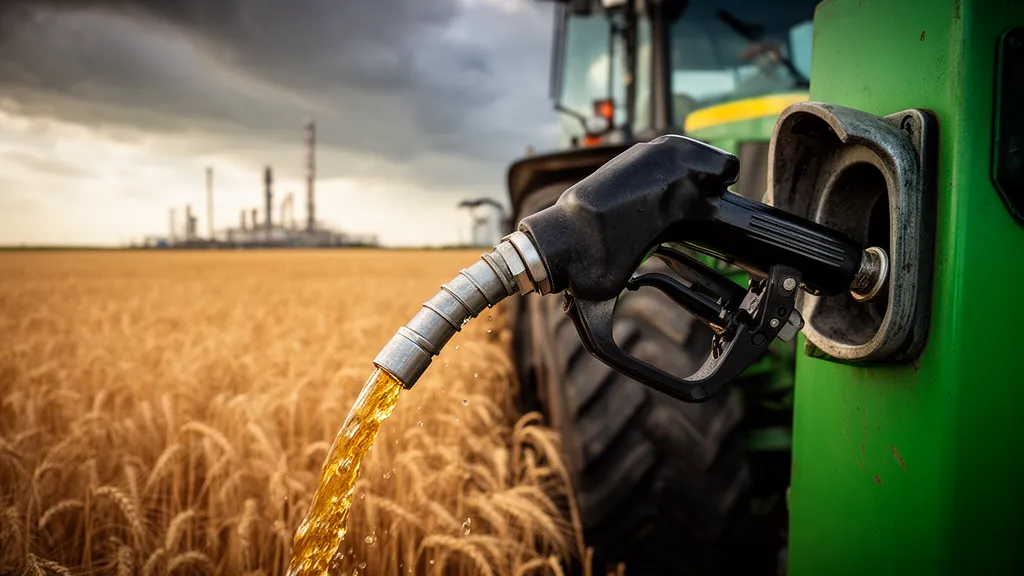
- Policy Focus: Russia is preparing mandatory exchange standards for small-scale wholesale fuel sales to let farms, gas stations, and industrial buyers access diesel and gasoline directly from producers.
- Cost Pressure: Early January 2026 diesel and gasoline price increases highlight persistent fuel cost pressure for agricultural and industrial consumers.
- Potential Relief: Cutting trader markups via direct producer-to-consumer exchange trading could modestly lower input costs, though the 1% production cap limits near-term impact.
Russia Proposes Fuel Exchange Reform
Russian Deputy Prime Minister Alexander Novak has tasked the Federal Antimonopoly Service, the Ministry of Energy, and the St. Petersburg Exchange with drafting mandatory exchange trading standards for small-scale wholesale fuel sales, defined as up to 1% of total production volume. The initiative is aimed at agricultural producers, independent gas stations, and industrial consumers that want to purchase diesel and gasoline directly from refiners.
The proposed framework would limit large-scale wholesale transactions, typically rail shipments from refineries to oil depots, while creating clearer mechanisms for small-scale wholesale via road deliveries from depots to end users. By structuring this segment on the exchange, authorities seek to bypass traditional trader networks and narrow intermediary margins.
Fuel Price Snapshot
| Product | Price (RUB/liter) | Period | Change (%) |
|---|---|---|---|
| Diesel | 76.94 | Jan 1–12, 2026 | +1.3% |
| Gasoline | 65.39 | Jan 1–12, 2026 | +1.2% |
Rosstat data show Russian diesel prices rising 1.3% between January 1–12, 2026 to 76.94 rubles per liter, while gasoline increased 1.2% to 65.39 rubles per liter over the same period. These moves come despite existing rules that require oil companies to sell 15% of gasoline and 16% of diesel fuel through exchanges, highlighting that current mechanisms have not fully contained price pressures.
Implications for Agricultural Input Costs
For Black Sea and broader Russian agricultural producers, the reform is potentially bearish for diesel input costs, as direct purchases from producers via the exchange could compress trader markups. However, the relatively low ceiling of 1% of production earmarked for small-scale wholesale limits the immediate scope of savings.
Diesel remains a major cost driver for fieldwork and logistics during planting and harvest, so even incremental reductions in markups could meaningfully support margins if the new standards are enforced effectively. Agricultural logistics operators and farm enterprises should track the upcoming government meeting on petroleum product exchange trading for clarity on implementation timelines and volumes.
Source: Market Data
Leave a Reply