
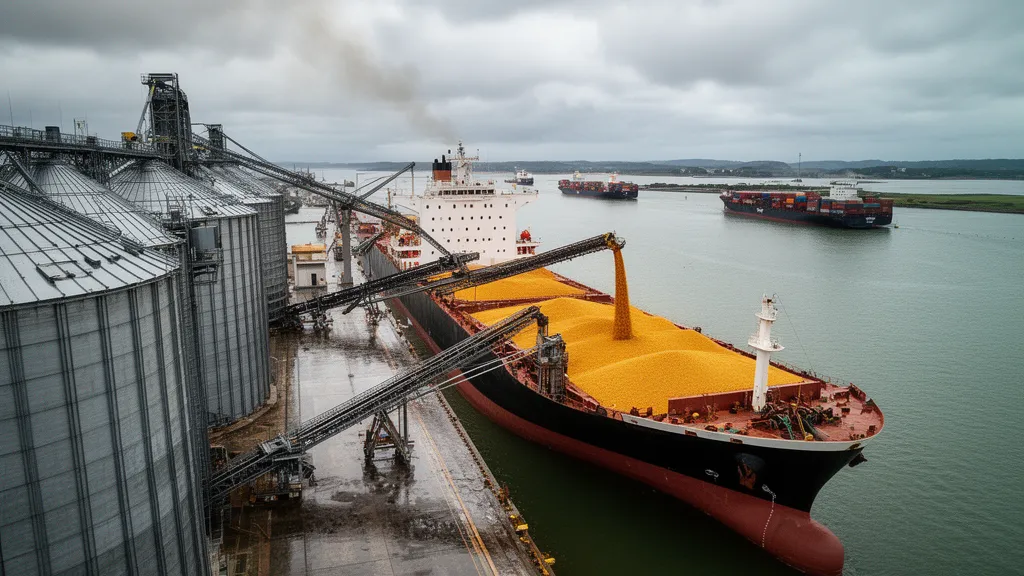
- Record January exports: Brazil’s soybean exports are forecast at 3.73 million tonnes, surpassing the previous January record of 2.85 million tonnes in 2024.
- Delayed shipments: December rain disruptions shifted volumes into January, with only 0.6% of the 2025/26 crop harvested by January 8 but supported by large carryover stocks.
- Strong production outlook: Brazil’s 2025/26 soybean crop is projected at 177 million tonnes, with exports seen at 113 million tonnes on expanding acreage and firm Chinese demand.
- Crush and by-products: Soybean processing will yield 46.1 million tonnes of meal (over half for export) and 12.3 million tonnes of oil, aided by higher biodiesel blend mandates.
- Black Sea impact: Expanded Brazilian supply is neutral to bearish for Black Sea soybean and meal exporters, though reduced competition in Russia offers some regional support.
Brazil Soybean Export and Production Snapshot
The Brazilian exporters association Anec has revised its January soybean export forecast to 3.73 million tonnes, significantly above both its prior weekly estimate and the January 2024 record of 2.85 million tonnes. Early January 2025 shipments totaled just 1.07 million tonnes, highlighting the front-loaded impact of revised vessel lineups and rescheduled loadings.
Anec attributes the sharp upward revision to changes in shipping schedules, as vessel composition typically shifts during the month. Heavy rains in December disrupted logistics and delayed loadings, pushing a portion of December’s export program into January. As of January 8, only 0.6% of the 2025/26 soybean crop had been harvested, but substantial carryover stocks are enabling Brazil to sustain elevated shipment volumes despite the slow start to fieldwork.
Production, Export, and Crushing Outlook
USDA’s Foreign Agricultural Service projects Brazil’s 2025/26 soybean crop at 177 million tonnes, up 3.2% year-on-year, underpinned by an expansion in planted area to 49.1 million hectares. Exports are forecast at 113 million tonnes, a 3.7% increase, driven largely by continued strength in Chinese demand. From January to November, Brazil’s soybean shipments to China were 16.5% higher than in the previous season, reinforcing Brazil’s role as China’s dominant supplier.
On the processing side, Brazil is expected to produce 46.1 million tonnes of soybean meal, with more than 52% (around 24 million tonnes) earmarked for export. Soybean oil output is estimated at 12.3 million tonnes, supported by the increase in the biodiesel blending mandate from B14 to B15, with the possibility of a further rise to B16 in March. Anec has also raised its January corn export forecast from 2.85 million to 3.27 million tonnes, highlighting broad-based strength in Brazil’s grain and oilseed export program.
| Indicator | 2024/25 or Latest | Comparison / Notes |
|---|---|---|
| January soybean exports (forecast) | 3.73 million tonnes | Record; vs 2.85 million tonnes in January 2024 |
| January soybean exports (early shipments) | 1.07 million tonnes | Shipped in early January 2025 |
| 2025/26 soybean production | 177 million tonnes | +3.2% year-on-year |
| Soybean export forecast 2025/26 | 113 million tonnes | +3.7%, driven by Chinese demand |
| Planted soybean area | 49.1 million hectares | Expanded area supports higher output |
| Harvest progress (as of Jan 8) | 0.6% of 2025/26 crop | Slow start, offset by large carryover stocks |
| Soybean meal production | 46.1 million tonnes | Over 52% (24 million tonnes) for export |
| Soybean oil production | 12.3 million tonnes | Backed by biodiesel mandate B14→B15, potential B16 |
| January corn export forecast | 3.27 million tonnes | Up from 2.85 million tonnes |
| Brazil soybean exports to China (Jan–Nov) | +16.5% | Increase vs previous season |
Implications for Black Sea Soybean and Meal Exporters
The combination of record January Brazilian shipments and a robust 2025/26 production outlook is neutral to bearish for Black Sea soybean and meal exporters, as global supply availability improves and Brazilian beans continue to dominate Chinese demand. While this intensifies competition for alternative origins, some pressure may be offset by reduced U.S. export presence in certain windows.
Black Sea exporters should closely track Brazilian crushing margins and domestic soybean oil demand. Rising biodiesel blending requirements could absorb more oil and indirectly tighten meal export availability later in the marketing year, offering potential support for international meal prices. Additionally, a 63% decline in Brazilian soybean exports to Russia reduces direct competition in that regional market, providing limited but notable support to Black Sea exporters’ positioning.
Source: Market Data
Leave a Reply