
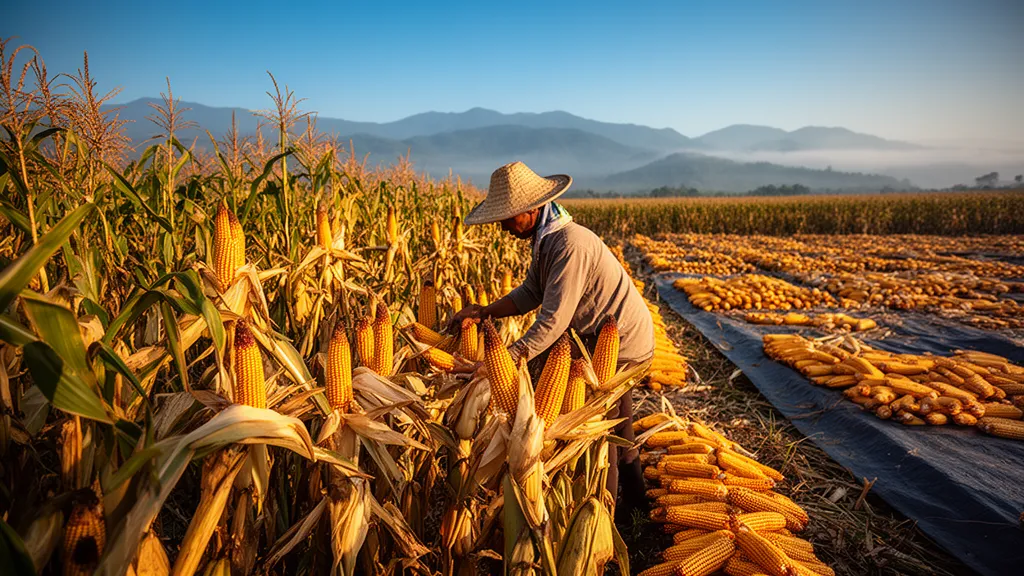
- Thailand tightens corn import rules: From January 1, feed corn imports must be certified as originating from non-residue-burning production.
- Imports already down sharply: Corn imports fell 27.59% to 1.46 million tonnes in January–November 2025, led by Myanmar at 82% of volume.
- Regional flows at risk: New environmental compliance could further restrict Southeast Asian corn shipments into Thailand.
- Black Sea impact: Neutral to slightly bullish, with potential indirect demand if regional suppliers fail to meet sustainability standards.
Thailand Tightens Corn Import Rules
Thailand has introduced new regulations requiring corn importers to submit documentation to the Thai Customs Service certifying that imported feed corn originates from suppliers that do not use crop residue burning practices. The measure, effective January 1, is aimed at curbing cross-border PM2.5 air pollution caused by agricultural burning in neighboring countries.
The Ministry of Commerce’s draft notification specifically targets smoke and smog generated by corn plantation burning in nearby origins, reflecting a broader policy shift toward environmental accountability in regional agricultural trade.
Trade Flows and Import Trends
Thai corn imports have already shown significant contraction ahead of the new rules, signaling tighter regional balance and potential sensitivity to additional regulatory constraints.
| Supplier Country | Jan–Nov 2025 Volume (tonnes) | Share of Total Imports |
|---|---|---|
| Total Corn Imports | 1,460,000 | 100% |
| Myanmar | 1,200,000 | 82% |
| Laos | 206,200 | 14% |
| Cambodia | 11,375 | 1% |
| Year-on-Year Change (Total) | -27.59% | — |
From January to November 2025, Thailand imported 1.46 million tonnes of corn, down 27.59% year-on-year. Myanmar supplied about 1.2 million tonnes, accounting for roughly 82% of total volumes, with Laos contributing 206,200 tonnes and Cambodia 11,375 tonnes. The concentration of supply in neighboring countries heightens the impact of any environmental compliance bottlenecks on Thai feed markets.
Market Impact and Black Sea Outlook
For global markets, Thailand’s certification requirement reinforces the trend toward sustainability-linked trade conditions but does not directly affect Black Sea corn flows in the near term. The immediate impact is likely to be regional, potentially tightening Southeast Asian supply further if exporters struggle to demonstrate compliance with no-burn standards.
For Black Sea exporters, the signal is neutral to slightly bullish: constrained regional availability and possible certification hurdles for Thailand’s traditional suppliers could open indirect demand opportunities, particularly if Thai buyers seek alternative origins capable of meeting environmental criteria. However, Thailand’s strong preference for nearby suppliers limits the scale and speed of any shift toward Black Sea corn.
Source: Market Data
Leave a Reply