
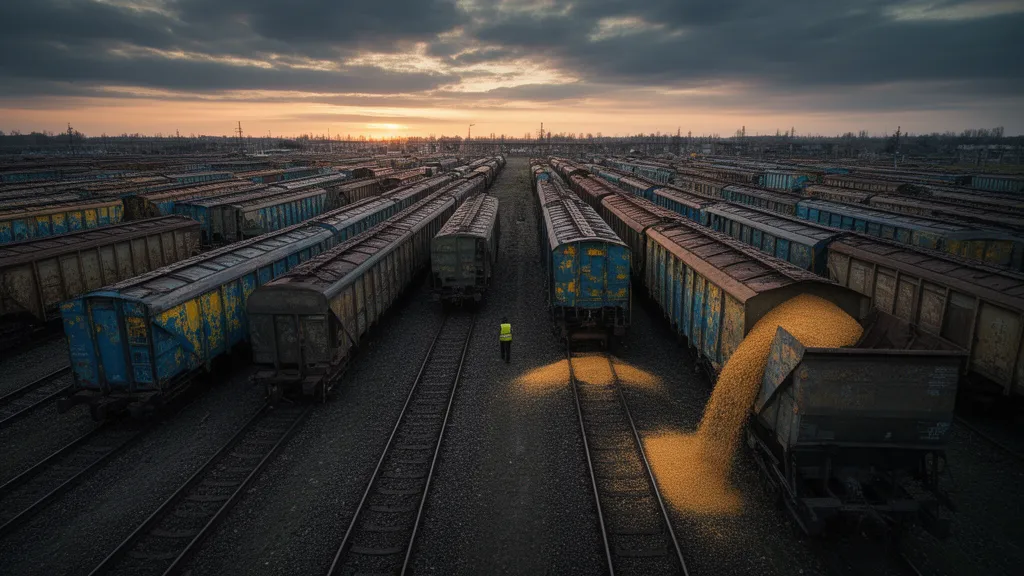
- Structural capacity cut: Ukrzaliznytsia’s CTL branch plans to reduce its active grain car fleet to around 800 units by end-2026, tightening rail logistics for agricultural exports.
- Selective repairs: Only grain cars backed by confirmed long-term commitments will be repaired in 2025, limiting availability for spot or short-term shippers.
- Contractual imperative: Agricultural exporters are being pushed toward long-term rail contracts to secure capacity and mitigate the risk of higher spot rates and delays.
- Neutral to bearish for shippers: Reduced rolling stock and seasonal fleet usage increase competition for cars during peak harvest and export periods.
Market Update
The Center for Transport Logistics (CTL), a branch of JSC Ukrzaliznytsia, announced on January 8 that its operating grain-carrying fleet will shrink to approximately 800 cars by the end of 2026. Branch head Igor Tribis shared this outlook during an online meeting with agricultural market participants, highlighting a structural adjustment in Ukraine’s grain rail logistics.
Tribis noted that the CTL grain car fleet operates on a highly seasonal basis, being actively utilized only for several months each year. Reflecting this pattern, CTL will limit its 2025 repair program to rolling stock with confirmed transportation commitments, effectively prioritizing cars tied to long-term or guaranteed contracts. As part of this shift, the branch is urging grain shippers to secure capacity in advance through longer-term agreements to ensure reliable access to rail transport for agricultural products.
Analysis and Impact on Grain Shippers
The planned reduction in grain car availability is neutral to bearish for Ukrainian grain shippers. A smaller, seasonally deployed fleet will intensify competition for rolling stock, particularly during harvest and peak export windows. Market participants without pre-arranged rail contracts risk facing higher spot freight rates, scheduling constraints, or logistical bottlenecks.
For traders and exporters, the announcement underscores the strategic importance of early capacity planning and long-term freight partnerships with Ukrzaliznytsia’s CTL branch. Those who commit volumes in advance and secure contractual access to grain cars are likely to benefit from more predictable logistics, while opportunistic or purely spot market users may see reduced flexibility and potentially higher costs as the fleet contraction progresses toward 2026.
Source: Market Data
Leave a Reply