
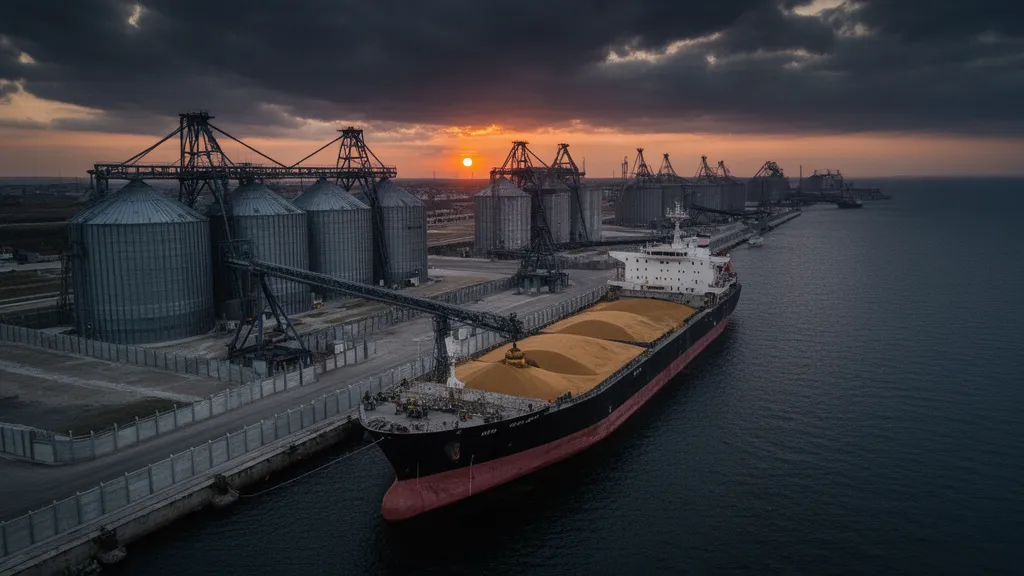
- Drone attacks on Ukrainian port infrastructure have surged more than tenfold in 2024, now occurring roughly every other day.
- Despite escalating threats, the Ukrainian Sea Ports Authority is reinforcing security while keeping ports operational and modernizing infrastructure.
- Black Sea freight remains viable but with elevated risk premiums, higher insurance costs, and potential cargo diversion to Romanian and Bulgarian ports.
Ukrainian Port Security Escalation
Drone attacks targeting Ukrainian port infrastructure have intensified sharply in 2024, with the frequency of strikes rising more than tenfold compared with last year. According to Mykola Kravchuk, head of the Ukrainian Sea Ports Authority, facilities are now coming under attack on an almost every-other-day basis, significantly raising the operational risk environment for Black Sea maritime logistics.
Speaking at the UKRAINIAN TRANSPORT FORUM 2026 in Odesa, Kravchuk outlined an ongoing program of enhanced protection across port assets. The Sea Ports Authority is rolling out strengthened security protocols and infrastructure hardening measures designed to preserve continuity of operations despite the elevated threat level.
Ukrainian ports continue to function as the backbone of the country’s export system, underpinning critical Black Sea freight flows. Their sustained operational status underscores both their strategic importance and the authorities’ determination to keep export corridors open under increasingly challenging conditions.
Market Impact
Market Impact: Bearish for Freight Costs, Neutral for Capacity
The sharp rise in attack frequency on Ukrainian port infrastructure is injecting higher risk premiums into Black Sea freight markets. Shipowners and charterers face mounting uncertainty around vessel safety and loading schedules, which is likely to translate into higher war-risk and insurance surcharges for calls at Ukrainian ports.
Operational disruptions from intermittent attacks may prompt some cargo owners to redirect volumes toward alternative gateways in Romania and Bulgaria. Any sustained diversion of flows could tighten berth availability and logistics capacity at these regional ports, potentially lifting local freight rates even if overall export volumes remain broadly unchanged.
Nonetheless, with Ukrainian ports still functioning and actively reinforcing security, the Black Sea export corridor remains open. Market participants should treat the route as viable but priced on a higher risk-adjusted basis, with freight costs bearing the brunt of the impact rather than immediate, large-scale capacity losses.
Source: Market Data
Leave a Reply