
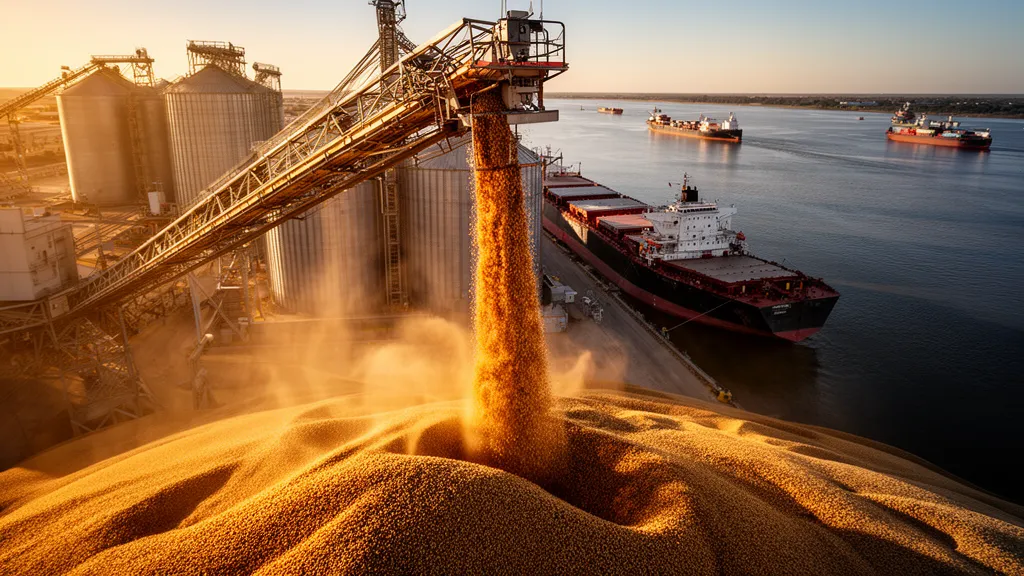
- Argentina will cut its wheat export tax from 7.5% to 5.5% starting June 2025, improving its competitiveness in global wheat markets.
- Proposed soybean export tax cuts of 0.25–0.5 percentage points from January 2027 remain conditional on fiscal performance.
- The move signals President Milei’s push to stimulate agricultural exports, potentially intensifying competition in shared demand markets from late 2025 onward.
Argentina Lowers Wheat Export Tax
Argentina has announced a 2-percentage-point reduction in its wheat export tax, lowering the rate to 5.5% from 7.5%, effective June 2025. President Javier Milei unveiled the measure on May 21 during an address at the Buenos Aires Grain Exchange, aiming to strengthen Argentina’s price competitiveness in global wheat trade.
In addition to wheat, Milei outlined a potential path for soybean export tax reductions, proposing cuts of between 0.25 and 0.5 percentage points starting in January 2027. These soybean tax changes are contingent on the country’s broader tax revenue performance, reflecting the administration’s attempt to balance fiscal needs with export-led growth.
The president also signaled that further tax relief measures targeting the automotive and petrochemical sectors would be announced in the coming days, reinforcing the administration’s broader pro-business and pro-export policy stance.
Implications for Global Wheat Trade
Neutral for Black Sea Wheat Market in the Near Term. While the wheat export tax cut materially improves Argentina’s ability to offer more competitive FOB prices, the immediate impact on Black Sea exporters is limited. Argentina’s May–September marketing window coincides with a relatively lower-activity period for Black Sea shipments, reducing direct short-term competition.
However, the policy underscores Argentina’s commitment to an aggressive agricultural export strategy. As Argentina’s 2025/26 crop moves into the global pipeline, competition is likely to increase in overlapping destination markets such as North Africa and the Middle East, especially into calendar Q4 2025. Lower fiscal burdens may enable Argentine exporters to issue more aggressive offers, particularly if production and quality outcomes are favorable.
Black Sea suppliers should closely monitor Argentina’s harvest progress, cost structure, and export pace, as any combination of strong yields and lower taxes could pressure prices in key tender markets. The announced and proposed tax changes also serve as a signal that Argentina may continue to prioritize export-friendly policy adjustments across the broader agricultural complex.
Source: Market Data
Leave a Reply