
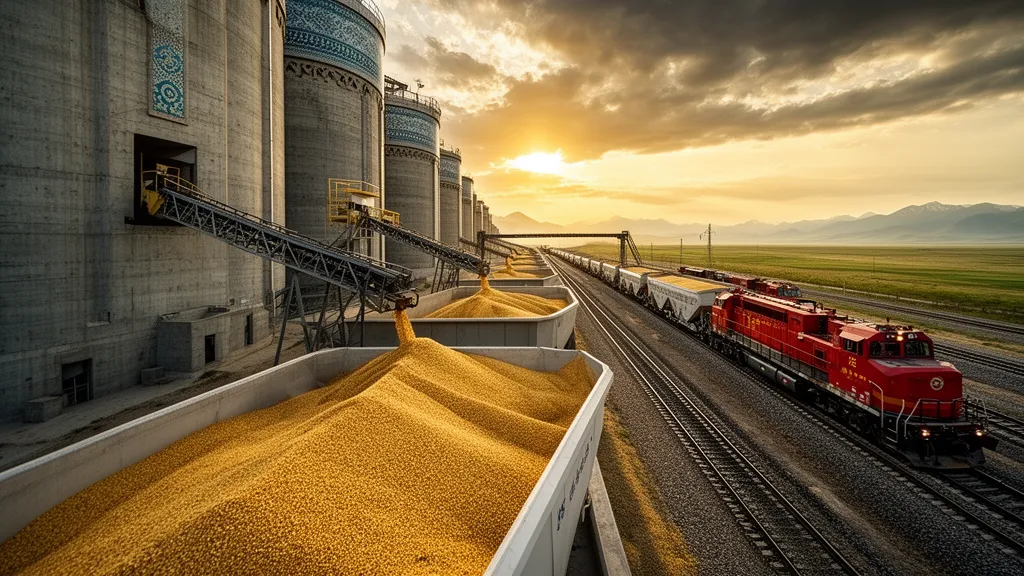
- Trade Expansion: Shandong Hi-Speed is in talks with Kazakhstan’s Food Contract Corporation to significantly scale up grain and feed meal imports, including potential forward financing.
- Export Surge: Kazakhstan’s feed meal exports to China jumped 137% year-on-year in Sep–Feb 2025/26, reinforcing China’s role as the dominant buyer.
- Strategic Shift: Growing eastbound flows may ease competition in some Black Sea destinations and create new arbitrage opportunities in grain and oilseed markets.
China–Kazakhstan Feed Meal Trade Update
JSC NC Food Contract Corporation hosted a delegation from Chinese firm Shandong Hi-Speed in Astana to discuss expanding agricultural trade flows. The Chinese side signaled strong interest in scaling up grain and feed meal purchases from Kazakhstan, with talks also covering forward financing mechanisms to underpin larger shipment volumes.
This dialogue builds on a cooperation memorandum signed in fall 2025, which formalized collaboration on grain, feed, and oilseed crop supplies. Under its agricultural export consolidation program, Food Contract Corporation has already delivered around 23,000 tons of feed meal to China.
Export Dynamics and Market Impact
China has solidified its position as the dominant destination for Kazakhstan’s feed meal exports. According to APK-Inform data citing official statistics, shipments reached 1.8 million tons during September–February 2025/26, compared with 760,000 tons over the same period in 2024/25, a year-on-year increase of 137%.
| Period | Destination | Feed Meal Exports (tons) | Y/Y Change |
|---|---|---|---|
| Sep–Feb 2024/25 | China | 760,000 | – |
| Sep–Feb 2025/26 | China | 1,800,000 | +137% |
| Cumulative to date | China (via Food Contract Corporation) | 23,000 | N/A |
The sharp growth in Kazakhstan’s feed meal exports underscores the strengthening trade corridor between Central Asia and East Asia. For Black Sea grain and oilseed markets, higher eastbound flows from Kazakhstan could ease competition in some overlapping destinations, while also opening arbitrage opportunities where Kazakh volumes displace other regional suppliers.
Negotiations on forward financing suggest Chinese buyers are actively securing long-term supply amid firm global demand for feed ingredients. This approach can support regional price structures for substitute products in the Black Sea basin, as China locks in volumes and potentially smooths export flows over the marketing year.
Source: Market Data
Leave a Reply