
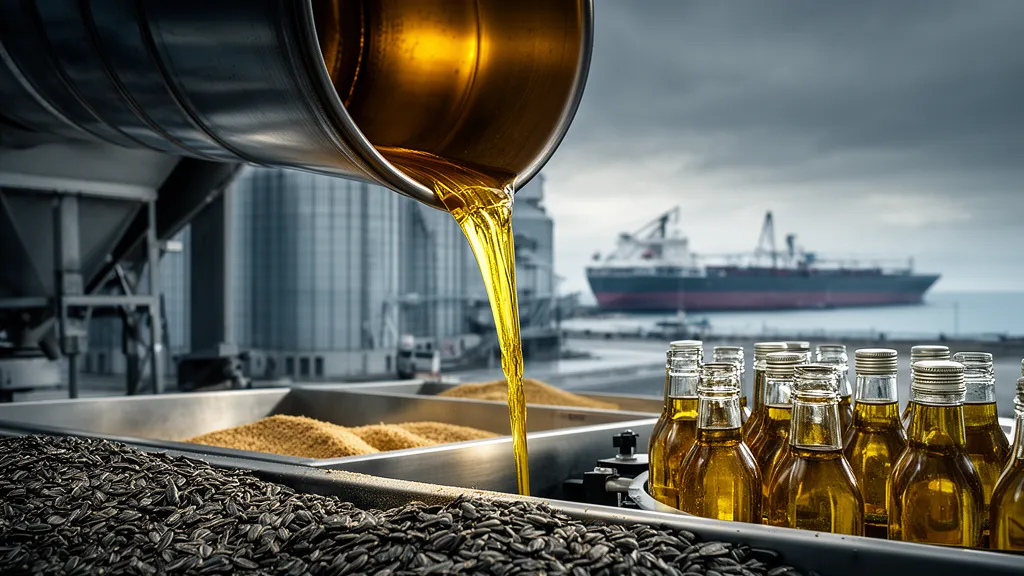
- Russia raises sunflower oil export price benchmark by 10%, from 82,500 to 90,750 rubles/ton, increasing duty costs for exporters.
- Sunflower meal base export price also climbs 10%, from 15,875 to 17,463 rubles/ton, directly lifting formula-based export duties.
- Higher export duties are bearish for Russian exporters, potentially slowing shipments and pressuring Black Sea competitiveness amid strong global vegoil prices.
Russia Raises Sunflower Oil and Meal Export Price Benchmarks
The Russian government has increased the base export prices used to calculate duties on sunflower oil and sunflower meal, tightening the cost environment for exporters and potentially reshaping Black Sea competitiveness in the near term.
Details of Resolution No. 460
Under Resolution No. 460, published on April 23, 2026, the base export price for sunflower oil rose by 8,250 rubles per ton to 90,750 rubles/ton, a 10% increase from the prior benchmark of 82,500 rubles/ton. Sunflower meal saw a proportional adjustment, with the base price rising 1,588 rubles per ton to 17,463 rubles/ton from 15,875 rubles/ton. The resolution took effect immediately upon publication on the official legal information portal.
| Commodity | Previous Base Price (RUB/ton) | New Base Price (RUB/ton) | Absolute Change (RUB/ton) | % Change |
|---|---|---|---|---|
| Sunflower Oil | 82,500 | 90,750 | +8,250 | +10% |
| Sunflower Meal | 15,875 | 17,463 | +1,588 | +10% |
Market Impact and Export Economics
These revised base prices are central to Russia’s formula-based export duty calculations. A 10% uplift in benchmarks will translate into higher effective export duties, compressing margins for sunflower oil and meal exporters. The adjustment is broadly bearish for Russian export flows, as higher duties may slow the pace of shipments while traders reassess netbacks and renegotiate forward commitments.
In the current environment of elevated global vegetable oil prices, the move signals Russia’s intent to capture additional fiscal revenue from its sunflower complex. However, the higher duty burden could erode the price competitiveness of Black Sea-origin sunflower oil and meal relative to other exporters, potentially diverting some incremental demand to alternative origins if buyers resist higher offer levels.
Outlook
In the short term, the market may see a recalibration of export programs as traders and crushers factor in the new duty structure. Any sustained pressure on Russian FOB competitiveness could support rival origins and underpin global vegetable oil prices, particularly if buyers seek to diversify away from higher-taxed Russian volumes.
Source: Market Data
Leave a Reply