
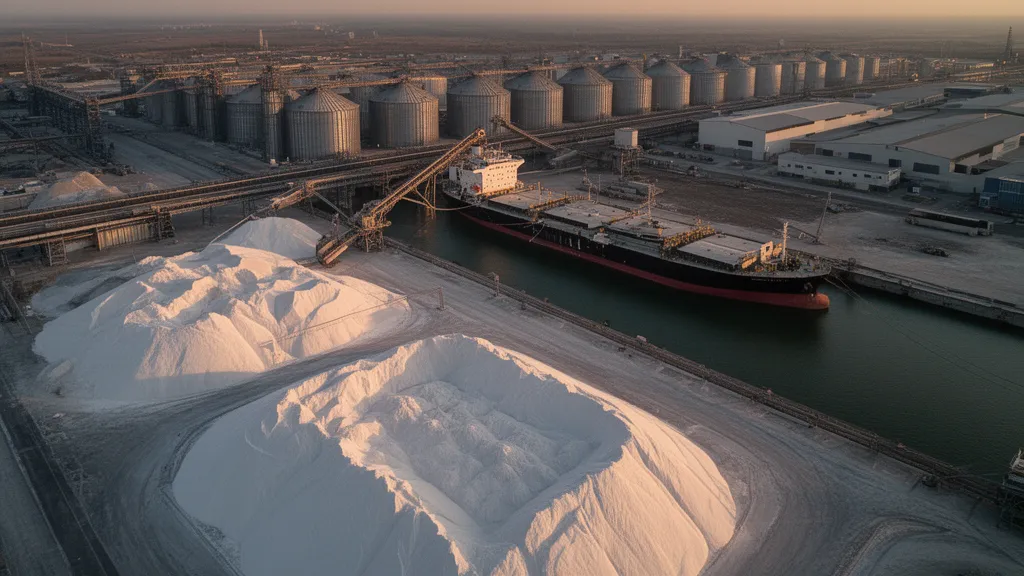
- Supply Constraint: Russia sets a 20 million ton fertilizer export quota for June–November 2026, limiting global availability.
- Domestic Priority: Quotas aim to secure sufficient fertilizer supplies for Russian farmers and feed producers during peak demand.
- Market Impact: Tighter export volumes may support higher global fertilizer prices and raise input costs for competing grain regions.
Russia’s 2026 Fertilizer Export Quota Overview
The Russian government has introduced mineral fertilizer export quotas totaling 20 million tons for the period from June 1 to November 30, 2026. The measure is designed to prioritize domestic supply during the peak agricultural application season while still allowing controlled exports to global markets.
Quota Breakdown by Fertilizer Type
| Fertilizer Type | Allocated Volume (tons) |
|---|---|
| Nitrogen fertilizers | 8.7 million+ |
| Ammonium nitrate | 4.2 million+ |
| Complex fertilizers | 7 million+ |
| Total quota | 20 million |
The quota allocates over 8.7 million tons to nitrogen fertilizers, more than 4.2 million tons to ammonium nitrate, and over 7 million tons to complex fertilizers, reflecting the key product groups supporting crop yield optimization.
Exemptions and Policy Objectives
Deliveries to Abkhazia and South Ossetia, international transit shipments through Russian territory, and humanitarian aid are exempt from the quota system. According to the government press service, the primary objective is to safeguard domestic availability for agricultural producers and feed manufacturers during the main application window.
Market Implications for Grain and Fertilizer
The June–November 2026 quota period coincides with critical pre-planting and growing stages for Black Sea and Northern Hemisphere crops. Domestic Russian farmers should benefit from more secure fertilizer supplies, potentially supporting stable or higher crop production. For international buyers, constrained Russian export volumes could tighten global fertilizer markets, placing upward pressure on prices and input costs in competing grain-exporting regions.
Overall, the policy reinforces Russia’s focus on domestic food security and internal market stability, while adding another layer of supply risk for global fertilizer consumers that rely on Black Sea-origin product.
Source: Market Data
Leave a Reply