
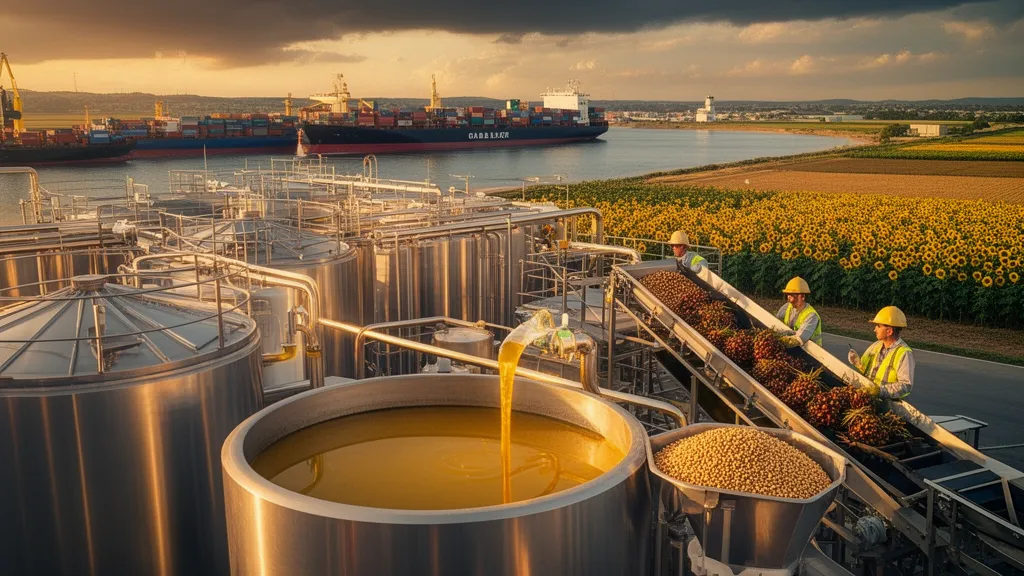
- Biodiesel-driven demand: Global vegetable oil use for biodiesel is projected to rise 11% to a record 48 million tonnes by 2026, tightening balances across the vegoil complex.
- Soybean oil outperforms: Soybean oil biodiesel demand is expected to climb 16% (+2.3 million tonnes) to 16.9 million tonnes, showing the strongest absolute growth among major oils.
- Palm oil remains dominant: Palm oil will retain its lead as the main biodiesel feedstock, reaching 21.5 million tonnes of demand by 2026.
- Crude oil linkage: Higher crude oil prices and Middle East tensions are accelerating the shift toward vegetable oil-based biofuels, lifting vegoil price sensitivity to energy markets.
- Supportive for Black Sea sunflower oil: Rising palm and soybean oil prices may push buyers toward alternative feedstocks, providing a neutral-to-bullish backdrop for Ukrainian and Russian sunflower oil.
Market Update: Biodiesel Demand Reshapes Vegetable Oil Flows
Global biodiesel feedstock consumption for palm, soybean, and rapeseed oils is projected to reach 48 million tonnes in 2026, an 11% increase from current levels and the highest utilization rate in several years, according to Oil World data. This growth underscores the structural shift toward vegetable oil-based biofuels amid elevated crude oil prices and ongoing geopolitical tensions in the Middle East.
Soybean oil is set to register the largest absolute demand increase, adding 2.3 million tonnes annually to reach 16.9 million tonnes by 2026, equivalent to a 16% year-on-year rise in biodiesel use. Palm oil will remain the dominant biodiesel feedstock globally, with consumption projected at 21.5 million tonnes, particularly anchored by Asian blending mandates and export-oriented biodiesel programs.
The March rally in crude oil prices has already transmitted into vegetable oil markets, with soybean oil showing the highest price elasticity to energy due to its heavy reliance on biodiesel demand. Palm oil prices have also strengthened, reflecting their central role in Asia’s biodiesel mix. These moves are beginning to reshape import strategies as major buyers reassess relative value and feedstock availability.
Projected Biodiesel Feedstock Demand by 2026
| Vegetable Oil | Biodiesel Use 2026 (million tonnes) |
Change vs. Current (million tonnes) |
Change vs. Current (%) |
|---|---|---|---|
| Soybean oil | 16.9 | +2.3 | +16% |
| Palm oil | 21.5 | n/a | n/a |
| Rapeseed oil & other major oils | 9.6 | n/a | n/a |
| Total (palm, soybean, rapeseed) | 48.0 | +4.8* | +11% |
*Implied aggregate increase based on Oil World’s 11% growth projection from current levels.
Analysis: Implications for Black Sea Sunflower Oil
The projected surge in biodiesel-driven demand for palm, soybean, and rapeseed oils is indirectly supportive for Black Sea sunflower oil. As key biodiesel feedstocks tighten and prices firm, some buyers may pivot toward alternative oils, including sunflower oil from Ukraine and Russia, particularly where technical specifications allow substitution in biodiesel blends or industrial applications.
For Ukrainian exporters, this evolving demand structure offers a potential avenue to expand market share, especially if soybean and palm oil prices remain elevated relative to sunflower oil. However, the ability to capitalize on this opportunity will depend on logistical capacity, crush margins, and the flexibility of downstream biodiesel mandates to incorporate sunflower oil.
Structurally, the biofuel transition places a higher floor under the entire vegetable oil complex, limiting downside for Black Sea sunflower oil despite regional risks. Exporters in Ukraine and Russia should monitor relative price spreads versus palm and soybean oil, as well as freight and insurance costs, to gauge when sunflower oil becomes a competitive biodiesel feedstock substitute.
Source: Market Data
Leave a Reply