
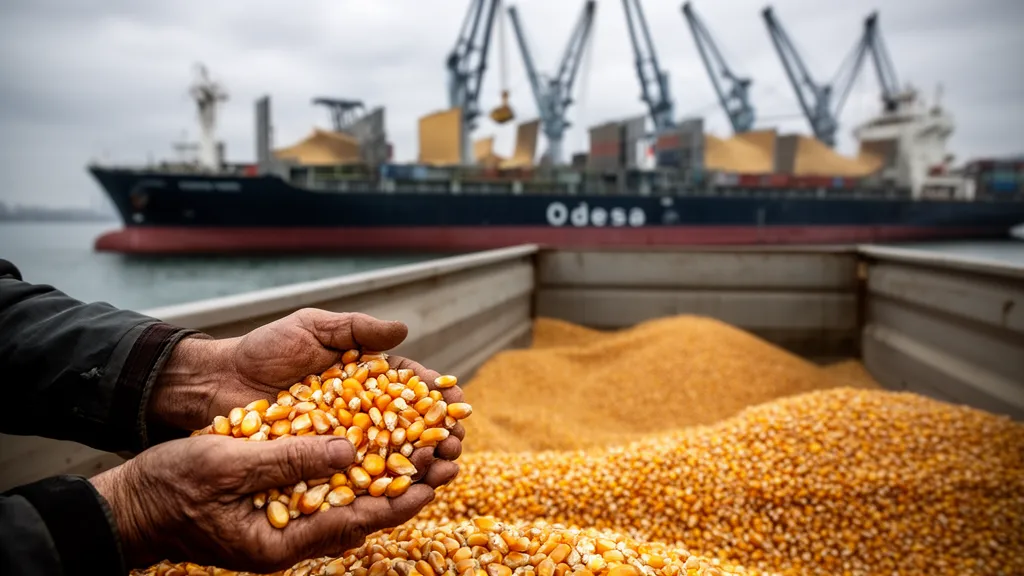
- Domestic strength: Ukrainian feed corn prices rose to UAH 9,000–10,300/t CPT on tight farmer selling and strong demand from traders and local consumers.
- Export weakness: Port prices slipped by USD 3–4/t to USD 207–214/t CPT-port, signaling softer international demand and limiting further domestic gains.
Market Update
Ukraine’s feed corn market extended its upward trend last week, with domestic prices increasing across key regions. Most trades were concluded in the UAH 9,000–9,600/t CPT range, while the southern region saw levels peak at around UAH 10,300/t CPT.
Firm buying interest from both traders and domestic consumers underpinned the rally, as farmers continued to limit sales despite the harvest period. This constrained supply backdrop has provided solid fundamental support to domestic price levels.
In contrast, the export market moved lower. Corn prices at Ukrainian ports fell by USD 3–4/t, settling between USD 207–214/t CPT-port. This decline in export quotations exerted downward pressure on the broader market and curtailed the upside potential for domestic prices.
| Market Segment | Price Range | Currency / Basis | Weekly Change |
|---|---|---|---|
| Domestic feed corn (most regions) | 9,000–9,600 | UAH/t CPT | Higher |
| Domestic feed corn (south) | Up to 10,300 | UAH/t CPT | Higher |
| Export corn (ports) | 207–214 | USD/t CPT-port | -3 to -4 USD/t |
Analysis
Market Sentiment: Mixed (Bullish Domestic / Bearish Export)
The Ukrainian corn market is currently split between a firm domestic environment and a softer export side. Internally, farmer reluctance to sell is tightening available supply, allowing prices to rise even during harvest and keeping domestic consumption well covered at higher levels.
At the same time, easing port prices point to weaker external demand or stronger competition from other origins. This disconnect suggests that while domestic prices can remain supported in the short term, any pickup in farmer selling or further deterioration in export values could quickly cap or reverse current domestic strength. Traders should closely track farmer marketing behavior and global price trends when timing purchases and sales.
Source: Market Data
Leave a Reply