
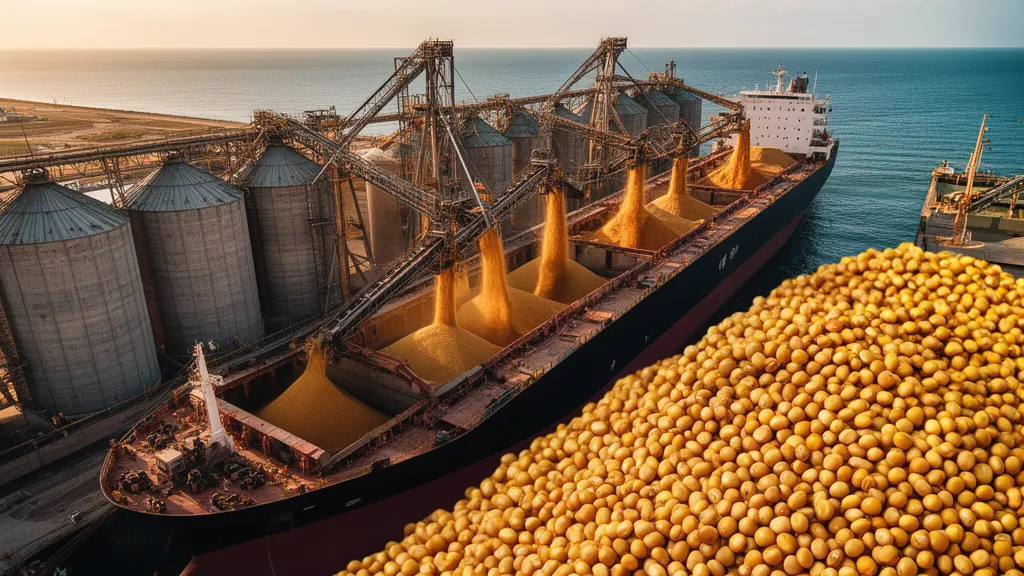
- Record Imports: Egypt imported 5 million tons of soybeans in 2025, the highest volume in its history.
- Further Growth Ahead: Imports are projected to rise to 5.5–6 million tons this year, a 10–20% year-on-year increase.
- Demand Drivers: Expansion of the poultry sector and increased domestic soybean crushing capacity are boosting import needs.
- Market Structure: All soybean procurement is handled by private sector buyers rather than government tenders.
- Regional Impact: Neutral to slightly bearish implications for Black Sea exporters, as South American origins dominate Egypt’s soybean supply.
Egypt’s Soybean Import Surge
Egypt imported a record 5 million tons of soybeans in 2025, according to Abdul Aziz El Said, Chairman of the Poultry Department of the Egyptian Chamber of Commerce. This milestone highlights the rapid expansion of Egypt’s poultry industry and the parallel build‑out of domestic soybean crushing capacity.
Looking ahead, El Said projects that soybean imports will rise further to 5.5–6 million tons in the current year, implying growth of roughly 10–20% versus the previous record. All soybean purchases are conducted via private sector channels, underscoring the role of commercial buyers and integrated feed producers in driving demand.
| Year | Soybean Imports (million tons) | Change vs. Prior Year |
|---|---|---|
| 2025 (actual) | 5.0 | Record high |
| Current year (projected) | 5.5–6.0 | +10–20% |
Market Implications
The surge in Egyptian soybean demand creates substantial import opportunities, but the direct impact on Black Sea exporters is limited because South American origins (primarily Brazil and Argentina) dominate Egypt’s soybean supply. As a result, the development is assessed as neutral to slightly bearish for Black Sea oilseed and meal exporters.
Nonetheless, increased Egyptian buying contributes to tightening global soybean availability, which can lend support to international soybean meal prices. Higher meal prices may, in turn, influence the competitiveness of Black Sea sunflower meal in regional feed rations, particularly in key import markets across the Middle East and North Africa.
Source: Market Data
Leave a Reply