
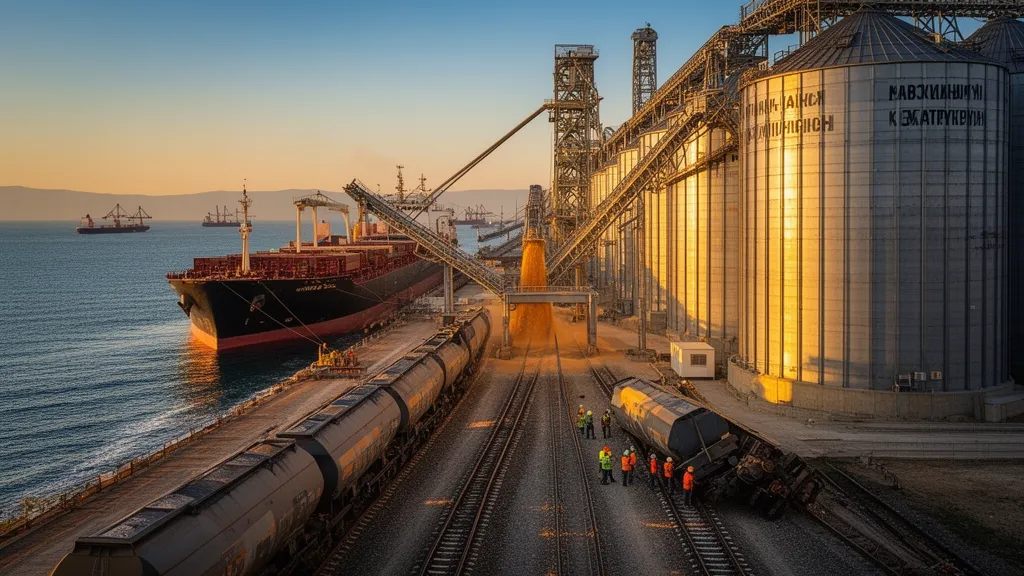
- Russian wheat, barley, and corn export duties remain at zero through February 10, sustaining Russia’s competitive pricing in global grain markets despite marginal price upticks.
- Railway derailment on the Gorky Railway introduces short-term logistical constraints, while Saratov Region’s export growth and expanded market reach add ongoing pressure to Black Sea basis levels.
Russian Grain Export Duties and Price Indicators
The Russian Ministry of Agriculture will keep export duties on wheat, barley, and corn at zero for the week of February 4–10, marking the fourth consecutive week of zero rates. This decision is based on slightly higher indicative export prices across all three grains, preserving Russia’s cost advantage in the global market even as benchmark values edge up.
| Commodity | Indicative Price (USD/ton) | Weekly Change (USD/ton) | Export Duty |
|---|---|---|---|
| Wheat | 227.3 | +1.0 | 0 |
| Barley | 202.0 | +0.8 | 0 |
| Corn | 203.7 | +0.4 | 0 |
Railway Disruption and Logistics Impact
On February 1, a derailment involving 21 grain freight cars on the Orichi–Shalegovo section of the Gorky Railway in Kirov Region disrupted grain logistics and passenger services. Around 900 meters of track infrastructure must be replaced, leading to delays for 20 long-distance trains and rerouting of nine services. While no injuries were reported and most cars have been recovered, short-term constraints on rail capacity could slow grain movements to domestic consumers and export terminals.
Saratov Region Export Performance
The Saratov Region recorded an export increase of over 18% in 2025, with total foreign trade turnover up 16%. Agricultural commodities such as wheat, corn, sunflower oil, and oilcake played a key role in this growth. Export geography has widened, with more than 36% of non-resource exports directed to the Middle East and Asia and 24% to CIS countries and Latin America, strengthening Russia’s presence in diversified grain and oilseed markets.
| Region / Flow | 2025 Performance | Key Destinations |
|---|---|---|
| Saratov Region Exports | >18% YoY growth | Brazil, Turkey, Iran |
| Foreign Trade Turnover | +16% YoY | Kazakhstan, Kyrgyzstan, Uzbekistan |
| Non-Resource Export Share | 36% to Middle East & Asia; 24% to CIS & Latin America | Multiple agricultural buyers |
Russian Fertilizer Exports to the U.S.
Russian fertilizer shipments to the United States jumped 3.6 times year-on-year to $154.9 million in November 2025, with nitrogen fertilizers contributing $99.2 million. Over the first 11 months of 2025, total fertilizer exports to the U.S. rose 1.5 times to $1.51 billion, underscoring continued interdependence in agricultural input trade despite broader geopolitical tensions.
| Period | Total Fertilizer Exports to U.S. (USD) | Nitrogen Fertilizers (USD) | YoY Change |
|---|---|---|---|
| November 2025 | 154.9 million | 99.2 million | 3.6x |
| Jan–Nov 2025 | 1.51 billion | n/a | 1.5x |
Market Implications
The overall market tone is neutral to slightly bearish. Zero export duties keep Russian grain highly competitive, potentially capping global price rallies, while the rail incident introduces only temporary friction to physical flows. Saratov’s export expansion into the Middle East, Asia, and Latin America suggests intensifying competition out of the Black Sea region. Traders should track the pace of rail infrastructure restoration and any rerouting of grain flows that could affect nearby cash basis and freight spreads.
Source: Market Data
Leave a Reply