
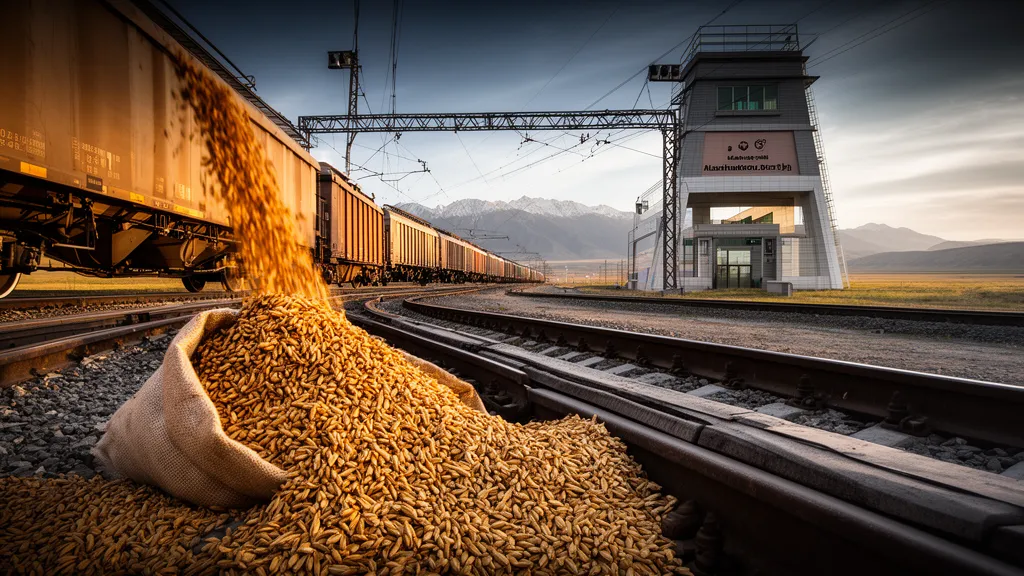
- Operational streamlining: Kazakhstan and China agreed to simplify grain cargo procedures and cut border delays on key rail crossings.
- Volume growth: Bilateral rail cargo volumes rose 11% in 2025 to 35.6 million tons, with TCTR container traffic up 15% to 36,000 TEUs.
- Infrastructure boost: Second track construction on the Alashankou-Dostyk section and planning of the Bakhty-Tachen line aim to relieve major bottlenecks.
- Market impact: Potential reduction in freight costs and improved transit times could enhance Kazakhstan’s grain competitiveness in the Chinese market.
Kazakhstan-China Rail Cooperation Update
Kazakhstan Temir Zholy (KTZ) Chairman Talgat Aldybergenov and Chinese Ambassador Han Chunlin held talks aimed at deepening transport and logistics cooperation, with a specific emphasis on optimizing grain transportation flows from Kazakhstan to China.
Negotiations focused on increasing bilateral cargo volumes, reducing train downtime at key border crossings, and simplifying procedures for Kazakh grain exports entering China. Both sides highlighted grain-specific process improvements as a priority for supporting growing trade volumes.
Infrastructure development is central to the new understanding, with plans to construct second tracks on the Alashankou-Dostyk section and advance design and planning for the new Bakhty-Tachen rail line. These upgrades are intended to ease capacity constraints and support higher-frequency grain shipments.
Rail Traffic and Transit Metrics
| Indicator | 2025 Volume | Year-on-Year Change |
|---|---|---|
| Total Kazakhstan-China rail cargo | 35.6 million tons | +11% |
| TCTR container transit | 36,000 TEUs | +15% |
Market Analysis
Neutral to bullish for Kazakh grain logistics. The formalization of cooperation on grain-specific procedures points to potential freight cost reductions and better throughput for Kazakh wheat and barley exports into China. Shorter border delays and simplified documentation could strengthen Kazakhstan’s position versus Black Sea origins in competing for Chinese demand.
Capacity upgrades on the Alashankou-Dostyk route directly address existing bottlenecks, but with implementation timelines still unclear, traders should be cautious about pricing in full benefits. Monitoring actual procedural changes, realized transit-time reductions, and effective capacity gains will be essential before adjusting freight premiums or reshaping forward logistics strategies.
Both parties reiterated their commitment to building a “sustainable, efficient, and mutually beneficial transport corridor,” underlining the strategic nature of this cooperation for regional grain flows and broader Eurasian transit routes.
Source: Market Data
Leave a Reply