
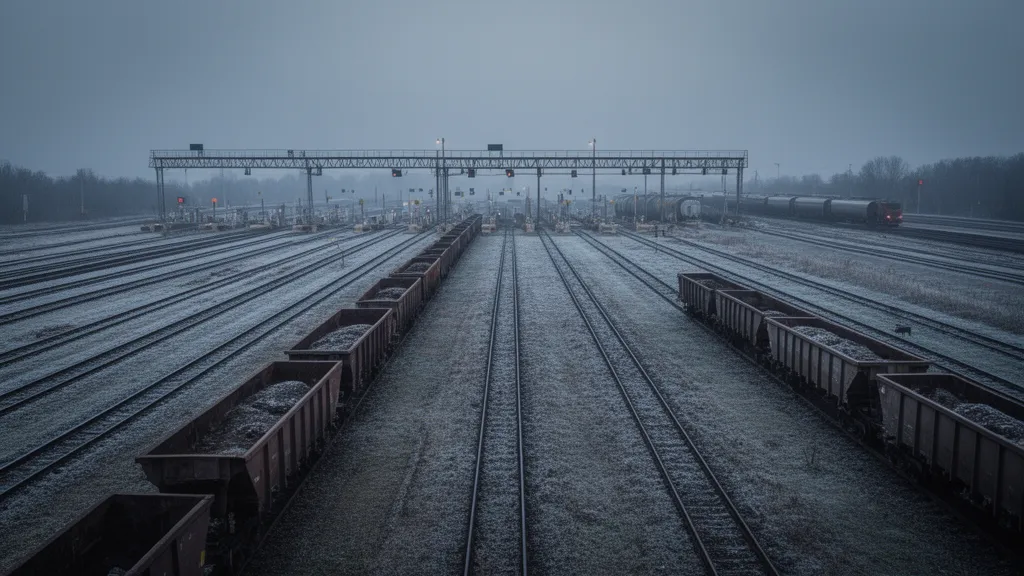
- Bearish logistics: Ukrainian grain rail exports to the EU fell sharply in 2025, with overall volumes via key land corridors down to about 1.45 million tons.
- Route disruption: Rail transfers to Poland and Romania plunged 77% and 88% respectively, signaling severe pressure on traditional western export routes.
- Cost pressure: Reduced rail capacity and higher dependence on alternative channels such as Black Sea ports may raise transport costs and erode Ukrainian grain competitiveness.
Ukrainian Grain Rail Exports to EU in 2025
Ukrainian grain rail exports to the European Union collapsed across all border crossings in 2025, highlighting severe stress in the country’s western export logistics. Rail cargo transfers of grain through Poland, Romania, Slovakia, and Hungary declined markedly versus 2024, according to Valeriy Tkachev, Deputy Director of the Department of Transportation Technology and Commercial Work of JSC Ukrzaliznytsia.
Rail Border Crossings: Volume and Declines
| EU Border Country | 2025 Grain Rail Cars | Approx. Volume (tons) | Change in Rail Cars vs 2024 | % Change vs 2024 |
|---|---|---|---|---|
| Poland | 5,322 | ≈ 322,000 | -18,106 | -77% |
| Romania | 1,916 | ≈ 99,500 | -13,670 | -88% |
| Slovakia | 7,198 | ≈ 456,000 | N/A | -45% |
| Hungary | 9,331 | ≈ 568,000 | -4,195 | -31% |
| Total (4 routes) | 23,767 | ≈ 1,445,500 | N/A | N/A |
Market Impact and Analysis
The steep contraction in rail freight volumes to all four EU neighbors is bearish for Ukrainian grain logistics. The most severe relative declines were recorded on routes to Poland and Romania, both traditionally central to Ukraine’s western export corridor. A 77–88% cut in flows via these gateways points to a combination of infrastructure constraints, regulatory and political friction, or a strategic reorientation of flows back toward Black Sea ports.
This shift reduces diversification in Ukraine’s export routes and heightens dependence on maritime channels. For Ukrainian producers, the loss of rail-based access to nearby EU markets risks higher overall transportation costs, longer delivery times, and increased exposure to regional security and policy shocks. For European buyers, particularly in Central and Eastern Europe, the reduced land-based supply may tighten availability of Ukrainian-origin grain and alter traditional sourcing patterns.
Source: Market Data
Leave a Reply