
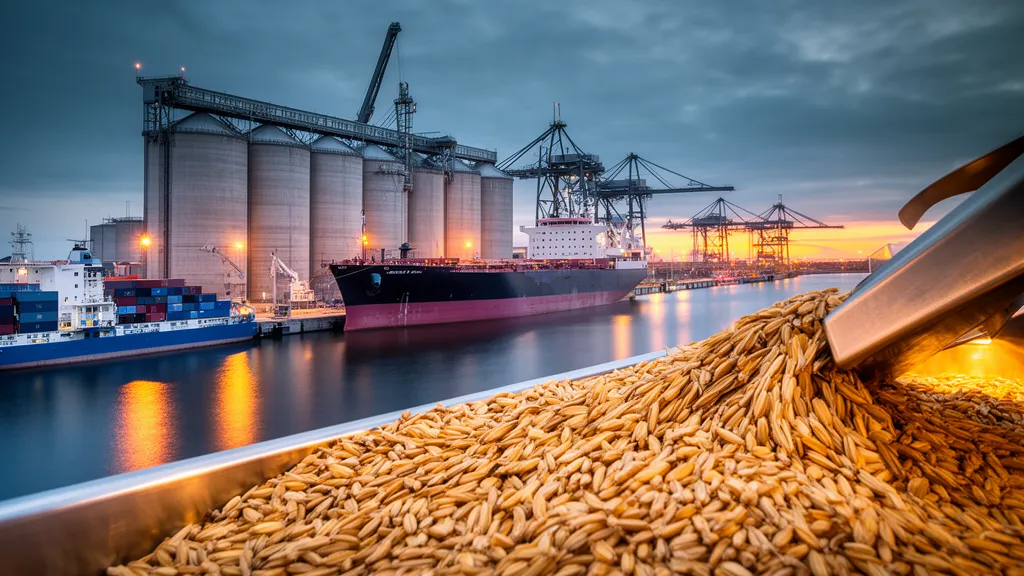
- Rice policy shift: Russia ends its paddy rice export ban and introduces a quota system, signaling confidence in domestic supply and renewed export ambitions.
- Grain exports stabilize: 2025 grain exports projected at 53–55 million tons, aligning with the five-year average but below the 2023–2024 record, capping upside for freight demand.
- Logistics expansion: FESCO’s management of Kaliningrad Commercial Sea Port strengthens Baltic logistics, supporting container and bulk trade flows.
- Regional output strength: Omsk Oblast’s record 4.2 million ton harvest more than doubles local needs, underpinning export availability to Asia, the Middle East, and Africa.
- Market tone: Overall impact is neutral to slightly bearish for near-term grain freight rates amid stable but reduced export volumes and softer global prices.
Russia Adjusts Rice Export Policy
Russia has terminated its ban on paddy rice exports outside the Eurasian Economic Union and replaced it with a quota system under Resolution No. 2076 of December 19, 2020. The original export ban, introduced on July 1, 2022, in response to damage at the Fyodorovsky Reservoir Dam in Krasnodar Krai, had been prolonged six times through December 31, 2025. Authorities now point to sufficient domestic output and a strategic push to develop rice cultivation and reopen international export channels.
The move is expected to re-engage global rice traders with Russian suppliers, diversify destinations, and gradually normalize flows that were constrained for more than three years. However, volumes will be paced by quota allocations rather than fully liberalized in the near term.
Grain Export Outlook: Back to the Five-Year Average
Deputy Prime Minister Dmitry Patrushev projects Russian grain exports at 53–55 million tons in 2025, broadly in line with the five-year average. This marks a normalization from the exceptional 70+ million tons shipped in the 2023–2024 agricultural season.
Patrushev attributes the lower export volume partly to weaker global grain prices, which have curbed shipment incentives. He notes that the price downtrend has stabilized since August, suggesting that export flows are now settling into a more sustainable range rather than continuing to contract.
Logistics and Port Infrastructure: FESCO at Kaliningrad
In logistics, FESCO Transport Group has been appointed managing company of the Kaliningrad Commercial Sea Port (KMTP JSC), which was nationalized in March 2023. From January to October 2025, the port handled over 1,224 tons of cargo, while container throughput rose 7.5% year-on-year to more than 86,000 TEU. The management deal is valued at an estimated 2.7–2.8 billion rubles.
FESCO’s control is expected to improve operational efficiency and capacity utilization at the Baltic gateway, supporting containerized and bulk flows along Black Sea–Baltic and wider international corridors.
Regional Grain Production: Omsk Oblast
Omsk Oblast reported a record grain harvest of 4.2 million tons with average yields of 24 centners per hectare, more than twice regional consumption. The surplus enables steady export programs directed to China, African markets, the UAE, Turkey, and Bangladesh, reinforcing Russia’s role as a key supplier to both traditional and emerging buyers.
Market Impact and Freight Rate Implications
The introduction of a rice export quota regime signals Russia’s confidence in domestic rice production and offers fresh opportunities for international buyers, but the quota mechanism may keep volumes disciplined. Grain export projections at 53–55 million tons indicate that, while shipments are down from the 2023–2024 peak, they have stabilized rather than entering a deeper contraction phase.
Combined with the strengthening of Baltic logistics through FESCO’s management of the Kaliningrad Commercial Sea Port, the overall outlook for grain and container flows is steady. However, given the retreat from record grain export levels and still-muted global prices, the near-term tone for grain freight rates remains neutral to slightly bearish.
| Metric | Period | Value |
|---|---|---|
| Projected Russian grain exports | 2025 | 53–55 million tons |
| Record Russian grain exports | 2023–2024 agricultural season | 70+ million tons |
| Container throughput at Kaliningrad Commercial Sea Port | Jan–Oct 2025 | 86,000+ TEU (+7.5% YoY) |
| Total cargo handled at Kaliningrad Commercial Sea Port | Jan–Oct 2025 | 1,224+ tons |
| Estimated value of FESCO–Kaliningrad port deal | 2025 | 2.7–2.8 billion RUB |
| Omsk Oblast grain harvest | 2025 | 4.2 million tons |
| Omsk Oblast average yield | 2025 | 24 centners/ha |
Source: Market Data
Leave a Reply