
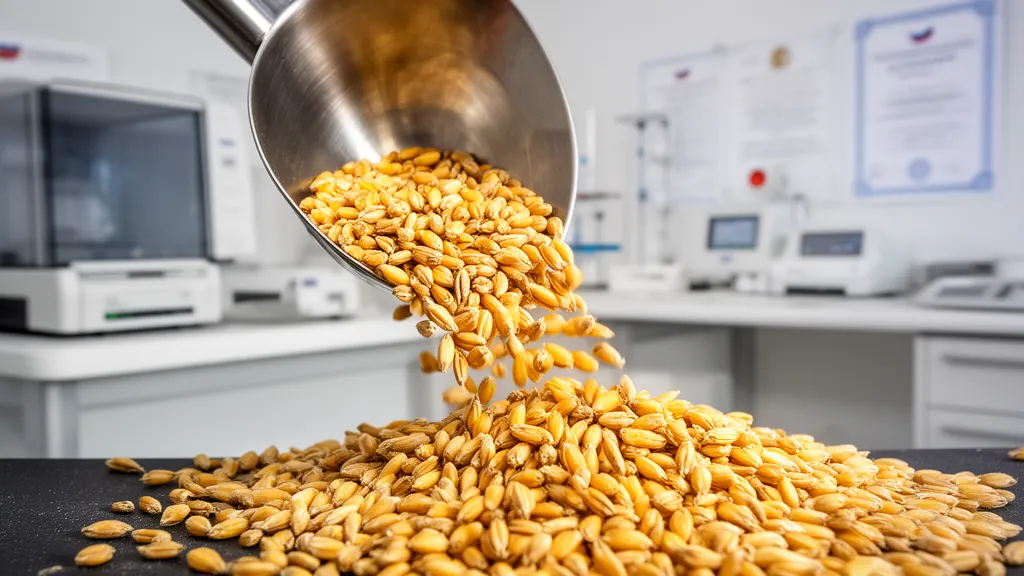
- 81% food-grade spring wheat: 135,900 tons of the 2025 Irkutsk Region harvest meets food-industry standards, supported by strong protein and gluten quality.
- Comprehensive state monitoring: 167,400 tons assessed across 17 districts, with 31,500 tons classified as feed-grade wheat.
- Export readiness: Quality certification under Russia’s federal export program supports additional milling-quality supply into global markets.
- Market impact: Higher-quality volumes from eastern Russia are neutral to slightly bearish for premium Black Sea wheat values.
Irkutsk 2025 Spring Wheat Quality Overview
State grain monitoring by Rosselkhoztsentr’s Irkutsk Region branch covered 167,400 tons of 2025 spring wheat across 17 districts in the Angara region. Laboratory testing of 291 samples, including both hard and soft wheat, focused on moisture, gluten quantity and quality, vitreousness, protein levels, impurities, and pest contamination.
According to Deputy Minister of Agriculture Anna Turusheva, 135,900 tons of the assessed volume met food-industry standards, while 31,500 tons were categorized as feed-grade. Elevated protein and gluten metrics underpinned the high 81% food-grade share, underscoring strong quality fundamentals for the 2025 crop.
Quality and Certification Details
The monitoring program, financed from the federal budget, provides free testing and certification to grain producers. This certification is required for domestic marketing into the food industry and is a prerequisite for export channels under the “Export of Agricultural Products” federal project.
By confirming moisture, protein, gluten, and contamination parameters, the certification process effectively positions Irkutsk wheat for milling and food-processing applications, both within Russia and in international markets that specify minimum quality thresholds.
Key Metrics Breakdown
| Metric | Volume / Value | Notes |
|---|---|---|
| Total monitored spring wheat (2025) | 167,400 tons | Across 17 districts in Irkutsk Region |
| Food-grade wheat | 135,900 tons | Meets food-industry quality standards |
| Feed-grade wheat | 31,500 tons | Does not meet food-grade thresholds |
| Food-grade share | 81% | High ratio supported by protein and gluten levels |
| Number of samples tested | 291 | Hard and soft wheat varieties |
Market Impact and Export Implications
The strong 81% food-grade outcome in Irkutsk reinforces Russia’s broader role as a supplier of milling-quality wheat. While the region’s inland location limits direct Black Sea logistics, federal support for export-oriented certification increases the likelihood that more eastern-origin grain will compete in quality-sensitive markets, whether via internal rail to Black Sea ports or alternative export corridors.
Incremental volumes of high-protein, high-gluten Russian wheat may narrow quality premiums for traditional Black Sea exporters if international buyers can substitute towards Irkutsk and other eastern origins. As a result, the development is assessed as neutral to slightly bearish for premium Black Sea wheat valuations, particularly in milling segments where protein and gluten specifications are critical.
Source: Market Data
Leave a Reply