- Ryazan region’s sunflower harvest has extended into December, spanning nearly six months from July amid frosts and snow cover.
- Record grain and oilseed yields combined with adverse weather led to an unprecedentedly long and operationally challenging harvest campaign.
- Sunflower seeds collected in December will need additional processing, which may affect quality, costs, and short-term spot availability.
- Despite logistical and quality concerns, record production underpins adequate Russian domestic sunflower supply, making the impact neutral to slightly bearish.
Ryazan Sunflower Harvest Extends into Winter
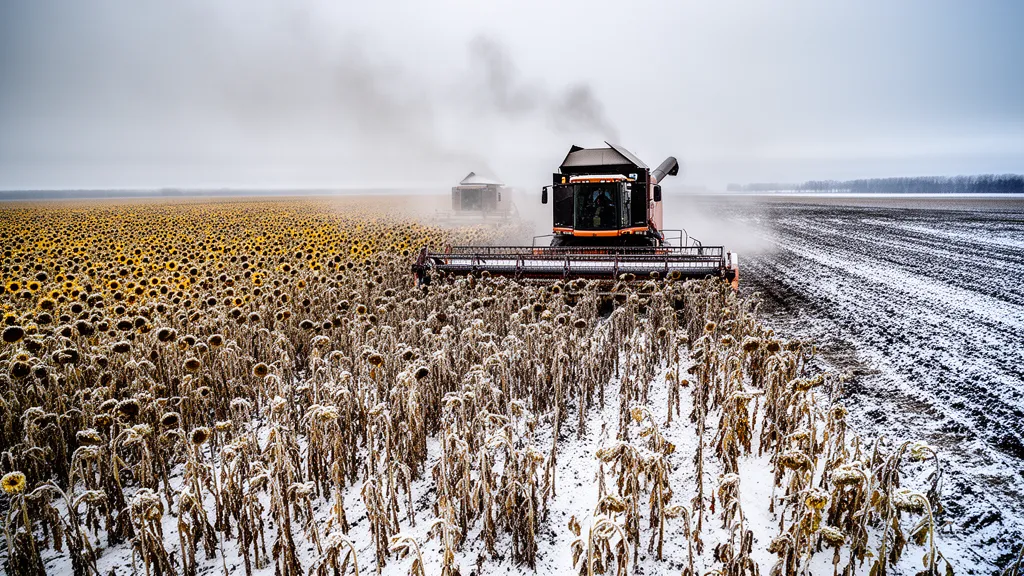
Farmers in Russia’s Ryazan region are continuing to harvest sunflower seeds in December under increasingly harsh winter conditions, according to the regional Ministry of Agriculture. The agricultural enterprise Gorzem remains active in the Korablinsky District, working through frosts and snow cover to complete the oilseed campaign.
This year’s harvest began in July and has now stretched to roughly six months, an unusually long period for the region. The extended timeline is attributed to a combination of weather variability and a record grain and oilseed harvest. Aerial photographs released by the Ministry highlight machinery operating in difficult, snow-covered field conditions.
Quality and Processing Implications
Sunflower seeds harvested in December typically face elevated moisture levels and greater risk of quality degradation, including potential impacts on oil content and meal characteristics. As a result, December-harvested lots from Ryazan will require additional processing and conditioning before being suitable for commercialization.
Regional agricultural enterprises note that while winter harvesting remains atypical, it is gradually becoming more accepted as a response to climatic volatility and the need to manage large crop volumes. However, these practices can increase operational costs and slow the flow of raw material into crushing facilities.
Market Impact and Trading Outlook
Market Bias: Neutral to Slightly Bearish. The extended Ryazan harvest underscores logistics and quality challenges that may modestly increase processing costs and temporarily constrain spot sunflower seed availability in central Russia. Moisture and quality issues in December-harvested seeds could weigh on oil extraction rates and meal quality, affecting crushers’ margins and product mix in the near term.
At the same time, confirmation of record grain and oilseed output in the region reinforces expectations of adequate Russian domestic sunflower supply. For traders, the key watchpoint is whether similar harvest delays and winter operations are occurring in other major producing regions. Broadly dispersed delays could influence short-term crushing throughput and nearby oil availability, but current signals point to sufficient overall supply, tempering any sustained bullish price response.
Source: Market Data
Leave a Reply