
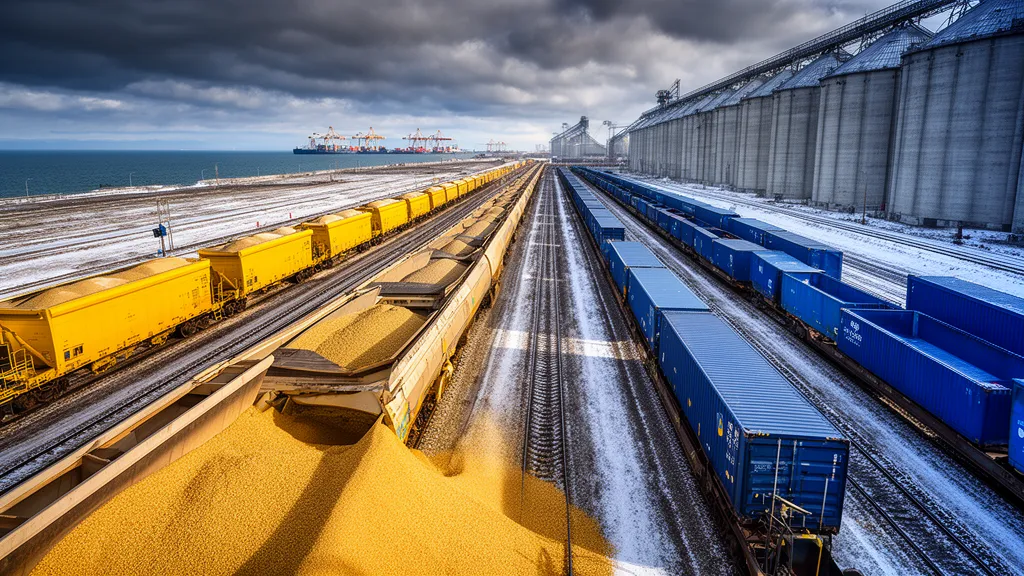
- Containerized grain shipments on Ukrzaliznytsia’s network dropped 13% y/y to 56,965 thousand TEUs in Jan–Nov 2025 as shippers pivoted back to specialized grain railcars.
- Low leasing rates of 100–200 UAH/day for grain railcars made traditional railcar transport more cost-effective than containers for exporters.
- Meal and cake container volumes rose 4% y/y to 24,474 thousand TEUs, overtaking ferrous metals to become the second-largest containerized cargo in November.
- Total containerized freight fell 9% y/y to 217,369 thousand TEUs, with grain still accounting for over a quarter of container volumes.
Ukrainian Rail Containerized Grain Update
Containerized grain freight on Ukraine’s rail network declined sharply in 2025. Ukrzaliznytsia handled 56,965 thousand TEUs of grain in containers over January–November, equal to 26% of total container volumes and 13% less than in the same period of 2024. The shift underscores a rebalancing toward more cost-efficient grain transport modes.
According to Valeriy Tkachev, Deputy Director of Transportation Technology at Ukrzaliznytsia, the main factor behind this trend was the attractive cost of specialized grain cars, which were available at 100–200 UAH per day during the first nine months of 2025. These competitive rates encouraged farmers and exporters to abandon containerized grain in favor of traditional railcar shipments.
Seaports remain the dominant export channel, handling 90–94% of Ukraine’s grain exports. For port-bound flows, shippers increasingly chose specialized grain railcars, further reducing the role of containers in bulk grain logistics. This suggests adequate availability and pricing of dedicated rolling stock to meet export demand.
Meal and Cake Container Growth
In contrast to bulk grain, containerized shipments of cakes and meal continued to grow. Volumes reached 24,474 thousand TEUs in January–November 2025, representing 11% of total container traffic and a 4% year-on-year increase. In November, these processed products surpassed ferrous metals in containerized volume, becoming the second-largest cargo group after grain.
The divergence between bulk grain and processed products highlights differing logistics needs. While low-cost railcars appeal for high-volume grain exports, meal and cake appear to benefit from the flexibility, protection, and handling advantages offered by container transport, which may sustain their containerization trend.
Containerized Freight Overview
Total containerized freight across the Ukrzaliznytsia network reached 217,369 thousand TEUs in the first eleven months of 2025, a 9% decline compared with 2024. Within this total, grain remained a key segment despite its downturn, while meal and cake strengthened their role in the overall container mix.
Key Rail Container Metrics
| Indicator | Jan–Nov 2025 | Share of Total Containers | Y/Y Change vs 2024 |
|---|---|---|---|
| Containerized Grain Shipments | 56,965 thousand TEUs | 26% | -13% |
| Containerized Cakes & Meal | 24,474 thousand TEUs | 11% | +4% |
| Total Containerized Freight | 217,369 thousand TEUs | 100% | -9% |
| Specialized Grain Car Rental Rate | 100–200 UAH/day | n/a | Competitive; drove modal shift |
| Grain Exports via Seaports | 90–94% of total grain exports | n/a | Supports use of rail grain cars |
Logistics and Market Implications
The modal shift back to specialized grain railcars reflects exporters’ rational response to pricing signals. Competitive leasing rates and strong seaport-oriented export flows are consolidating railcar-based bulk grain logistics, offering stable and cost-effective options for port-bound movements. At the same time, the rise in meal and cake containerization points to a differentiated logistics strategy for processed products, where container transport remains advantageous.
Source: Market Data
Leave a Reply