
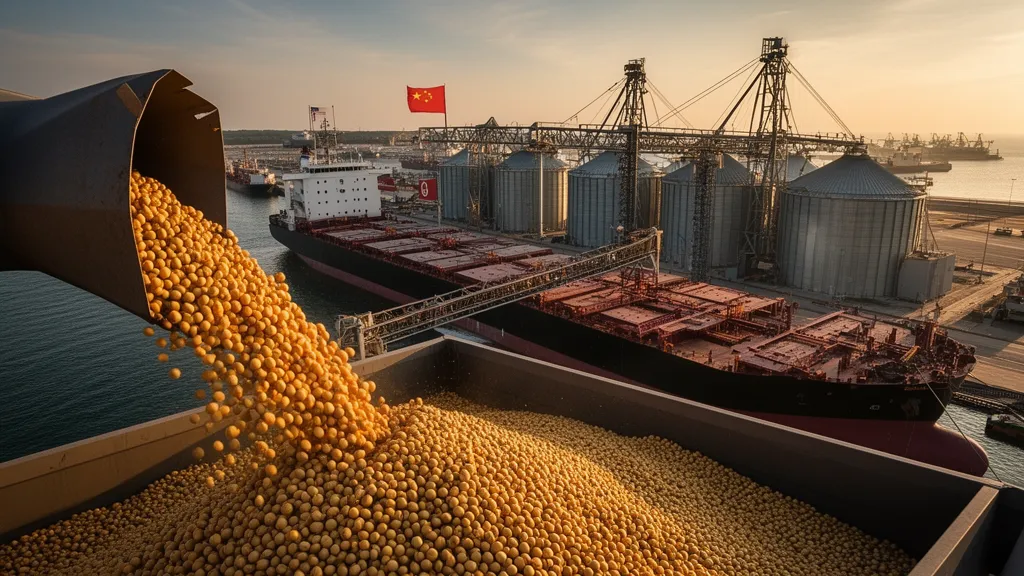
- Bearish: U.S. soybean industry warns new tariffs on China could repeat past trade war losses of $27 billion and further undermine U.S. export competitiveness.
- Bearish: Record global soybean stocks projected at 124–125 million tonnes in 2025/26 and a massive South American harvest are expected to pressure soybean meal prices.
- Neutral to Supportive: Tightening vegetable oil stocks to a four-year low may support Black Sea sunflower oil values despite abundant global meal supplies.
- Bearish for Black Sea Meals: Strong South American supply and Brazil’s expanding market share intensify competition for Black Sea sunflower and rapeseed meals.
U.S. Soybean Industry Pushes Back Against New Tariffs
The American Soybean Association (ASA) has urged the Office of the U.S. Trade Representative to avoid imposing additional tariffs on China and instead prioritize enforcement of existing Phase I commitments. The group stressed that the previous trade conflict slashed U.S. soybean exports to China from 36.1 million tonnes in 2016/17 to 13.4 million tonnes in 2018/19, a 63% collapse that contributed heavily to sector-wide financial losses.
USDA Economic Research Service data show soybeans accounted for 71% of more than $27 billion in annual agricultural losses during the trade dispute. With China purchasing 61% of global soybean reserves and representing over half of all U.S. soybean exports, ASA underlined that no alternative market can currently absorb comparable volumes, making renewed tariff escalation a significant downside risk for U.S. farmers.
Record Global Soybean Stocks and South American Harvest
Oil World (Germany) projects global soybean stocks will rise to a record 124–125 million tonnes in 2025/26, maintaining a stock-to-use ratio near 29%. This build-up reflects strong output growth, led by a record South American harvest that is expected to weigh on international soybean complex prices and intensify competition across export origins.
Global soybean meal production for 2025/26 is forecast at a record 287.1 million tonnes. Recent soybean meal price gains of 10–15% in November could prove difficult to sustain given the looming supply overhang. Additional increases of 0.7 million tonnes each in rapeseed and sunflower meal further enhance global protein meal availability and may contribute to a more bearish price environment once new-crop supplies are fully priced into the market.
Diverging Trends in Vegetable Oil Stocks
In contrast to the abundant soybean and meal outlook, global vegetable oil stocks across 17 key categories are expected to fall to a four-year low of 33.8 million tonnes. Annual consumption growth of around 7.4 million tonnes is pushing the stock-to-use ratio to its lowest point since 2007/08, highlighting a structurally tighter environment for oils compared with meals.
This divergence between ample protein meal supplies and tightening vegetable oil inventories may support prices for oil-rich products, particularly sunflower oil and other vegetable oils where demand growth remains robust. The relative scarcity in the oils segment could partially offset pressure from the heavy meal balance, especially in regions with strong biodiesel and food-use demand.
Implications for Black Sea Oilseed and Meal Markets
The overall outlook is neutral to bearish for Black Sea oilseed markets. Record global soybean supplies and Brazil’s expanding export share are raising competitive pressure on Black Sea sunflower and rapeseed meals, likely capping upside in regional meal prices despite recent gains. Strong South American supply is expected to limit the sustainability of the 10–15% November rally in soybean meal unless additional demand or supply shocks emerge.
At the same time, tightening vegetable oil stocks create a more supportive backdrop for Black Sea sunflower oil exporters. The region could benefit from the global pivot toward oils, particularly if buyers seek to diversify away from single-origin dependence and secure supply amid tighter stock-to-use ratios. However, continued Brazilian expansion at the expense of U.S. market share reinforces the highly competitive landscape that all origin suppliers will face in the coming seasons.
Key Quantitative Indicators
| Indicator | Period / Context | Value | Comment |
|---|---|---|---|
| U.S. soybean exports to China (baseline) | 2016/17 | 36.1 million tonnes | Pre-trade war reference level |
| U.S. soybean exports to China | 2018/19 | 13.4 million tonnes | 63% decline versus baseline |
| Agricultural losses (annual, all products) | Trade war period | >$27 billion | Soybeans accounted for 71% of losses |
| Global soybean stocks | 2025/26 forecast | 124–125 million tonnes | Record level, ~29% stock-to-use |
| Global soybean meal production | 2025/26 forecast | 287.1 million tonnes | Record output |
| Vegetable oil stocks (17 categories) | 2025/26 outlook | 33.8 million tonnes | Four-year low |
| Vegetable oil stock-to-use ratio | 2025/26 outlook | Lowest since 2007/08 | Reflects strong demand growth |
| China share of global soybean reserves | Current | 61% | Major driver of global trade flows |
| China share of U.S. soybean exports | Current | >50% | No alternative market of similar scale |
| Recent soybean meal price change | November | +10–15% | Gains seen as vulnerable without new support |
Source: Market Data
Leave a Reply