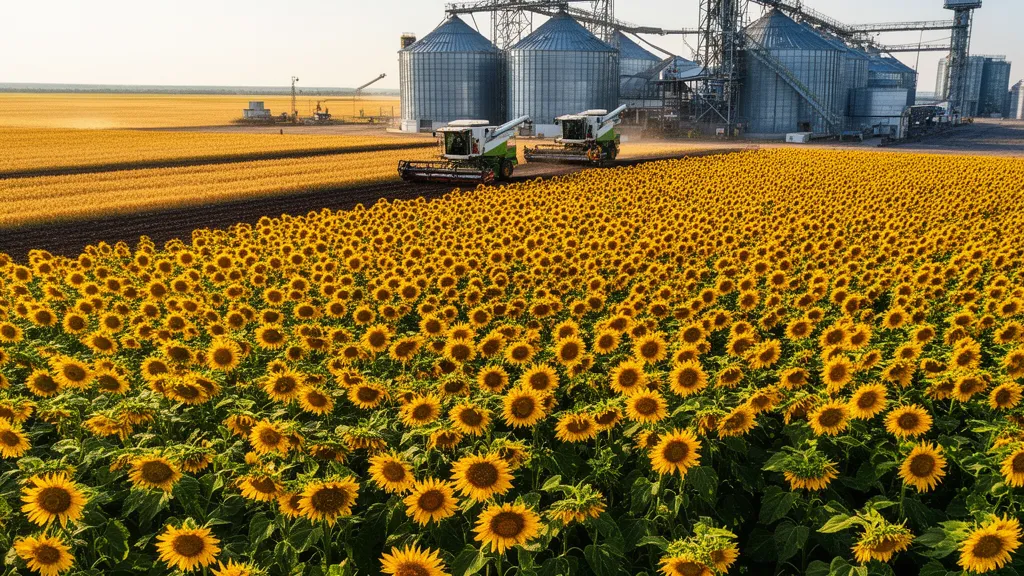
- Dagestan harvest growth: Sunflower seed output in Dagestan rose 14% year-on-year to 4,500 tons in 2025.
- Regional expansion: The North Caucasus Federal District posted 9% overall growth in sunflower seed production.
- Stavropol dominance: Stavropol Krai contributed around 370,000 tons, roughly 82% of the district’s sunflower harvest.
- Market impact: Despite strong percentage gains, the overall effect on Black Sea sunflower seed markets is assessed as neutral.
Market Update
Rosstat data indicate that Dagestan’s sunflower seed harvest reached 4,500 tons in 2025, a 14% increase versus the previous year, according to RIA Dagestan. At the broader regional level, the North Caucasus Federal District registered 9% year-on-year growth in sunflower seed production.
Stavropol Krai remained the key production center, accounting for more than three-quarters of the district’s sunflower seed harvest. With approximately 370,000 tons of output, Stavropol represents about 82% of regional production, highlighting the high concentration of sunflower cultivation and processing capacity within this territory.
Production Data Overview
| Region | 2025 Sunflower Seed Output (tons) | Year-on-Year Change | Share of North Caucasus Output |
|---|---|---|---|
| Dagestan | 4,500 | +14% | Small share of district total |
| Stavropol Krai | 370,000 | Not specified | ~82% |
| North Caucasus Federal District (total) | Not specified | +9% | 100% |
Analysis
Market Impact: Neutral
Dagestan’s 14% growth exceeds the North Caucasus average but remains modest in absolute terms at 4,500 tons, limiting its influence on broader Black Sea sunflower seed pricing. In contrast, Stavropol Krai’s approximately 370,000-ton harvest is the primary driver for regional crushing capacity utilization and exportable surplus.
The 9% increase in total North Caucasus output supports stable domestic processing demand and contributes incrementally to Russia’s supply balance. However, the region’s volumes are still secondary compared to major sunflower-producing hubs in southern Russia and Ukraine, keeping the overall market impact neutral.
Source: Market Data
Leave a Reply