
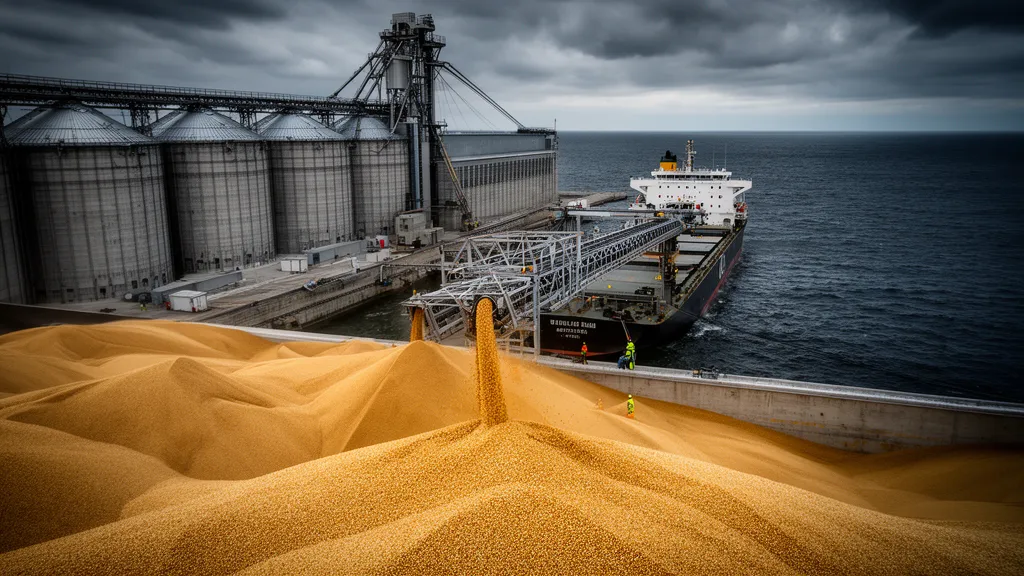
- Bearish wheat & corn: Russian export duties for wheat, corn, and barley are set to zero for December 10–16, increasing competitive Black Sea supply.
- Price pressure: Falling indicative prices for wheat and corn below the base level trigger zero duty, adding short-term downward pressure on global grain prices.
- Export incentive: Removal of the tax allows Russian exporters to offer more aggressive pricing, potentially boosting export volumes.
Russian Export Duties Cut to Zero
Russia has reduced its export duties on wheat, corn, and barley to zero for the week of December 10–16. This change follows a decline in the calculated indicative prices for key grains, particularly wheat and corn, which have moved below the government’s established base price threshold that activates the duty.
The measure is part of Russia’s “grain damper” mechanism, which adjusts export duties based on the gap between a fixed base price and an indicative price derived from export contracts registered on the Moscow Exchange. When the indicative price dips below the base level, the duty is set to zero, effectively removing an extra cost from Russian grain exports.
Indicative Price Changes
| Commodity | Current Indicative Price ($/tonne) | Previous Indicative Price ($/tonne) |
|---|---|---|
| Wheat | $226.1 | $227.3 |
| Barley | $213.6 | $210.8 |
| Corn | $208.5 | $211.8 |
The latest indicative prices show small week-on-week moves but are significant in relation to the base price triggers. Wheat and corn prices have edged lower, moving under the base level and effectively switching off the export duty. Barley prices have risen modestly but also fit within the parameters for a zero duty in the current calculation period.
Market Impact and Price Signal
Zeroing the export duty immediately improves the netback for Russian exporters, allowing them to offer wheat and corn at more competitive values into key import markets. This added supply from the Black Sea region is likely to weigh on global quotations, especially in nearby shipments, as buyers receive cheaper offers from Russia.
From an international pricing perspective, the move is a bearish signal for wheat and corn in the short term. With Russia already a dominant exporter, removing this fiscal friction can increase export flow, intensify competition with other origins, and exert additional downward pressure on global grain benchmarks.
Source: Market Data
Leave a Reply