- Bearish (near term): Ukrainian corn yields 24% above plan increase available supply and pressure spot prices.
- Bullish (forward): Planned 8% cut to 2025 corn acreage supports medium‑term price expectations.
- Mixed: High 24% grain moisture raises drying costs, delaying export-ready supply and affecting farm-gate prices.
Agrain Corn Harvest Overview
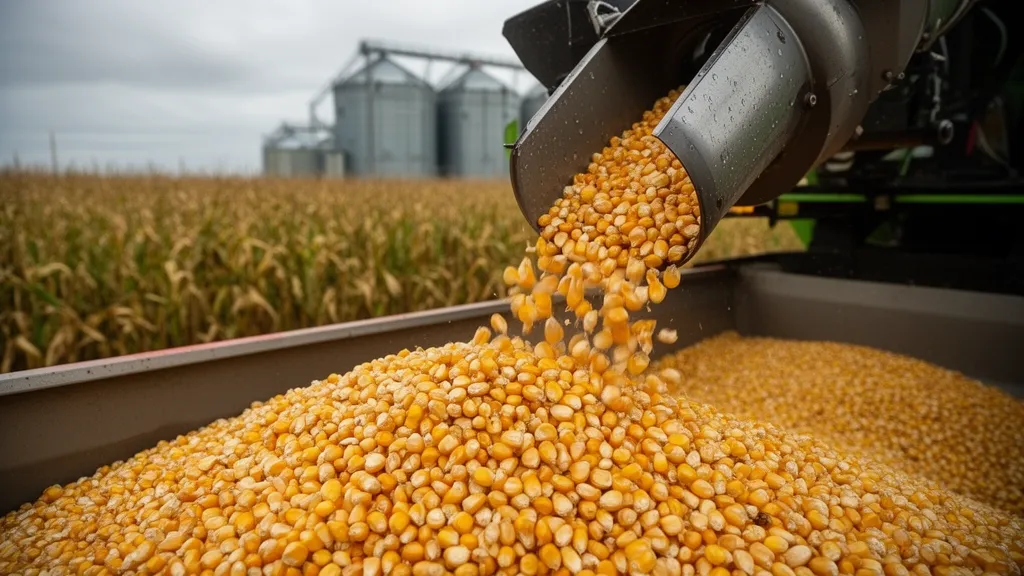
Ukraine’s Agrain Group has completed its 2024 corn harvest with an average yield 24% above its initial plan. The company’s Chernihiv cluster outperformed the rest of the holding, exceeding planned yields by more than 31%, highlighting strong regional productivity.
Average grain moisture content across the harvested corn was reported at 24%, which was broadly in line with seasonal expectations. This level of moisture implies substantial post-harvest drying requirements before the grain can be marketed or exported.
2025 Acreage Plan
For the 2025 season, Agrain has allocated over 13,000 hectares to corn, representing an 8% reduction compared with the previous year. This reflects the company’s effort to optimize crop rotation and may signal a modest shift of area into alternative crops.
| Indicator | 2024 / 2025 Value | Change vs. Plan / Last Year |
|---|---|---|
| Average corn yield | Above planned level | +24% |
| Chernihiv cluster yield | Above planned level | >+31% |
| Average grain moisture | 24% | In line with expectations |
| 2025 corn area | >13,000 ha | -8% vs. last year |
Market Impact and Price Signals
The stronger-than-planned yields are a bearish factor for the spot Ukrainian corn market, indicating a larger supply base and potential downward pressure on near-term prices. However, the elevated 24% moisture will require extensive drying, adding costs and temporarily limiting the volume of export-ready grain.
These additional drying costs are likely to be reflected in lower farm-gate prices as buyers adjust for handling and processing expenses. At the same time, the 8% reduction in planned corn acreage for 2025 is a mildly bullish signal for the forward curve, as it suggests some supply restraint and possible diversification into other crops in the new-crop season.
Source: Market Data
Leave a Reply