
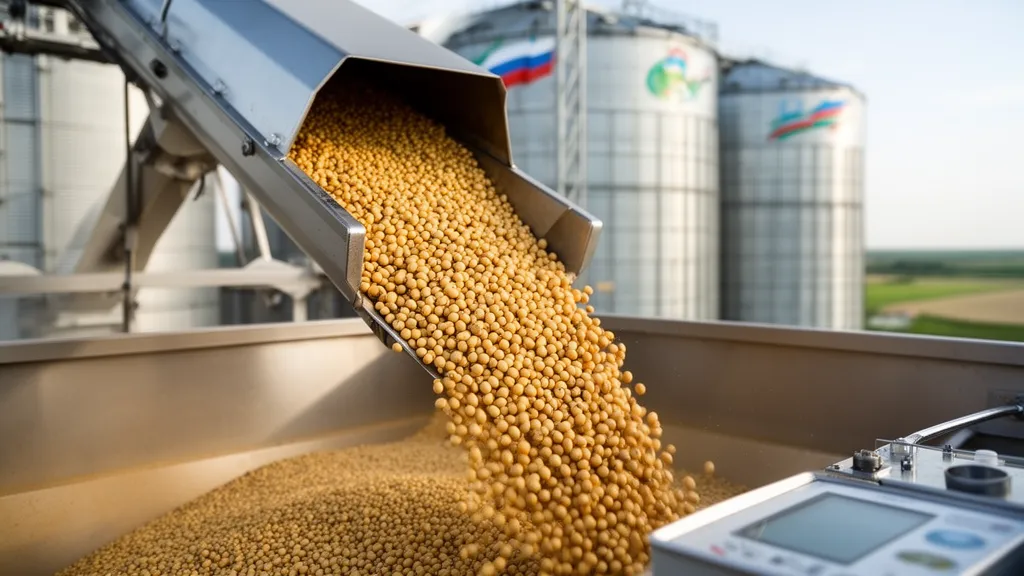
- Supply growth: Tested soybean volume in Tatarstan reached 56,200 MT year-to-date, nearly four times last year’s level.
- High quality: About 99% of tested soybeans met safety and quality standards, with 82.5% categorized as food-grade.
- Structural shift: Soybean acreage expanded from 1,500 ha to 62,000 ha over the past decade, signaling a strategic move toward oilseed production.
- Bearish indicator: Rising Russian soybean capacity adds competitive supply to the Black Sea market, pressuring regional premiums.
Tatarstan Soybean Market Update
Official testing data from Russia’s grain quality assessment agency (FGBU "CQA AIC") in the Republic of Tatarstan shows a sharp increase in soybean flows as of November 25. The agency analyzed more than 56,200 metric tons (MT) of soybeans, almost four times the volume recorded over the same period last year.
Of the total volume, 46,300 MT (82.5%) were classified as food-grade soybeans, while 9,800 MT (17.5%) were destined for feed use. Quality checks confirmed that 99% of the samples met the requirements of the Customs Union Technical Regulation (TR CU 015/2011) and GOST standards. Only one new-crop sample showed non-compliance due to excess moisture.
This surge in tested volume reflects a longer-term structural trend. Over the last decade, soybean acreage in Tatarstan has expanded from just 1,500 hectares to 62,000 hectares, highlighting a deliberate regional strategy to scale up oilseed production and support export growth.
Key Soybean Metrics – Tatarstan
| Indicator | Value | Notes |
|---|---|---|
| Tested soybean volume YTD | 56,200 MT | Nearly 4x year-on-year |
| Food-grade soybeans | 46,300 MT (82.5%) | Meets food-use standards | Feed soybeans | 9,800 MT (17.5%) | Non-food applications |
| Compliance rate | 99% | TR CU 015/2011 & GOST standards |
| Non-compliance cases | 1 sample | Excess moisture in new crop |
| Soybean area 10 years ago | 1,500 ha | Baseline level |
| Current soybean area | 62,000 ha | More than 40x expansion |
Market Analysis
Bearish. While Tatarstan’s absolute soybean output is still modest on a global scale, the rapid increase in tested volume and acreage is a notable bearish signal for the broader Black Sea complex. The 4x growth in handled volume and over 40-fold expansion in planted area demonstrate Russia’s rising capacity in soybeans, adding incremental supply and new competition in export channels.
The fact that 82.5% of the volume is food-grade and that nearly all of it meets quality standards suggests that this origin can increasingly target higher-value markets, not just feed channels. As non-traditional Russian regions like Tatarstan scale up, traders should factor these flows into Black Sea balance sheets, as they may pressure premiums for established suppliers and weigh on regional oilseed and meal pricing.
Source: Market Data
Leave a Reply