
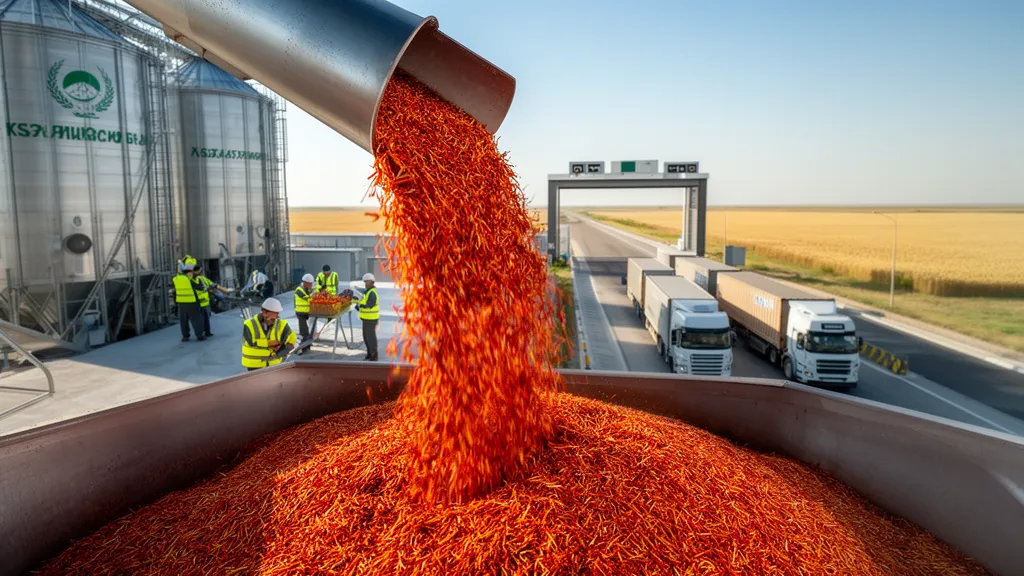
- Kazakhstan has removed mandatory customs examinations for safflower exports from the Kostanay region, cutting clearance times.
- Exporters are expected to see lower logistical costs and fewer freight delays for safflower shipments.
- The change enhances the competitiveness of Kazakh-origin safflower in global markets by easing a non-tariff barrier.
Kazakhstan Eases Safflower Export Rules
Customs authorities in Kazakhstan’s Kostanay region have abolished the requirement for mandatory customs examination of safflower oilseeds, previously triggered by a specific risk profile. This procedure had been a notable source of delays and added financial cost for shippers, affecting both clearance times and overall freight efficiency.
The policy change follows coordinated efforts by the Atameken regional chamber of entrepreneurs, the Kostanay Transport Prosecutor’s Office, and the State Revenue Department. Their successful lobbying has removed a key procedural hurdle, streamlining foreign trade transactions for safflower and reducing the administrative load on exporters.
Market and Freight Implications
From a market perspective, this is a bullish development for the regional supply chain. Lower non-tariff friction should reduce both time and cost per shipment, directly benefiting exporters, logistics coordinators, and buyers relying on Kazakh-origin safflower. Improved reliability in execution is likely to support a more competitive pricing basis and strengthen Kazakhstan’s position in the safflower export market.
By targeting a specific logistical bottleneck, the procedural update is expected to accelerate freight movements, minimize congestion at customs, and improve planning for forward sales and deliveries. Over time, these changes may encourage higher export volumes and deeper integration of Kostanay-origin safflower into global oilseed trade flows.
Source: Market Data
Leave a Reply