
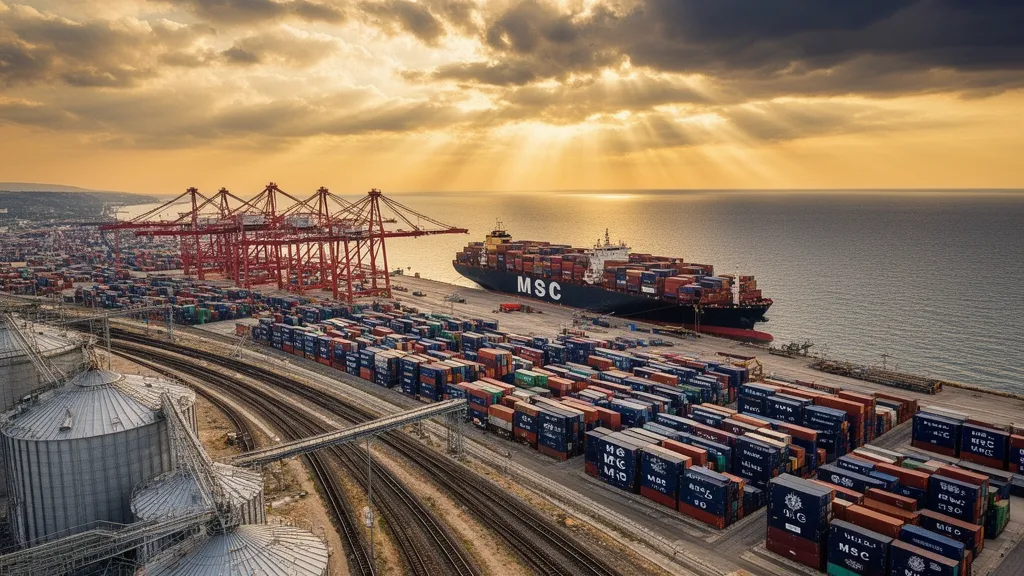
- Strategic Black Sea Expansion: MSC acquires a 51% controlling stake in Ukraine’s largest container terminal, underscoring long-term commitment to Black Sea logistics.
- Infrastructure & Capacity Boost: Integration of TIS’s six specialized terminals with MSC’s global network is poised to enhance container capacity and operational efficiency.
- Support for Ukrainian Exports: Upgraded container infrastructure at Pivdennyi port should improve reliability for grain and oilseed exporters using alternative export routes.
- Sector-Significant Deal: The transaction is reported as the largest in Ukraine’s transport sector in the last decade, signaling renewed investor confidence.
- Moderately Bullish Freight Outlook: Improved throughput and reduced congestion potential are neutral to moderately bullish for Black Sea freight markets.
Transaction Overview
Mediterranean Shipping Company (MSC), the world’s largest container line, has finalized the acquisition of a 51% controlling stake in the TIS container terminal at Ukraine’s Pivdennyi port. While the deal value remains undisclosed, market sources cited by Ekonomichna Pravda characterize it as the most significant transaction in Ukraine’s transport industry over the past decade.
TIS, founded in 1994 by Alexey Stavnitser, is currently Ukraine’s largest port operator by cargo throughput. The company manages six specialized marine terminals, an extensive rail network, and its own tugboat fleet at Pivdennyi, positioning it as a critical node for both bulk and containerized trade.
MSC Profile and Strategic Rationale
MSC is a Swiss family-owned shipping group established in 1970. It operates a fleet of more than 1,000 vessels with a combined capacity exceeding 7 million TEU, serving over 500 ports across 155 countries. Beyond liner shipping, MSC has built a diversified logistics portfolio that includes port infrastructure, inland logistics networks, rail, and air freight operations.
The acquisition of a majority stake in the TIS container terminal aligns with MSC’s strategy to deepen control over key logistics assets along major trade corridors. Strengthening its footprint in the Black Sea region allows MSC to better integrate sea, rail, and inland logistics for European and global customers moving cargo via Ukraine.
Market Impact and Freight Implications
Neutral to Moderately Bullish for Black Sea Freight: The deal signals MSC’s confidence in the resilience and long-term viability of Ukraine’s export corridors despite ongoing challenges. By upgrading and integrating the TIS container terminal into its global network, MSC can support higher throughput, more frequent sailings, and improved schedule reliability.
For agricultural exporters, particularly grain and oilseed traders relying on alternative routes, improved containerized shipping options at Pivdennyi may help alleviate bottlenecks and reduce congestion-related delays. Over time, investments in port infrastructure, yard equipment, and digitization under MSC’s management could lower logistics costs and enhance the competitiveness of Ukrainian exports in global markets.
Outlook for Ukrainian Export Logistics
In the near term, operational integration and process optimization at TIS are expected to focus on boosting terminal efficiency and aligning services with MSC’s global standards. Longer term, continued capital investment into terminal expansion, rail connectivity, and value-added logistics services could transform Pivdennyi into a more robust regional hub for containerized and bulk trade.
This transaction, as the largest in Ukraine’s transport sector in the past 10 years, also has a signaling effect: it may encourage additional strategic and institutional investment into Black Sea port and logistics infrastructure, further supporting the development of Ukraine’s export capabilities.
Source: Market Data
Leave a Reply