
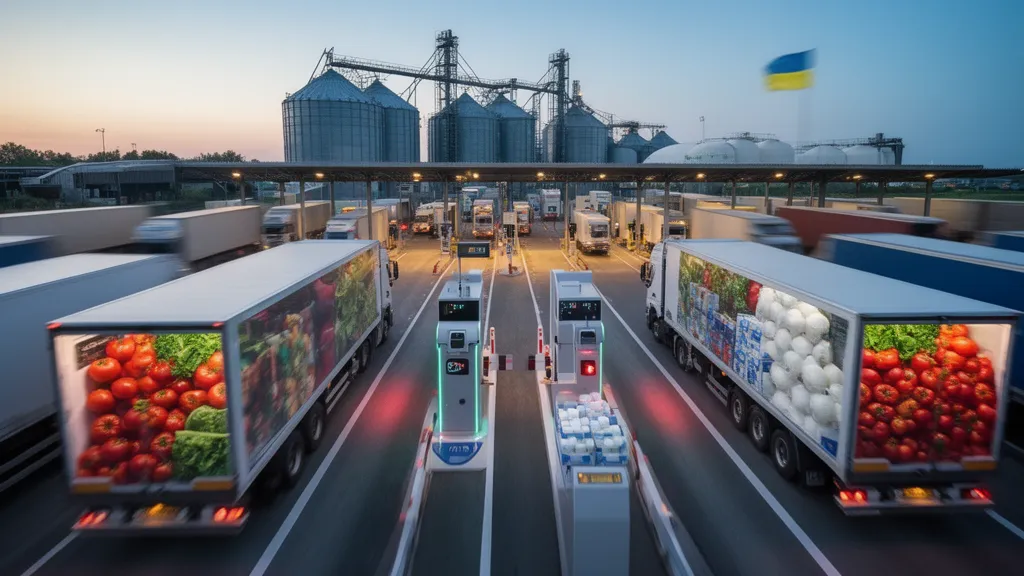
- Neutral to Slightly Bullish: Streamlined border procedures for perishable agricultural goods should reduce delays, spoilage, and logistics uncertainty for Ukrainian exporters.
- Operational Improvement: The eCherga automated system now assigns priority based on cargo codes, limiting manual intervention and reducing corruption risks.
- Scope Limitation: Immediate impact on bulk grain and oilseed flows is limited, as these are less sensitive to short-term border delays.
Regulatory Update: Priority Border Crossings for Perishables
Ukraine has implemented Order No. 5639, introducing unified rules for priority passage of perishable agricultural products through all international and interstate border checkpoints. The regulation standardizes lists of agricultural goods with limited shelf life and special storage requirements, targeting long-standing issues of congestion and delays at the border.
Previously, the absence of a unified cargo classification meant that fresh fruit, vegetables, meat, and dairy often waited in general queues for many hours or even days. These delays led to quality deterioration, increased spoilage, and direct financial losses for exporters and logistics providers reliant on predictable delivery schedules.
Operational Changes and System Integration
The new framework introduces automated priority verification via the єЧерзі (eCherga) system, which recognizes perishable cargo based on its code without the need for manual processing. This reduces human involvement in queue management and is expected to lower corruption risks tied to discretionary decision-making at checkpoints.
In addition to automated prioritization, the regulations mandate expedited inspection protocols for time-sensitive cargo. These measures are being integrated into the broader electronic border control infrastructure, making the new procedures compulsory across all applicable checkpoints and ensuring consistent treatment of perishable shipments.
Market Impact and Logistics Outlook
For Black Sea agricultural logistics, the changes are viewed as a neutral to slightly bullish development. Faster, more predictable transit for perishable products should improve supply chain reliability, reduce spoilage-related write-offs, and support margin stability for traders dealing in fresh produce, meat, and dairy.
Logistics coordinators may benefit from lower operational uncertainty and better planning of cross-border flows, potentially leading to more efficient fleet utilization. While the direct impact on bulk grain and oilseed shipments is limited due to their lower sensitivity to short-term delays, the reduction in corruption risk and improved regulatory clarity may enhance the overall business environment for Ukrainian agricultural trade.
Source: Market Data
Leave a Reply