
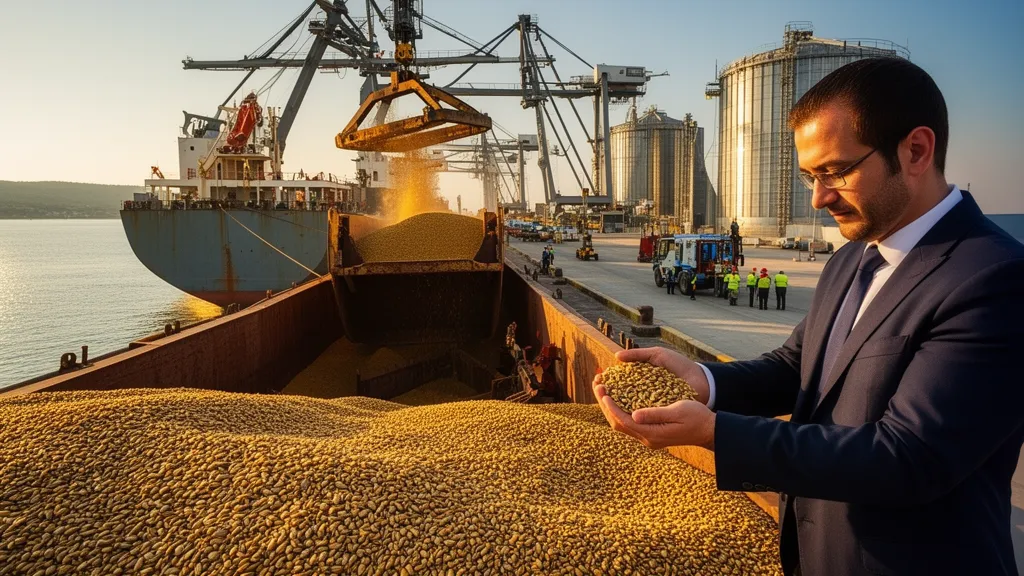
- Turkey successfully unloaded its first Argentine sunflower seed vessel in May, receiving 33,000 tons after stringent quality inspections.
- Two of three Argentine vessels were rejected due to pesticide contamination and mold, underscoring ongoing quality risks with South American supplies.
- From September to April 2025/26, Turkey imported about 1.3 million tons of sunflower seeds, mainly from Romania (48%), Moldova (28%), and Bulgaria (15%).
- Quality issues with Argentine sunflower seeds have impacted both Turkey and Bulgaria, raising broader concerns over supply chain reliability.
- Market impact is neutral to slightly bullish for Black Sea suppliers as Turkish buyers may lean more on established regional origins amid quality concerns.
Turkey’s Sunflower Seed Import Dynamics
Turkey has unloaded its first shipment of Argentine sunflower seeds in May, marking a notable step in its efforts to diversify supply beyond traditional Black Sea origins. Of three Argentine vessels that arrived, only one 33,000-ton shipment passed inspection and was discharged, while two were rejected due to pesticide contamination and mold. Another Argentine vessel is expected to arrive by May 28, with market participants closely watching whether it meets Turkish quality standards.
Current Import Structure and Volumes
Between September and April of the 2025/26 marketing year, Turkey imported approximately 1.3 million tons of sunflower seeds. The country’s sourcing remains highly concentrated in the Black Sea region, with Romania, Moldova, and Bulgaria supplying the vast majority of volumes.
| Supplier Country | Share of Turkey’s Imports (Sep–Apr 2025/26) | Estimated Volume (000 tons) |
|---|---|---|
| Romania | 48% | ~624 |
| Moldova | 28% | ~364 |
| Bulgaria | 15% | ~195 |
| Other origins (incl. Argentina) | 9% | ~117 |
| Total | 100% | ~1,300 |
The data underline Turkey’s continued dependence on Black Sea suppliers despite exploratory purchases from Argentina and other origins.
Quality Concerns and Regional Impact
Quality issues with Argentine sunflower seeds are emerging as a recurring problem. In addition to Turkey’s recent vessel rejections over pesticide contamination and mold, Bulgaria has previously reported excessive pesticide levels in Argentine consignments. These problems pose risks for crushers and refiners, as non-compliant seed can jeopardize sunflower oil sales and downstream processing contracts.
For logistics and procurement teams, this increases the importance of pre-shipment inspections, clear contractual quality specifications, and contingency planning when sourcing from newer or higher-risk origins.
Market Implications
The situation is neutral to slightly bullish for Black Sea suppliers. Rejections of Argentine cargoes reinforce Turkey’s reliance on established regional origins—Romania, Moldova, and Bulgaria—which are viewed as more reliable on quality. This could support demand and, by extension, basis levels for Black Sea sunflower seeds in the near term.
At the same time, the successful unloading of a 33,000-ton Argentine vessel shows that alternative supply channels can meet Turkish standards when properly managed. Over the medium term, if Argentina resolves quality issues, its presence could introduce additional competition for Black Sea exporters. Until then, Turkish buyers are likely to prioritize risk management and quality assurance over marginal price advantages from higher-risk origins.
Source: Market Data
Leave a Reply