
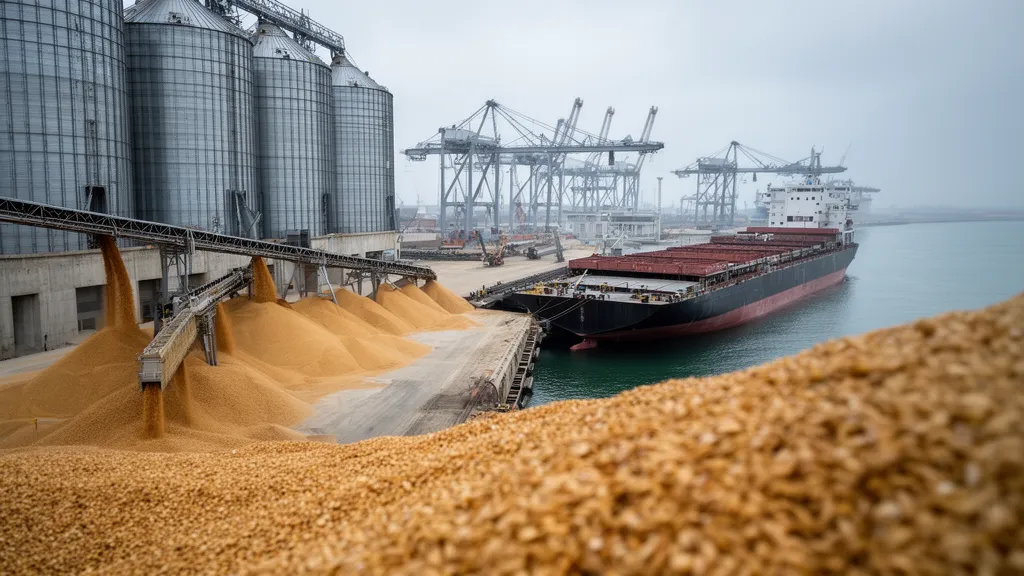
- Bearish price action: Granulated wheat bran prices at Ukrainian ports declined steadily through two ten-day periods in May.
- Demand shock in Turkey: Turkish buying collapsed amid Q1 oversaturation and higher domestic bran output.
- Export pressure: Reduced appetite in key markets is weighing on Ukrainian export prices and volumes.
- Strategic challenge: Exporters may need to find alternative destinations or accept lower prices to clear inventories.
Market Update
Granulated wheat bran prices at Ukrainian export terminals moved sharply lower over May, with consecutive declines recorded across two ten-day periods, according to APK-Inform. The pullback highlights a shift in the regional supply-demand balance as export flows struggle to find sufficient end-user demand.
Turkey, historically one of the largest outlets for Ukrainian wheat bran, has dramatically scaled back purchasing. Heavy import programs during the first quarter of 2024 left the Turkish market oversupplied, curbing new buying interest just as Ukrainian export availability remained strong.
At the same time, an increase in domestic bran production in Turkey has displaced imported volumes, further eroding demand for Ukrainian material. This combination of earlier over-importing and stronger local output has created a headwind for Ukrainian exporters seeking to maintain price levels and shipment pace.
Analysis and Outlook
The backdrop is clearly bearish for Ukrainian wheat bran exporters. Weakened Turkish demand and intensifying domestic competition in key destinations are pushing both prices and traded volumes lower. Unless alternative markets in other regions step in to absorb Ukrainian bran, the current supply overhang could persist into the remainder of Q2.
The situation also mirrors broader milling activity and wheat processing margins in the Black Sea region, where by-product flows must be carefully managed. Traders and exporters may be forced to diversify destination portfolios, renegotiate terms, or accept discounted pricing to maintain liquidity and prevent inventory accumulation at ports.
Source: Market Data
Leave a Reply