
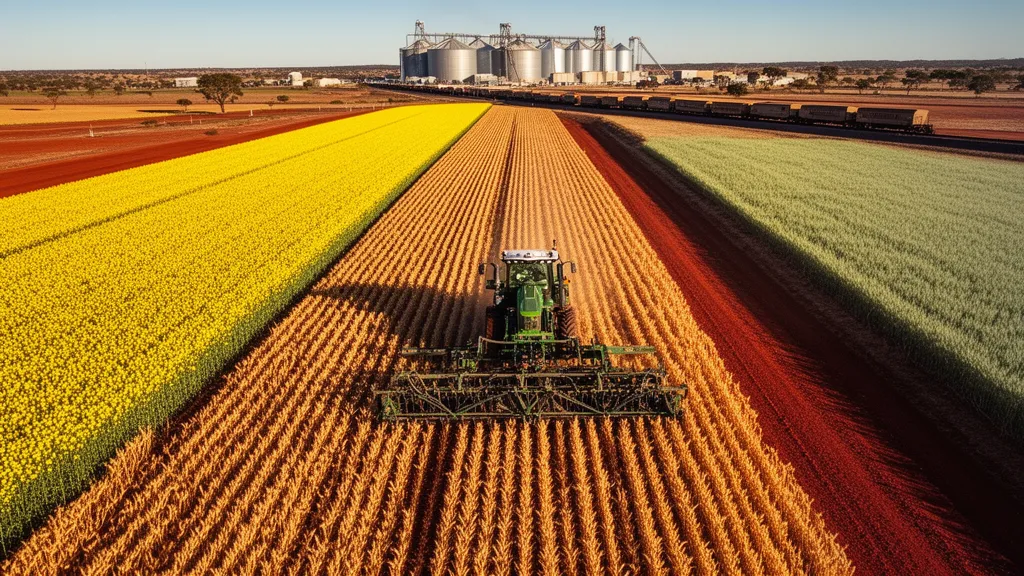
- Bearish for global feed barley: Western Australia’s barley area is set to rise 6% year-on-year to 2.17 million hectares, adding potential exportable supply and pressuring prices into late 2024.
- Bearish for wheat: Wheat plantings in Western Australia are forecast to fall 13% to 3.73 million hectares as farmers pivot toward lower-fertilizer barley and higher-priced canola.
- Supportive for canola values: Canola area is expanding 33% to 2.28 million hectares, driven by strong price premiums over wheat and favorable gross margin expectations.
- Input-cost driven rotation: Elevated fertilizer prices linked to Middle East conflicts are reshaping Western Australia’s crop mix, favoring barley’s lower nutrient requirements.
- Neutral to bearish for Black Sea barley: Additional Australian supply may intensify competition in Asian markets, challenging Black Sea origins in Q4 2024–Q1 2025 if yields normalize.
Western Australia Crop Mix Shifts
The Grain Industry Association of Western Australia (GIWA) reports a significant shift in crop intentions for the current planting season. Farmers in the country’s largest crop-exporting state are expanding barley and canola area at the expense of wheat as they adapt to elevated input costs and evolving price signals.
| Crop | 2024 Area (m ha) | Y/Y Change | Change vs. April Estimate (ha) |
|---|---|---|---|
| Barley | 2.17 | +6% | +110,000 |
| Canola | 2.28 | +33% | +290,000 |
| Wheat | 3.73 | -13% | -45,000 |
Barley plantings are now projected at 2.17 million hectares, 6% above last year and 110,000 hectares higher than GIWA’s April estimate. Canola area has been revised sharply higher to 2.28 million hectares, a 33% year-on-year increase and an additional 290,000 hectares versus earlier projections. In contrast, wheat area is expected to fall to 3.73 million hectares, down 13% on the year and 45,000 hectares below April forecasts.
Fertilizer Costs and Economics Drive Rotation
GIWA attributes these acreage shifts primarily to high fertilizer costs, which have been exacerbated by ongoing Middle East conflicts. Barley’s lower fertilizer requirements relative to wheat are improving its cost competitiveness, making it an attractive option under current input price conditions. At the same time, canola is benefiting from favorable price premiums over wheat, encouraging farmers to allocate more land to oilseeds despite their higher agronomic demands.
Market Impact: Neutral to Bearish for Black Sea Barley
From a global balance perspective, increased Australian barley output in Western Australia is neutral to bearish for international feed barley values. If normal yields are achieved, the additional Southern Hemisphere supply will arrive into key Asian markets by mid- to late-2024, strengthening Australia’s competitive position against Black Sea origins.
Greater Australian availability during Q4 2024 and Q1 2025 could cap rallies and pressure Black Sea barley export margins into major Asian destinations, especially where the two origins compete most directly. However, the same fertilizer cost pressures affecting Australia are also influencing Black Sea producers, which may restrain their capacity to expand barley acreage aggressively.
Traders should closely track Western Australian crop development through the growing season, alongside Black Sea planting intentions and input cost trends. Weather risks and any deterioration in yield potential remain key swing factors that could offset the current acreage-driven bearish bias.
Source: Market Data
Leave a Reply