
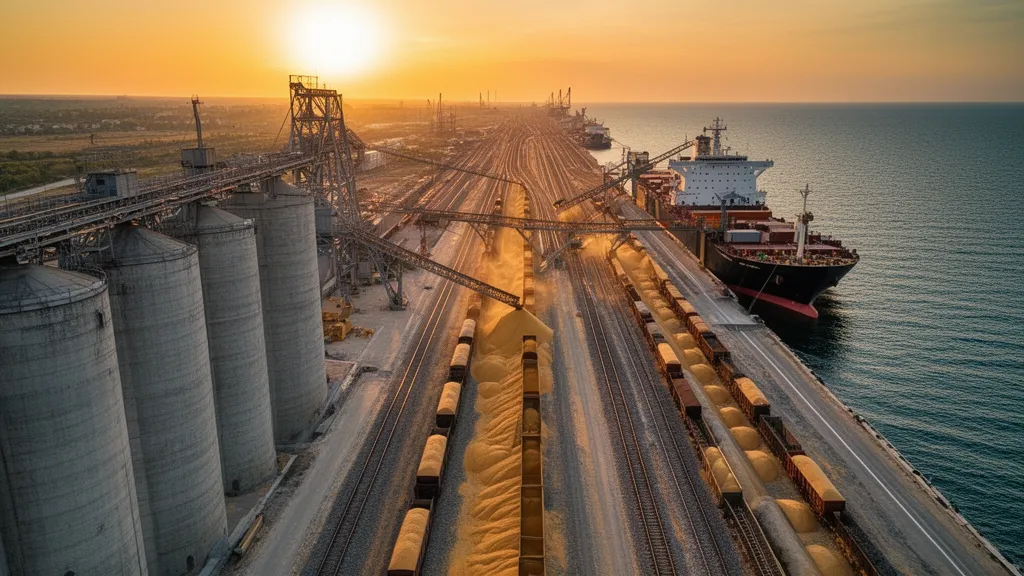
- Strategic integration: Ukraine has proposed extending the 3,600 km Rail-2-Sea corridor to the port of Odesa, linking its key Black Sea hub with Central European freight routes.
- Financing window: A dedicated funding channel for Ukrainian projects is expected within the Three Seas Investment Fund during Poland’s upcoming presidency.
- Freight impact: The project is neutral to marginally bullish for Black Sea freight markets as it could diversify export routes for grain and oilseeds, though timelines remain uncertain.
Ukraine Proposes Rail-2-Sea Extension to Odesa
At the Three Seas Initiative Summit in Croatia, Ukrainian Prime Minister Yulia Svyrydenko announced that Ukraine has formally proposed extending the Rail-2-Sea railway corridor to include the port of Odesa. The existing 3,600 km Rail-2-Sea route connects Poland’s Gdansk port with Romania’s Constanta port, serving as a key freight artery between the Baltic and Black Seas.
The extension would integrate Ukraine’s largest Black Sea port into this north-south logistics corridor, potentially enhancing regional connectivity for bulk commodities and containerized cargo. By linking Odesa to Gdansk and Constanta by rail, the project aims to streamline transit flows and reduce bottlenecks for cross-border trade.
Funding Prospects and Project Timeline
Svyrydenko highlighted the need for a dedicated funding window for Ukrainian infrastructure within the Three Seas Investment Fund. The Ukrainian government expects the first funding package to become available during Poland’s upcoming presidency of the initiative, which could accelerate investment into transport, logistics, and energy assets.
Implementation timelines remain uncertain and will depend on the speed of funding approvals, project design, and cross-border coordination. Market participants should watch for formal announcements on investment allocations and tender processes as leading indicators of project viability and phasing.
Market Impact and Freight Outlook
The proposed Odesa extension is strategically important for Ukraine’s agricultural export sector. A rail link into the Rail-2-Sea corridor would provide grain and oilseed exporters with an alternative land-bridge to northern European and Baltic markets, partially reducing reliance on traditional Black Sea maritime routes and vulnerable transit corridors.
For Black Sea freight markets, the development is currently assessed as neutral to marginally bullish in the medium term. Improved rail connectivity could increase routing options, support more flexible logistics chains, and potentially enhance export resilience during periods of maritime disruption. However, until funding is secured and construction schedules are clarified, the near-term impact on freight flows and pricing is limited.
Traders and logistics operators should monitor policy signals from the Three Seas Initiative and the timing of the first investment packages, as these will shape expectations for capacity additions and future freight differentials between rail and sea routes.
Source: Market Data
Leave a Reply