
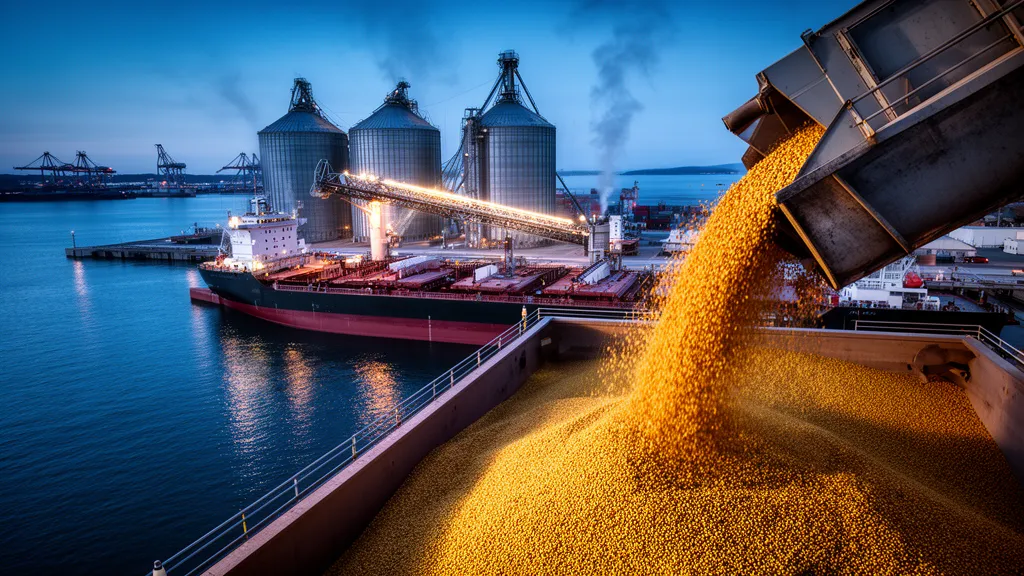
- Neutral: February canola exports rose 24% year-on-year to 808,000 tonnes, but cumulative 2025/26 shipments remain 28% below last season.
- Bullish: Record Canadian soybean exports of 4.49 million tonnes for August–February, driven by strong Chinese demand, underline robust global oilseed consumption.
- Bearish: Lower year-to-date Canadian canola exports open space for competing origins such as Black Sea rapeseed and sunflower products.
- Neutral to supportive: Strong EU demand for Canadian canola suggests tight European supply, which can lend support to Black Sea rapeseed prices.
Canadian Canola Export Performance
Canada’s canola exports reached 808,000 tonnes in February, up from 796,000 tonnes in January and 652,000 tonnes in February 2025. The European Union was the largest buyer with 301,000 tonnes, followed by Japan at 159,000 tonnes, China at 114,000 tonnes, and Mexico at 81,000 tonnes.
Despite the solid February performance, cumulative canola exports for the 2025/26 marketing year (August–February) totaled 4.27 million tonnes, well below 5.93 million tonnes in the same period last season. Over this span, the EU has received 1.29 million tonnes and Japan 0.89 million tonnes.
Canola Oil and Meal Shipments
Canola oil exports in February were steady at 287,000 tonnes, with the United States accounting for 228,000 tonnes of that volume. Canola meal exports reached 464,000 tonnes, again heavily dominated by the US market with 384,000 tonnes.
Record Canadian Soybean Exports
Canadian soybean exports increased to 406,000 tonnes in February, up from 397,000 tonnes in January and 315,000 tonnes in February 2025. China purchased 245,000 tonnes during the month. For August–February, soybean exports climbed to a record 4.49 million tonnes, surpassing 4.34 million tonnes in 2024/25, with China taking 1.77 million tonnes.
Key Export Volumes Overview
| Commodity / Period | Month / Season | Volume (000 t) | Year-Ago Volume (000 t) | Change |
|---|---|---|---|---|
| Canola exports | Feb 2026 | 808 | 652 | +24% |
| Canola exports (cumulative) | Aug–Feb 2025/26 | 4,270 | 5,930 | -28% |
| Canola oil exports | Feb 2026 | 287 | n/a | n/a |
| Canola meal exports | Feb 2026 | 464 | n/a | n/a |
| Soybean exports | Feb 2026 | 406 | 315 | +29% |
| Soybean exports (cumulative) | Aug–Feb 2025/26 | 4,490 | 4,340 | +3% |
Destination Breakdown
| Export Flow | Period | Destination | Volume (000 t) |
|---|---|---|---|
| Canola seed | Feb 2026 | EU | 301 |
| Canola seed | Feb 2026 | Japan | 159 |
| Canola seed | Feb 2026 | China | 114 |
| Canola seed | Feb 2026 | Mexico | 81 |
| Canola seed | Aug–Feb 2025/26 | EU | 1,290 |
| Canola seed | Aug–Feb 2025/26 | Japan | 890 |
| Canola oil | Feb 2026 | US | 228 |
| Canola meal | Feb 2026 | US | 384 |
| Soybeans | Feb 2026 | China | 245 |
| Soybeans | Aug–Feb 2025/26 | China | 1,770 |
Market Impact: Neutral to Slightly Bearish for Black Sea Oilseeds
The 28% year-on-year decline in Canadian canola exports for August–February increases scope for alternative origins, including Black Sea rapeseed and sunflower products, to capture demand. This is mildly bearish for Black Sea competitors in the sense that they face less Canadian competition in some markets but also points to broader supply availability.
At the same time, robust EU buying from Canada highlights tight European rapeseed supply, which can underpin Black Sea rapeseed prices into the EU. The record Canadian soybean export pace, led by China, underscores strong global oilseed demand and indirectly supports sentiment across the oilseed complex, including Black Sea sunflower seed and products.
Freight demand from North American export terminals remains elevated, continuing to compete with Black Sea routing for both Asian and European destinations. This freight dynamic may influence netbacks and origination choices, particularly for time-sensitive nearby shipments.
Source: Market Data
Leave a Reply