
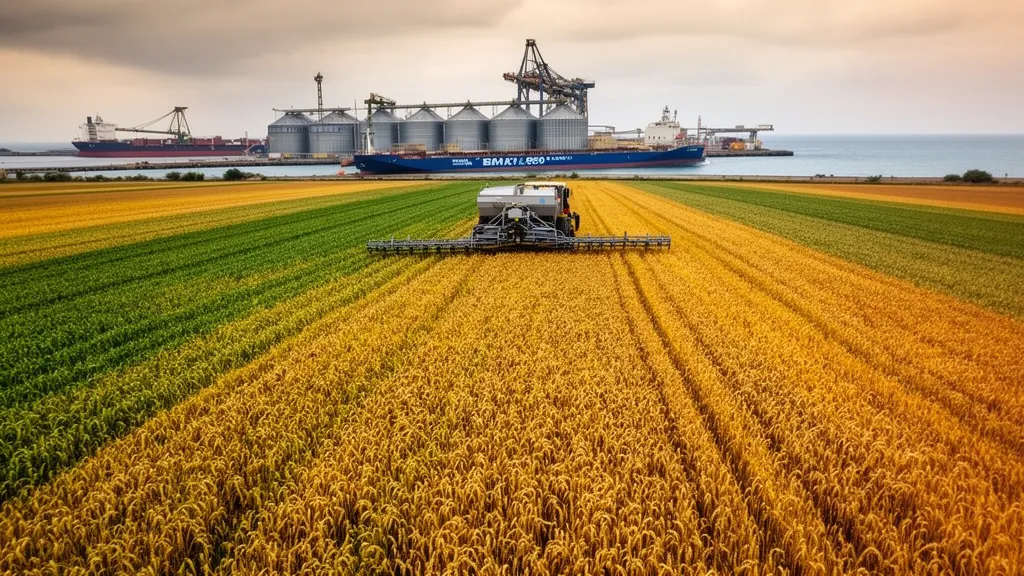
- Marginally supportive: Expana raised its 2026/27 EU soft wheat forecast to 128.7 million tonnes, reflecting generally favorable March weather.
- Structurally bearish: Wheat output for 2026/27 remains 8.4 million tonnes below the current 2025/26 forecast, a year-on-year decline of 6.1%.
- Downside risk: Reduced fertilizer application and potential spring precipitation deficits could further constrain EU grain yields.
- Regional opportunity: A tighter EU balance sheet may support Black Sea export prospects, especially into Mediterranean and North African markets.
EU Wheat & Coarse Grains Outlook
Expana consulting has marginally revised its European Union soft wheat production forecast for the 2026/27 marketing year to 128.7 million tonnes, up 0.1 million tonnes from the previous month on the back of generally favorable March weather. Despite the upward tweak, the projection remains well below the current 2025/26 estimate of 137.1 million tonnes, implying a 6.1% year-on-year decline.
Weather monitoring points to potential precipitation deficits in northern and northeastern EU member states from mid-spring onward, which could stress crops during key growth phases. At the same time, growers have cut fertilizer applications significantly, both to manage high input costs and in response to shifting agronomic strategies, adding a structural layer of downside risk to yield potential across major cereals.
| Crop | Marketing Year | Production (million tonnes) | Change vs Prior Season |
|---|---|---|---|
| Soft Wheat | 2025/26 (current) | 137.1 | – |
| Soft Wheat | 2026/27 (latest) | 128.7 | -8.4 vs 2025/26 |
| Soft Wheat | 2026/27 (month-ago) | 128.6 | +0.1 vs prior estimate |
| Barley | 2025/26 | 57.2 | – |
| Barley | 2026/27 | 52.3 | -4.9 vs 2025/26 |
| Corn | 2025/26 (previous estimate) | 57.9 | – |
| Corn | 2026/27 (latest) | 58.3 | +0.4 vs prior estimate |
Beyond wheat, EU barley output is forecast at 52.3 million tonnes for 2026/27, down sharply from 57.2 million tonnes in 2025/26, underscoring the impact of lower input intensity. Corn is a partial exception: production is now pegged at 58.3 million tonnes, up from a previous estimate of 57.9 million tonnes, even as acreage falls to historically low levels. The modest corn upgrade reflects yield optimism rather than area expansion, as farmers continue shifting toward less fertilizer-intensive crops.
Implications for Black Sea Exporters
The updated EU balance sheet carries neutral-to-bearish implications for Black Sea wheat exporters in the near term. While the projected 8.4 million tonne decline in EU wheat output for 2026/27 could tighten regional availability and, in theory, create additional demand for imports, the latest upward revision signals that immediate production concerns have eased somewhat.
If anticipated spring precipitation deficits in northern EU regions materialize, yield pressure could re-emerge, opening competitive windows for Black Sea origins into deficit EU member states and nearby Mediterranean buyers. More broadly, persistent under-application of fertilizer across European agriculture points to a structural drag on output growth, which over time could enhance the strategic positioning of Black Sea exporters in Mediterranean and North African markets where EU supplies have traditionally been strong.
Source: Market Data
Leave a Reply