
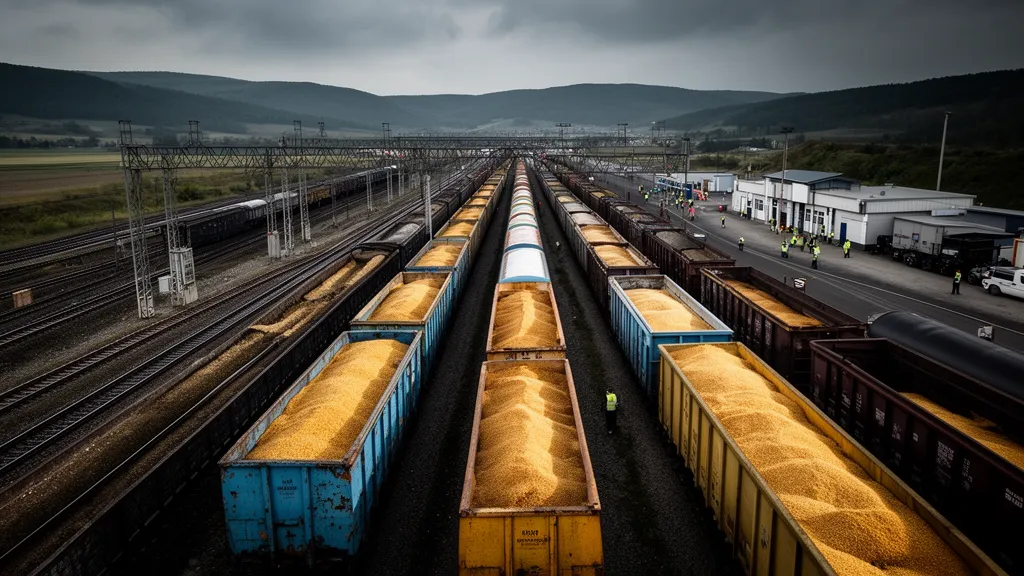
- Rail exports rise: Ukraine moved 314,000 tons of agricultural products by rail to western crossings in March 1–17, with grain at 45% of volumes.
- Throughput improves: Daily grain shipments increased to 177 wagons, up 7.9% versus late February, signaling better short‑term capacity.
- Backlogs build: Total wagon backlog surged to 5,800 units, driven mainly by congestion on the Hungarian Chop–Záhony route.
- Processed products dominate: Higher share of processed products (55%) limits rail capacity for raw grain, potentially diverting flows to sea routes.
- Mixed freight outlook: Neutral to slightly bearish for grain freight as rising congestion offsets modest gains in daily wagon movements.
Ukraine Rail Export Snapshot (March 1–17)
Ukrainian rail exports via western border crossings reached about 314,000 tons of agricultural products during March 1–17, according to Spike Brokers. Grain crops accounted for 142,500 tons (45%), while processed products such as vegetable oil, cake, and meal totaled 171,500 tons (55%), underlining the stronger rail orientation of higher-value processed goods.
| Metric | Value | Period / Note |
|---|---|---|
| Total ag exports by rail | 314,000 tons | March 1–17 |
| Grain exports | 142,500 tons | 45% of total |
| Processed products (oil, cake, meal) | 171,500 tons | 55% of total |
| Average daily grain wagons | 177 wagons/day | +7.9% vs. 164 wagons at end-Feb |
| Total wagon backlog | 5,800 wagons | As of March 17 |
| Grain wagons in backlog | 247 wagons | 4.3% of total backlog |
Routing Patterns and Bottlenecks
Vegetable oil shipments are spread more evenly across western destinations, while cakes and meals are concentrated on Polish and Slovak crossings, which handle most overland processed volumes. Congestion has intensified on the Hungarian corridor via Chop–Záhony, where the wagon backlog has risen sharply. In contrast, Slovak route volumes have declined, and Polish border crossings are operating without major delays, currently offering more reliable overland capacity.
Market Impact and Freight Outlook
The build-up of the overall wagon backlog, led by the Hungarian route, points to rising risks of shipment delays for exporters seeking alternatives to Black Sea ports. While the increase in average daily grain wagon throughput and the lack of congestion on Polish crossings provide some relief, the dominance of processed products in rail flows constrains available capacity for raw grain. This dynamic is neutral to slightly bearish for grain freight, as it may force more grain volumes toward sea freight or prolong lead times for land-based deliveries into western Europe, with potential implications for freight premiums and delivery schedules.
Source: Market Data
Leave a Reply