
- Kazakh companies signed $62.6 million in export contracts with Mongolia, focused largely on non-commodity finished goods.
- Bilateral trade turnover between Kazakhstan and Mongolia is expected to triple by the end of 2025, driven by food and industrial products.
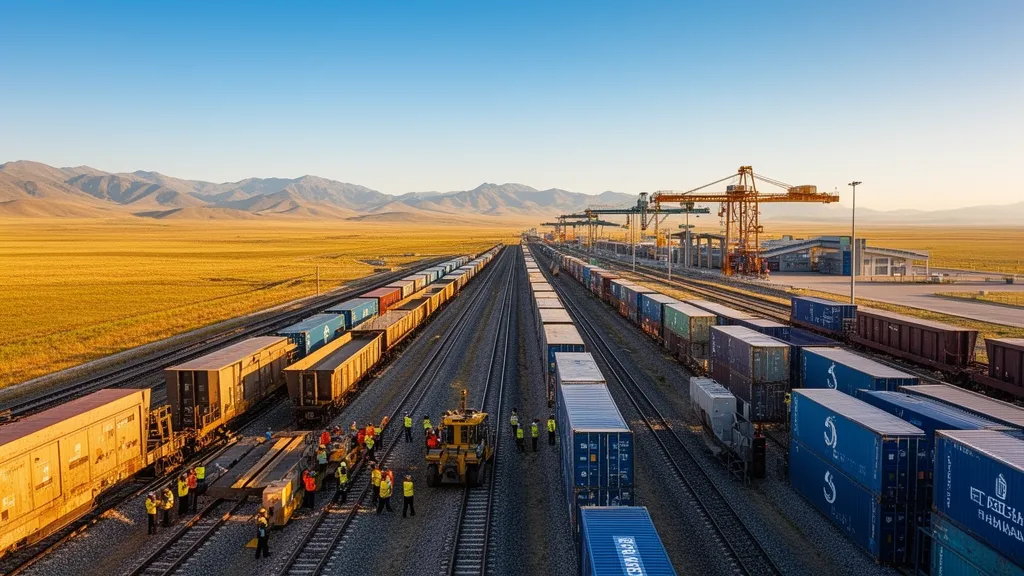
- Kazakhstan is strengthening its role as a key transit hub for Mongolian exports to EAEU, Caucasus, Turkey, and EU markets.
- For Black Sea freight, the impact is neutral to moderately positive, with potential changes in regional rail and logistics patterns.
Kazakhstan–Mongolia Trade Expansion
Kazakh businesses secured export contracts worth $62.6 million with Mongolia during a business mission to Ulaanbaatar led by First Vice Minister of Trade and Integration Aizhan Bizhanova. The deal mix reflects a pivot toward value-added trade, with more than 90% of supplies consisting of non-commodity finished goods such as food products and industrial items.
The Interim Trade Agreement between the Eurasian Economic Union (EAEU) and Mongolia covers around 367 commodity items and is designed to reduce trade barriers and broaden market access. This agreement supports favorable conditions for exporters on both sides and facilitates the launch of joint projects, underpinning the projected tripling of trade turnover by the end of 2025.
Kazakhstan is capitalizing on its geographic location to enhance its role as a transit corridor for Mongolian goods. The strengthened trade relationship provides Mongolia with diversified export routes, shorter delivery times, and improved access to markets in the EAEU, the Caucasus, Turkey, and the European Union.
Key Figures
| Indicator | Value |
|---|---|
| Total export contracts signed (Kazakhstan → Mongolia) | $62.6 million |
| Share of non-commodity finished goods in supplies | >90% |
| Number of commodity items under EAEU–Mongolia Interim Trade Agreement | ≈367 |
| Expected change in bilateral trade turnover by end-2025 | ~3x increase |
Regional Logistics and Market Impact
The immediate impact on Black Sea grain and oilseed flows is limited, but the broader implications for regional freight are notable. As Kazakhstan deepens its role as a transit hub, alternative overland routes could emerge that either compete with or complement traditional Black Sea corridors, particularly for agricultural and industrial cargoes.
Traders and logistics operators should track how increased Kazakhstan–Mongolia trade affects rail capacity, transit times, and routing options for exports from Central Asia and neighboring regions. If trade turnover triples as projected, rail wagon availability and route pricing on connecting corridors may tighten, exerting moderate upward pressure on freight rates in some segments.
Source: Market Data
Leave a Reply